It was heavy overnight rain that exposed Bengaluru’s long-standing infrastructure and drainage problems, with the city’s infamous Silk Board junction completely waterlogged and causing massive traffic chaos on Friday morning. Videos and images from the region showed roads submerged under several feet of water, making the busy junction look like a swimming pool rather than one of Bengaluru’s most important traffic corridors.
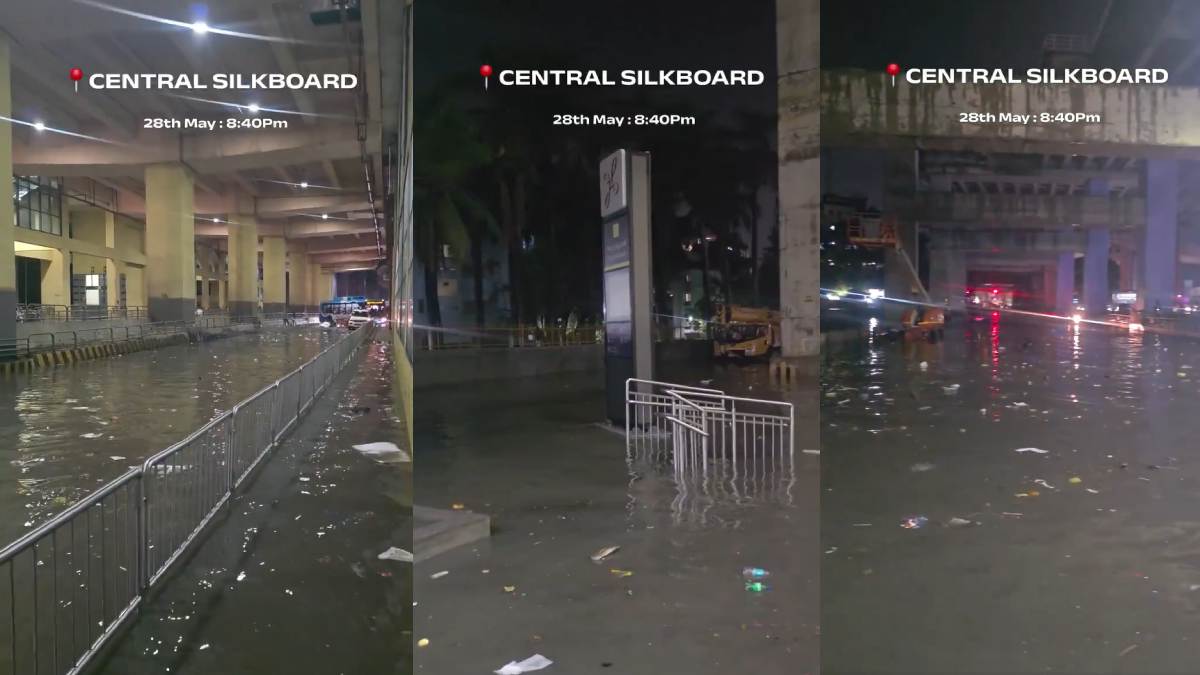
The flooding was particularly noticeable around the newly built metro station and ongoing metro corridor works near Silk Board. The road was inundated, and there were questions about urban planning, drainage and the effectiveness of infrastructure projects being conducted in the city. Commuters were shocked that even the most modern areas with modern infrastructure would not hold up under high rainfall for a couple of hours.
Silk Board is well known in Bengaluru for congestion, especially during peak office hours. But it just got more serious with the rain, and the cars couldn’t move through flooded roads. For hours, many cars were stuck in bumper-to-bumper traffic, as water flooded low-lying vehicles, and some commuters simply left their vehicles mid-drive.
The flooding also affected public transport and daily commuters travelling to the IT corridors such as Electronic City, HSR Layout and Outer Ring Road. Office-goers, students and delivery workers faced major delays as traffic moved at a slow pace. Residents said despite many incidents of flooding every monsoon, authorities had not provided a permanent solution.
The sight of waterlogging around a new metro station has been a source of criticism for citizens and urban experts alike. There has been great concern about how large development projects worth crores of rupees are being implemented, but the drainage infrastructure is still poor. Bengaluru’s rapid urbanisation is not being integrated into proper stormwater drain planning and maintenance, citizens said.

Ikkada road undali kada saar...!
— Karnataka Portfolio (@karnatakaportf) May 29, 2026
This is Bengaluru’s Silk Board after last night’s heavy rain. The entire stretch turned into what looked more like a swimming pool than one of the city’s busiest junctions. Even the newly constructed metro station area was completely waterlogged,… pic.twitter.com/J9SaOcuxDr
Social media was flooded with photos and videos of vehicles in water that were partially submerged, and people walking through knee-deep water, and traffic police struggling to get them out of it. The people on social media jeered at Silk Board for being described as Bengaluru’s “new swimming pool,” and several users used sarcastic language to describe Silk Board's new swimming pool, saying people are frustrated with the city’s lack of civic leadership.
Urban planning experts say that unchecked concretisation, encroachment of lakes and stormwater drains, and poor coordination between civic agencies have worsened Bengaluru’s flooding problem over the years. Even moderate rainfall now results in severe waterlogging in several parts of the city. Areas around major infrastructure projects are particularly vulnerable due to ongoing excavation and blocked drainage channels.
Citizens also criticised the authorities for failing to prepare for monsoon conditions despite repeated warnings and previous experiences. Residents of the city wanted to see drains desilted and flood management systems improved, and that the road and metro construction authorities should be held accountable.
The recent incident has once more brought back the debate about Bengaluru’s urban infrastructure model and whether development projects in the city are being executed with sufficient long-term planning. Residents have been worried that if monsoon rains continue in the city’s various parts, such scenes will be repeated in different parts of the city in the next couple of weeks.