A food safety inspection of a canteen in Vikas Soudha in Bengaluru raised concerns about hygiene in the city after officials found cockroaches on food plates. Food Department officials conducted a raid at the canteen located in the Vidhana Soudha building and a cockroach was found, one of the documents said.
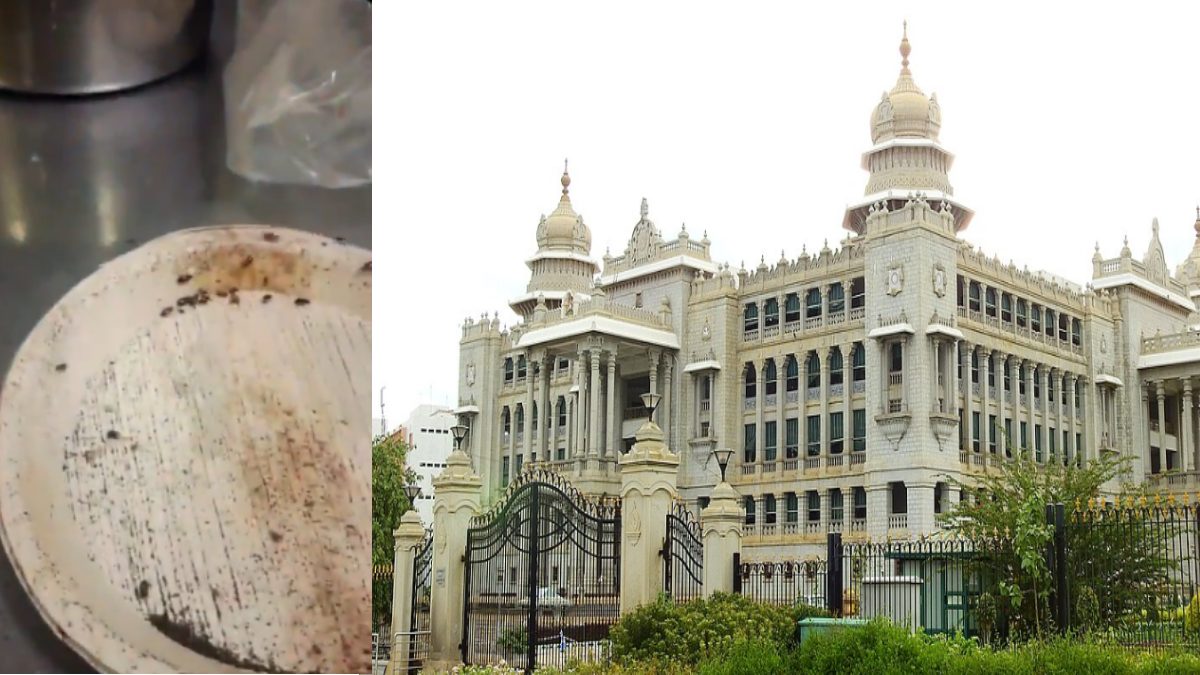
The findings of Vikas Soudha are particularly significant because it houses the offices of various ministers, senior government officials and IAS officers. A canteen in such a big government building is required to be clean and serve dishes and food properly. The fact that cockroaches have been observed on the food plates has raised concerns that hygiene and pest control procedures have been followed.
According to the information provided about the inspection, Food Department officials visited the canteen as part of a food-safety check. Food-service staff found cockroaches in food served at the facility, and cockroaches on food plates raised concern not only about the cleanliness of the dining area but also about the contamination of food being eaten by staff and visitors.
Food hygiene is a pressing public health issue in places that serve and cook food to many people every day. Kitchens and canteens are expected to clean food preparation areas, store their ingredients properly, prevent pest infestation and clean utensils and serving plates. Food contamination and illness are likely to be more severe if they fail.
The inspection at Vikas Soudha has attracted particular attention because the canteen is located there. Vikas Soudha is part of the larger Vidhana Soudha government complex in Bengaluru and is associated with the work of Karnataka's state administration. Ministers and senior bureaucrats have offices in the building so hygiene standards at the facilities in the building are a very important matter.
Cockroaches in food operations may indicate poor pest control or sanitation in food service work. Cockroaches might touch food, utensils, kitchen surfaces and storage areas in a food facility and potentially cause food-safety issues. So food establishments should be cleaning and pest management systems regularly.
This discovery does not mean that the entire canteen or kitchen is whole. A formal inspection report, laboratory testing where possible and further action by the authorities would provide a clearer picture of the situation. But to find pests in food plates is indeed something that should be taken care of by the authorities involved with food safety.
The inspection is also critical because government-run or government-premises canteens are in frequent use by workers throughout the working day. These facilities may be serving meals, snacks, tea and other food items for a large and changing customer base. Hygiene in such spaces is therefore a must for the consumers.
After the inspection, authorities will take more action. And the canteen's food-preparation facilities, storage areas, water sources, waste disposal system, waste disposal and pest control equipment could be investigated, for example. The authorities could take corrective measures or be concerned about the situation, according to food safety regulations applicable to the establishment or take further action against the establishment if necessary.
Food safety inspections are usually of two purposes. First, they help to identify immediate hygiene issues which could affect consumers. Second, food businesses and institutional canteens have to keep their standards at a higher level in line with food safety inspections. Inspections can also show that monitoring is needed on a more frequent basis and should not only be routine.
The Vikas Soudha incident shows how hygiene is important throughout the entire food-service process. Cleanliness is not just for the dining table and visible areas. Kitchens, refrigerators, storage shelves, cooking equipment, drains, waste bins and food-serving utensils are all in need of regular cleaning and maintenance. And there’s no less importance to pest control in food preparation or storage areas.
Another important thing to do is to manage food storage in order to prevent pest infestation. Foods should be kept in appropriate containers and protected from exposure. Food waste should be removed quickly, and kitchen surfaces should be cleaned regularly. Water accumulation and poorly maintained drainage areas can also cause hygiene issues and create conditions that attract pests.
For consumers, the incident serves to remind them of food hygiene at every level of food consumption– government canteen, restaurant, workplace cafeteria or roadside food outlet. While consumers can never inspect a kitchen themselves, visible cleanliness, proper food handling and hygienic serving practices can be useful indicators.
At the same time, responsibility for food safety is also on the operators and the government who is responsible for monitoring compliance. Food businesses need to comply with hygiene regulatory requirements and regulatory agencies need to conduct inspections and take appropriate steps if there are violations.
The Vikas Soudha incident is likely to provoke more discussion because it took place in a large government administration complex. Public health, cleanliness and responsible administration are generally expected to guide government institutions. A hygiene problem in a canteen serving government workers can be a greater concern for public opinion than a problem at a normal restaurant.
It’s also critical that any official action after the inspection be based on documented findings. When violations are confirmed the necessary corrective measures should take place and then the canteen should have to meet food-safety standards before it is back to business as normal. Regular follow-up inspections could also verify whether the necessary improvements have been implemented.
For those who use the canteen the priority is very simple: food should be prepared, stored and served in a clean and safe environment. Food should be fed to employees and visitors without any visible pests or contamination.
The reported discovery of cockroaches on food plates at the Vikas Soudha canteen has therefore raised a broader question about the monitoring of food facilities operating within government premises. While the inspection itself is an important step, sustained action will be necessary to ensure that the problem is addressed rather than simply treated as a one-time incident.
A canteen inside Vikas Soudha, located within the Vidhana Soudha premises, was reportedly found infested with cockroaches during an inspection by Food Department officials.
— Hate Detector 🔍 (@HateDetectors) August 13, 2026
According to officials, cockroaches were allegedly found on food plates at the canteen during the raid,… pic.twitter.com/Zr9qUr5NUF
As authorities examine the reported findings, further details may emerge regarding the extent of the alleged infestation, the condition of the kitchen and food-storage areas, and the measures required from the canteen operator.
Any confirmed violations could lead to regulatory action under applicable food-safety rules. Ultimately the incident highlights a basic principle: food must be served to the public with essential hygiene and safety standards at all times, whether it is in the canteen or restaurant. The fact that the incident took place inside Vikas Soudha is also of particular interest since it is an important place in government facilities and government personnel are employed there.
Additional action from the Food Department and other concerned authorities will be closely watched. The focus now is likely to be whether corrective measures are taken and whether the canteen is reopened and whether the same hygiene problems will not occur again and how officials will ensure that there are no repeat problems.