A Bengaluru-based tech professional has lost ₹1.9 crore after an online trading investment scam was exposed by an advertisement on Facebook, and he was apparently lured by investment advisers and representatives from the start to have been contacted by people who posed as investment advisers and representatives as a tech professional who was looking for money on Facebook in a scam as an investment adviser to invest in the market for the first time.
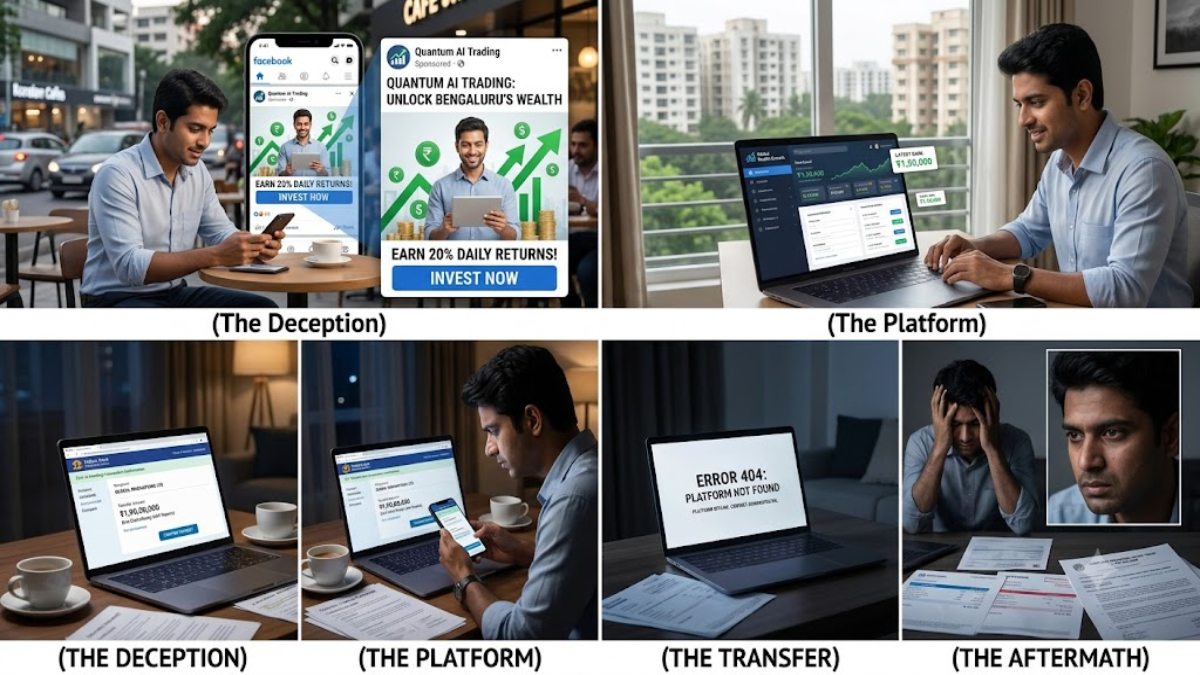
The victim was then sent an online trading advertisement at the time of writing and he was later contacted by them and reported the scam to the East Cyber Crime Police in Bengaluru, who are now investigating the fraud.
It began in February after the victim came across an online trading advertisement on Facebook. The victim says he was contacted by people who portrayed themselves as investment experts and representatives of a trading platform called “Proxtrend.” They persuaded him to join the platform and invest money, they said, because online trading could create significant returns.
Trusting the information provided by the alleged representatives, the victim said he set up an account on a website associated with Proxtrend. The website, they said, was an investment platform and had a logo that said the company was registered in Mwali, Comoros Islands. Police are now investigating the legitimacy of such a platform, the people operating it, and the bank accounts used to receive the victim’s money.
The alleged fraud was done slowly over several months. Between February 27 and September 9, the victim was allegedly contacted by different people that had names Raja S., Vinay Sharma and George Tyson. They had been claiming to be account managers who would continue giving trading recommendations and would keep telling the victim to invest more money.
At first, the fraudsters had shown profits and deposits in the investment system. The fake profits gave the victim so much faith in the system, and the victim transferred more money. The victim was convinced that the investments were producing returns and transferred money in multiple transactions to different bank accounts with the alleged representatives.
The total amount the victim transferred was about ₹1.9 crore over the months. The transactions continued until September 9, when the victim tried to withdraw the accumulated investment amount. That’s when the alleged fraud became apparent.
As reported in the complaint, the victim was given a small amount to withdraw, increasing his confidence in the platform. But when he tried to withdraw the larger amount on September 9, the request was declined. The people communicating with him said the withdrawal process required further formalities and that the money needed to be paid before the money could be released, the complaint said.
The fraudsters asked for an additional ₹50 lakh and ₹20 lakh from the victim, saying that these payments were needed to complete the withdrawal process, he said. It made the tech professional suspicious that he was actually involved in an investment scam.
When the victim was informed that he had been defrauded, he immediately contacted the national cybercrime helpline 1930 and reported it. He next went to the East Cyber Crime Police Station in Bengaluru and filed a formal complaint. The police have now opened a case and are investigating the transactions and people involved.
Investigators are looking into the bank accounts from which the money was transferred and have launched efforts to freeze the accounts used by the alleged fraudsters. Digital communication, transaction records, website details and other evidence will also be examined by police to identify the alleged investment network.
The incident illustrates how online investment scams can start with seemingly legitimate advertisements on social media platforms. Fraudsters often build trust by presenting professional-looking websites, assigning account managers and displaying fabricated profits before encouraging victims to transfer increasingly larger amounts.
The cybersecurity community has repeatedly stressed to individuals to check investment platforms independently before transferring money. Investors should be particularly wary of strangers who come to them on social media with promises of high returns, or when a platform needs more money before allowing withdrawal of existing funds.
The Bengaluru case is still under investigation, and the allegations against the people involved are yet to be established through legal proceedings. Police are still searching for the money trail, the person who operates the accounts and the full network behind the alleged ₹1.9 crore investment fraud.