Bengaluru has once again become known for having traffic congestion, as an IFS officer said that it took only about 5 kilometres to drive a distance of 5 km to get to the city, and the officer was shocked by how long it took to get there.
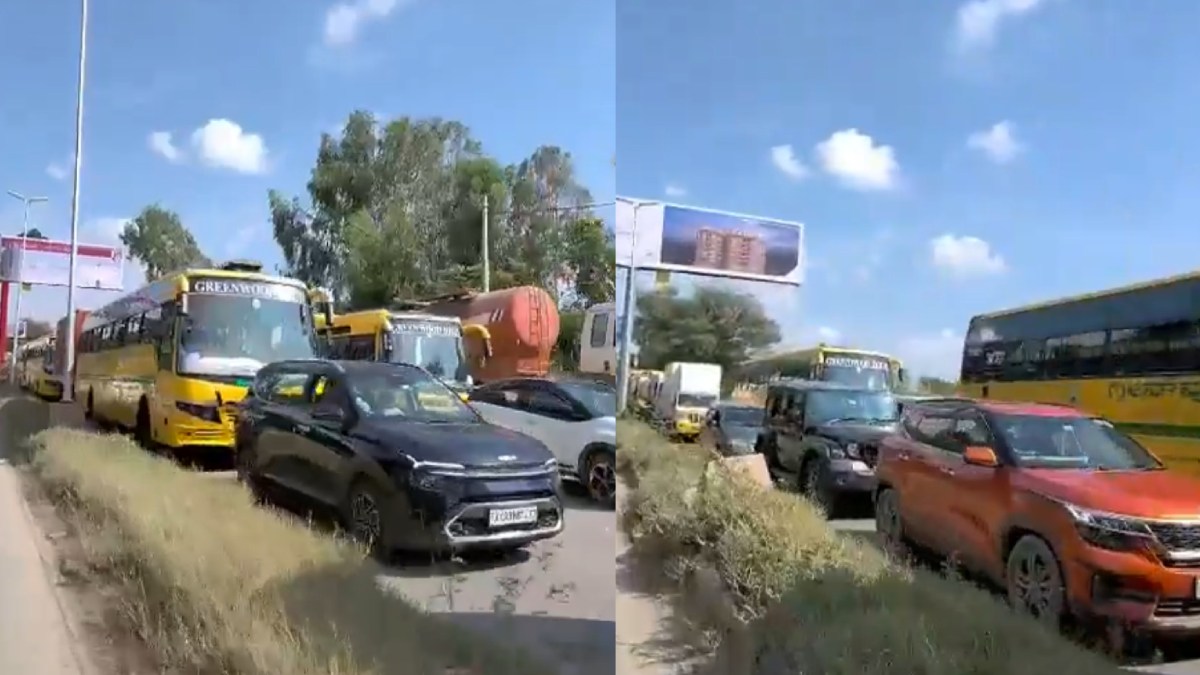
What should be a short drive turned out to be almost 2 hours and was the experience of thousands of commuters throughout the city every day. Long lines, slow-moving vehicles and traffic jams are still hampering travel across much of the city’s busy areas. For office-goers, students, delivery workers and other daily commuters, even short routes can take up huge amounts of time.
The IFS officer’s experience has resonated with people because Bengaluru’s traffic congestion is one of the most heavily discussed issues of life in the city. A 5 km journey taking nearly 2 hours has the driver waiting for almost an hour, so vehicles spend most of it either moving slowly or being frozen or almost stationary.
This is especially frustrating when traffic is heavy during peak hours, when cars, two-wheelers, buses, cabs and other vehicles are so packed onto roads. The situation is compounded by roadworks, bottlenecks, accidents, waterlogging or bad junction management. A journey that might begin as a routine commute can quickly become an exhausting one.
Bengaluru’s rapid growth has added another layer to the traffic problem. The city has grown considerably over the years with technology companies, startups, educational institutions and businesses from all over India and abroad in and around it. This growth has brought with it a steady increase in the number of people travelling every day.
Residential areas have also expanded further from the major employment centres, which is causing long commutes for most workers. While public transport services have been expanded, many commuters still depend on private vehicles, cabs and two-wheelers to commute. When thousands of cars are turning up on the same roads during the morning and evening peak periods, even a tiny disruption can cause traffic to stop and slow down, making a big difference in the flow of cars.
2+ hours. Every single day. That's how long kids from Whitefield spend on Varthur Road for a 5km commute. My own daughter is stuck right now as I post this. Whitefield deserves better than this. @blrcitytraffic @DKShivakumar @krishnabgowda @PCMohanMP @MALimbavali #Varthur pic.twitter.com/GMXfG5mrsS
— Ritish Reddy (@itsritish) September 17, 2026
For commuters, the negative impact of congestion is more than just losing time on the road. Spending nearly two hours of time on the road for five kilometres has the potential to add stress and fatigue to work schedules, appointments and personal time as well. Long hours of sitting in idle traffic can also cause more fuel use and increased vehicle emissions.
Emergency vehicles face additional difficulties in the presence of heavy traffic jams when roads are busy, and public transport services are also disrupted as buses are stuck in traffic, leading to delays. The long hours spent by commuters on short trips have become a big frustration for people who spend hours on short rides every day in Bengaluru’s streets.
The incident with the IFS officer has brought back the issue of better traffic management and more efficient urban mobility solutions. There are different modes of public transportation in Bengaluru, including buses and metro, and infrastructure projects are being implemented to promote connectivity between different parts of the city.
But traffic management is not simply about adding road capacity. Better junction management, improved pedestrian infrastructure, more coordinated roadworks and better interconnectivity between different modes of transport should be done to improve mobility. Encouraging commuters to use public transport where feasible would also help in reducing the number of private cars on congested roads.
For now, the two-hour journey for only five kilometres shows the daily traffic problems of Bengaluru’s residents. The city is one of India’s most important technology and business centres, and its traffic issue remains a major challenge to city life.
The response of the IFS officer has once again highlighted that the time of travel rather than distance is what determines a commuter’s experience in Bengaluru. The city will always need sustainable ways to move people efficiently, and for thousands of residents, the hope will be simple: a short 5 km journey should now feel like a quick trip rather than a two-hour adventure.