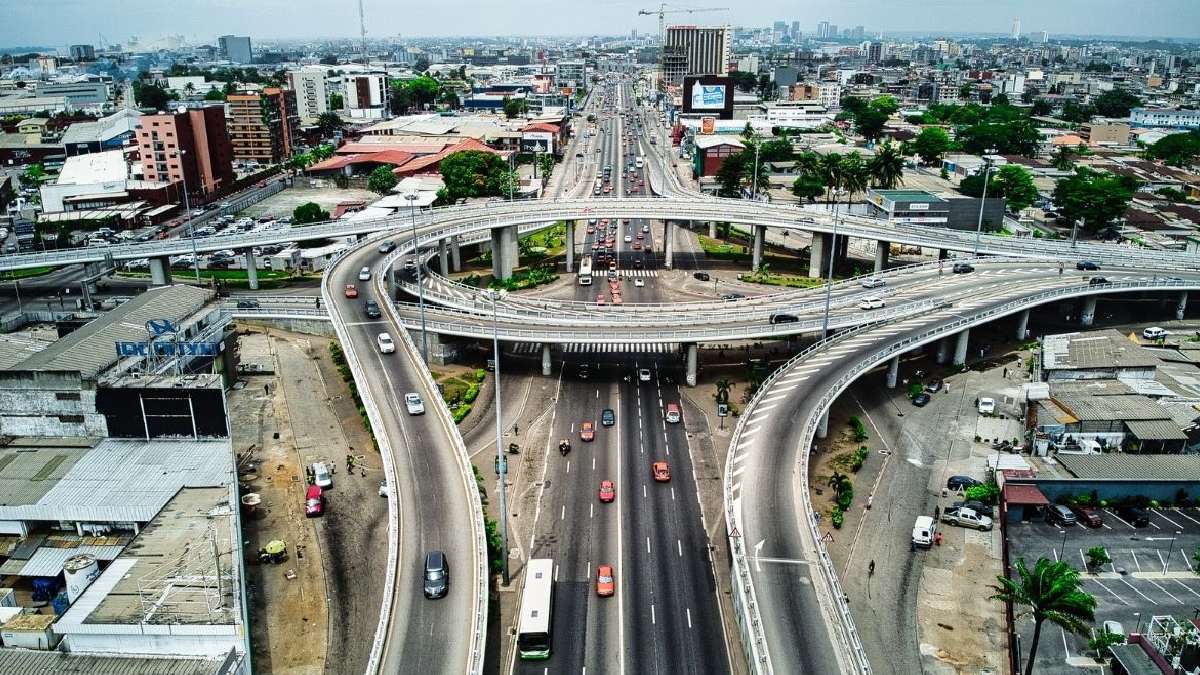
Bengaluru’s traffic management system could see further changes as authorities look at ways to curb congestion on some of the city’s busiest roads and improve traffic movement across major flyovers.
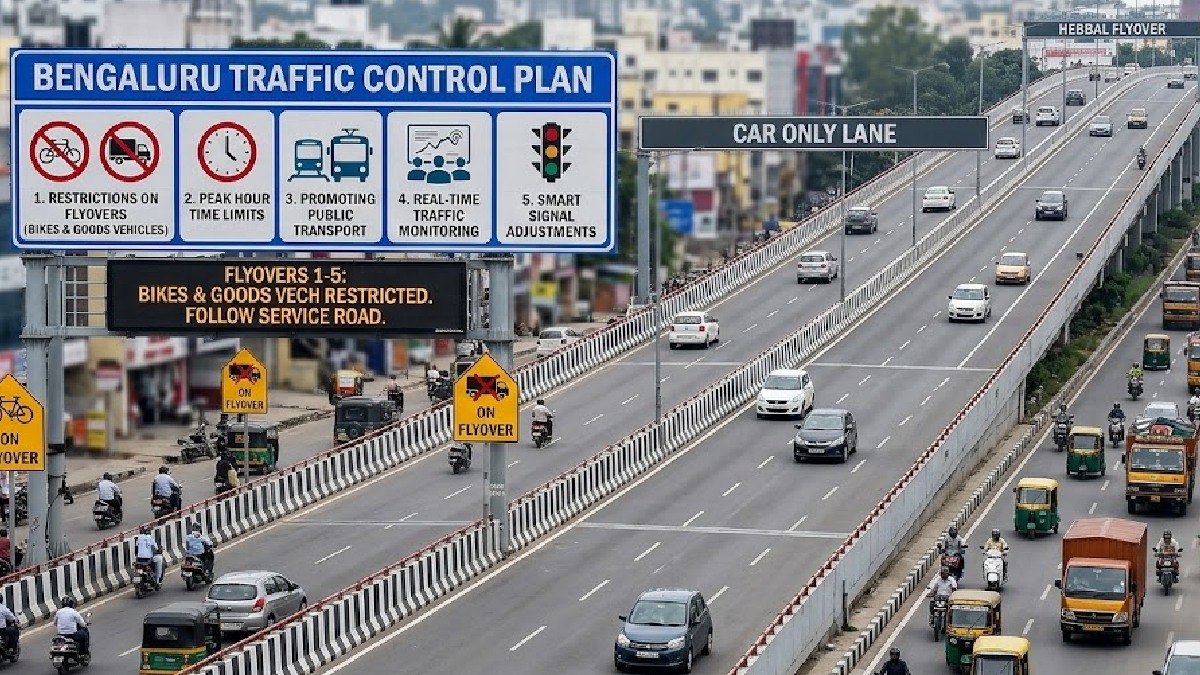
Among the proposals for these kinds of measures is a proposal to govern or curb the movement of two-wheelers and goods vehicles on five major flyovers. The objective is to allow traffic flow to be smoother and lower the number of slower or slower-moving vehicles in elevated road segments.
Bengaluru is one of India’s busiest metropolitan cities in terms of daily vehicular activity. Thousands of people travel across the city every day for work, education, business and other purposes. The surge of private vehicles has created an ever-growing pressure on the roads, intersections and transport facilities.
In this situation, authorities are considering different approaches to improve traffic flow rather than only new road construction.
Why are restrictions being considered on Five Flyovers?
A smooth flow of traffic on flyovers is necessary because vehicles have few chances to exit or change course once they are on an elevated stretch.
Cars, buses, motorcycles, autorickshaws and goods vehicles all travel at different speeds. When slower-moving vehicles reduce speed or change lanes, they can affect the movement of vehicles behind them.
Two-wheelers are also different from larger vehicles and may switch lanes frequently in congestion. The speed difference between different categories of vehicles is another problem for traffic management.
Goods vehicles, by contrast, may need more road space and may also go slower, especially when carrying heavy loads.
So restricting certain vehicle types on some flyovers may help in the maintenance of traffic flow and road safety.
But it is necessary to carefully plan. If the vehicles simply drive over a flyover to the surrounding roads, congestion could increase elsewhere. The solution should thus act so that the problem doesn't shift from one road to another.
Five-Part Plan to Address Bengaluru’s Traffic Problem
Bengaluru traffic congestion cannot be resolved by simply having a single measure. Road improvement, public transport expansion, traffic control, and better junction management will have to be done in concert with road improvement, too, as well as enforcement of traffic safety and better junction management will be needed.
1. Regulating vehicle categories on large flyovers
Restricting two-wheelers and goods vehicles on certain flyovers would allow faster-moving traffic to move with fewer interruptions.
But authorities need to find alternative routes before implementing this. Clear signboards must be put up well before entry so that cars can take the opportunity to switch routes.
The effects on surrounding roads should also be monitored after implementation.
2. Place public transport at the forefront
Public transport is still one of the most important long-term solutions to the traffic problem in Bengaluru.
Metro services and BMTC buses need to work as an integrated network so that commuters can conveniently travel between residential areas, business districts, workplaces and metro stations.
With better feeder services, people can leave private vehicles at home. If public transport is faster, reliable and convenient, it can reduce the number of cars and motorcycles entering already congested roads.
3. Scientific management of major junctions
At many major junctions in Bengaluru, there are long queues at busy intersections during peak hours. In some places, traffic queues can even extend to flyovers and create more bottlenecks in addition to the existing ones.
Signal timings should be regularly reviewed in relation to actual traffic volumes. Lane management, removal of unnecessary turning movements and better coordination between nearby signals could improve traffic flow.
Technology-based traffic monitoring can also help authorities to see if congestion patterns exist and to adjust the timing of traffic signals accordingly.
4. Time-based regulation of goods vehicles
Goods vehicles are key to Bengaluru’s economy, but their movement during peak traffic hours can put pressure on already busy roads.
In some areas, time-based restrictions might be considered in high-density areas, allowing deliveries during periods when traffic volumes are relatively low.
But these measures should be structured in such a way to take into account the needs of small businesses, retailers, restaurants, logistics companies and other commercial industries that rely on regular deliveries.
A well-designed delivery-time system could help relieve congestion without disrupting essential commercial activity.
5. More roads and infrastructure
And the flyovers alone won’t solve the traffic problems in Bengaluru forever.
The roads connecting to flyovers, service roads, junctions, signals and pedestrian infrastructure must also function efficiently. Poor road surfaces, potholes, unclear lane markings, illegal parking and encroachments can reduce road capacity even where major infrastructure is available.
So improving connecting roads should be an integral part of flyover and traffic planning.
What will change for motorists?
If two-wheelers and goods vehicles are restricted on five major flyovers, affected motorists may have to use alternative roads.
For two-wheeler riders, this may mean longer travel distances in some areas. Goods vehicle operators may also have to change their delivery routes and schedules.
As such, authorities will need to provide advance information about the restrictions. Direction boards, route maps and clear diversion signs can aid motorists to avoid confusion and will be needed to ensure no confusion.
Moreover, traffic personnel may also be needed at the main junction points in the early stages of the implementation period to direct motorists and avoid congestion.
How Awareness Is Just as Important as Enforcement
If a new traffic rule is introduced without adequate public awareness, there can be confusion.
Motorists must be notified about the restrictions before they reach the flyover entrances. Signboards should clearly explain which vehicle types are prohibited and indicate alternative routes.
Technology can also play a larger role in enforcement. Cameras, automatic number plate recognition systems and digital challans could be used to monitor violations and enhance compliance.
At the same time, enforcement should be transparent and consistent so that motorists clearly understand the rules.
Bengaluru needs a long-term transport strategy
Restrictions on flyovers may improve traffic flow in a few places, but they won’t solve the larger congestion problem of Bengaluru by themselves.
The city requires a comprehensive transport strategy that integrates Metro expansion, better bus service, pedestrian-friendly roads, cycling infrastructure, parking management, better freight movement, and better road connectivity.
Traffic planning should also consider how people actually travel across the city rather than looking at the individual roads in the city.
The success of any flyover restriction will ultimately depend on whether traffic can efficiently move on the road network as well.
And for Bengaluru, the bigger challenge is to build a transport system in which public transport is a real alternative to private vehicles and road infrastructure is used more efficiently.
The proposed restrictions on two-wheelers and goods vehicles on major flyovers might be one part of that big picture. But careful implementation, public communication and continuous monitoring will be necessary to make sure that congestion on one road does not create a new bottleneck somewhere else.