The Karnataka High Court has ordered compensation for 38-year-old G. Chandan, who suffered severe spinal injuries after a large branch of a Gulmohar tree fell on him as he was going to work in Bengaluru. The court ordered that the compensation be paid with 6% annual interest and made a series of directions for the state government and civic authorities to enhance public safety measures and take action against dangerous trees and other hazards in a timely manner.
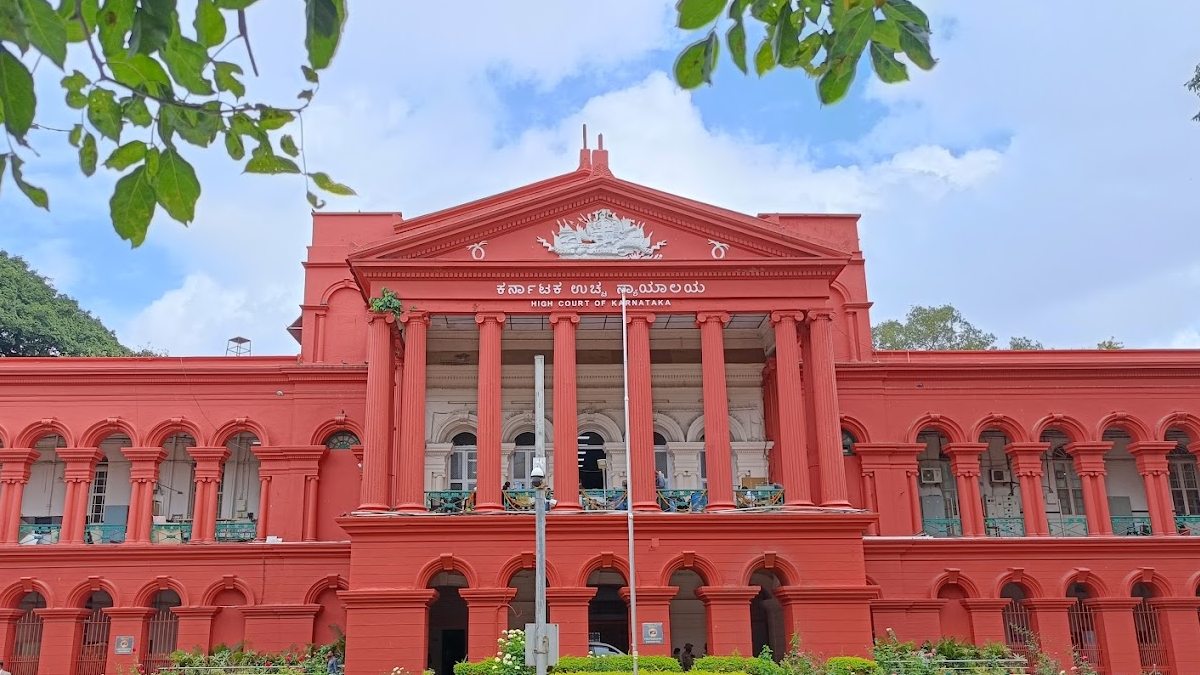
Justice Suraj Govindaraj, who heard Chandan’s petition, observed that the civic authorities had prior information about the dangerous tree branch but failed to take timely preventive action. The court ordered the authorities concerned to pay the compensation after deducting the ₹5 lakh that had already been paid by the BBMP. The remaining amount must be transferred through RTGS within 12 weeks from the date on which the authorities receive a copy of the judgment.
The court also ordered 6% annual interest on the compensation from March 7, 2024, the date of the accident, until the payment is actually made. The court examined the circumstances of the accident and the information available with the civic authorities at the time of the accident.
The accident took place at 10 am on March 7, 2024, on Convent Road in Shanthala Nagar, Bengaluru. Chandan, working for a private organisation, was on his way to his office when a heavy branch from a Gulmohar tree located within the premises of Good Shepherd Convent School fell on his neck. He suffered serious spinal injuries and was immediately operated on. He later developed traumatic paraplegia.
Although medical records described his physical disability at 85%, the High Court found his functional disability to be 100% in terms of impact on his livelihood and ability to perform daily activities. The court considered the long-term consequences of his injuries while determining the compensation payable to him.
A key factor was the prior warning about the dangerous tree branch. Good Shepherd Convent School had written to the BBMP on February 16, 2024, warning that the branch could fall at any time and posed a danger to children, residents, and vehicles. The letter was sent to the civic authority on February 22. However, permission to cut the branch was granted on March 7—precisely when the accident took place.
The High Court rejected the BBMP’s argument that taking 13 days to grant permission for cutting the tree was not an unusual delay. The civic body also claimed that the tree was situated on private property and that this incident took place due to natural or "act of God" reasons.
But by law, the court held that once authorities had received information about a potential danger, they had a legal duty to take appropriate action to protect people using the public road, irrespective of whether the tree was on private property. A natural cause could not be justified if authorities knew of an existing danger, the court ruled.
The compensation awarded by the court covers several heads of loss. These include ₹24,44,271 for medical costs, ₹1,03,85,424 for loss of future income, ₹27 lakh for caregiver costs, ₹1.17 crore for future medical treatment, physiotherapy, and rehabilitation, ₹5 lakh for pain and suffering, and ₹5 lakh for loss of amenities of life. The total compensation amount of ₹2,82,29,695 was taken into account, from which the amount already paid was to be deducted, resulting in the payable amount of ₹2,77,29,695.
The court also issued broader directions for public safety in Bengaluru. A comprehensive system must be put in place to tackle hazards that could endanger the public, the state government has been told. The system would cover not only dangerous trees but also potholes, open manholes and drains, electrical hazards, unsafe buildings, and construction-related risks.
The High Court directed the authorities to create a common digital platform through which citizens can report such hazards using photographs, videos, and location details. All complaints should receive a unique identification number, so citizens can track it from the time it is registered until the issue is resolved.
The court also directed authorities to classify reported hazards according to levels like urgent, high, medium, and normal, with appropriate protective measures to be taken depending on the severity of the risk. Artificial intelligence-based systems could be used to identify potential hazards, it said, but such systems should not be given authority to determine legal violations or liability.
The court required that the key measures be implemented in Bengaluru first and its main directions to be put into place within six months. It also ordered that the existing procedures for handling dangerous trees should be reviewed within three months and authorities must also introduce necessary improvements.
The judgment also pointed out that the school had already paid ₹3 lakh and had promised Chandan’s daughter free education up to Class 12. The court directed that the commitment to her education should be honoured.
The ruling has brought renewed attention to the need for civic authorities to act promptly if they are warned about hazards in public places. It also highlights the importance of transparent complaint systems and timely preventive action to protect pedestrians, motorists, and residents from preventable risks.