# Bengaluru Cracks Down on Waste Rule Violators: 50,000 Notices Issued, ₹15,000 Fine Imposed
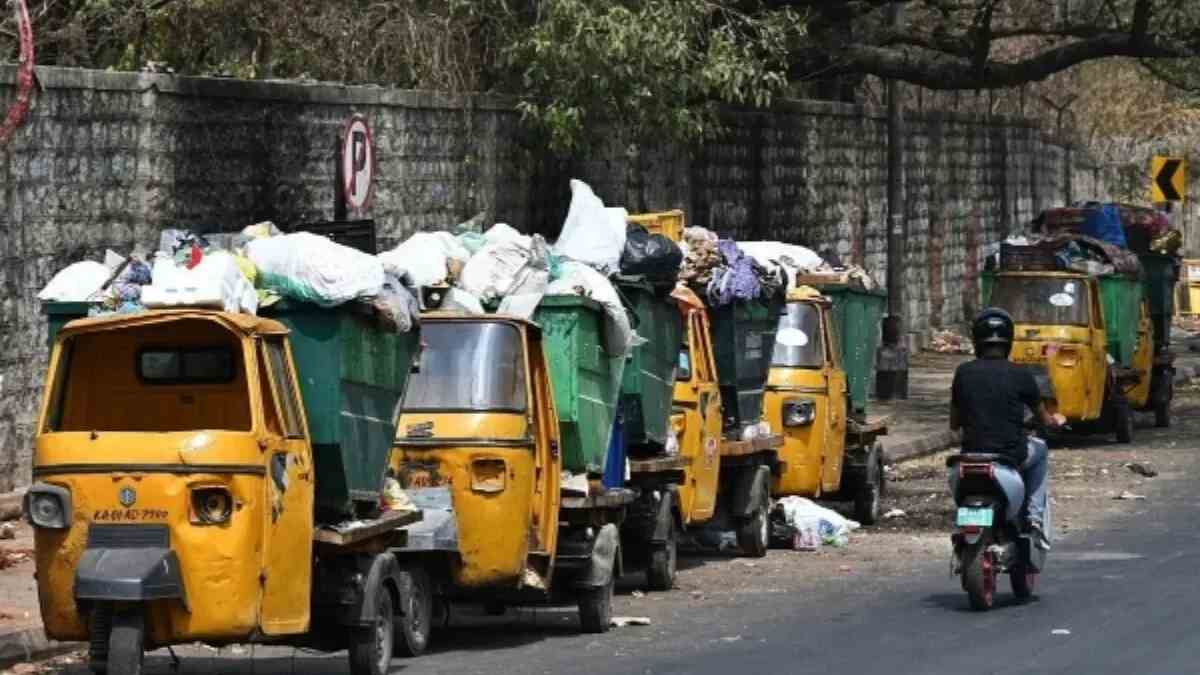
The Bengaluru Solid Waste Management Limited (BSWML) has intensified its response to non-compliance with solid waste management guidelines by issuing notices to almost 50,000 bulk waste generators throughout the city. This is part of a much larger plan to improve waste segregation, scientific disposal, and environmental sustainability in Bengaluru.
According to officials, notices are being served on bulk waste generators that are found violating prescribed waste management norms. Non-compliance will bring in a fine of ₹15,000. Repeat offenders will also face a penalty of ₹30,000 for a second violation.
The enforcement campaign aims to ensure that apartments, commercial establishments, institutions, hotels, hospitals, and other large waste generators comply with the Solid Waste Management Rules by properly segregating, processing, and disposing of their waste.
Despite awareness campaigns and guidelines, officials said, some establishments continue to transgress waste disposal regulations. Inspection staff discovered that the improper segregation of biodegradable and non-biodegradable waste, failure to process wet waste on-site, and illegal disposal were the most common violations.
The civic group thinks that strict enforcement is necessary to improve Bengaluru’s waste management system and reduce the burden on landfill sites. Segregation at the source is believed to be the most effective way to encourage recycling, composting, and environmentally responsible waste disposal.
The ₹15,000 penalty is intended to encourage compliance and not to punish violators. Bulk waste generators are advised to implement approved waste management procedures immediately to avoid legal action and higher penalties in the future.
Under the new guidance, all of the establishments should rectify the violations identified within the stipulated period. Failure to do so will result in additional fines and further regulatory action.
Environmental experts have welcomed the crackdown, believing that effective waste management is critical to public health, pollution reduction, and a clean urban environment. They say ongoing monitoring and enforcement will lead to greater accountability among large waste generators.
Residents have also been asked to help the city clean up by following waste segregation guidelines, avoiding littering, and cooperating with the municipal authorities. Public involvement will help support long-term progress in Bengaluru’s sanitation and waste management system.
Bengaluru Solid Waste Management Limited has said inspections will continue across the city and officials will regularly monitor compliance. Violations will result in harsher penalties, and authorities have warned that there will be no leniency for those who violate the law repeatedly.
Civic authorities hope that, as Bengaluru is now generating thousands of tonnes of waste a day, enforcement and public awareness will make the waste management system more effective and sustainable for the city.
The latest drive is a reminder that proper waste disposal is not only a legal responsibility but also a collective civic duty that contributes to a cleaner, healthier, and greener Bengaluru.