The Bengaluru woman’s enormous but unlikely mechanism of coping with the crush of rising temperatures has sparked widespread conversations about urban lifestyle, economics and acclimatisation to the unpredictable climate.
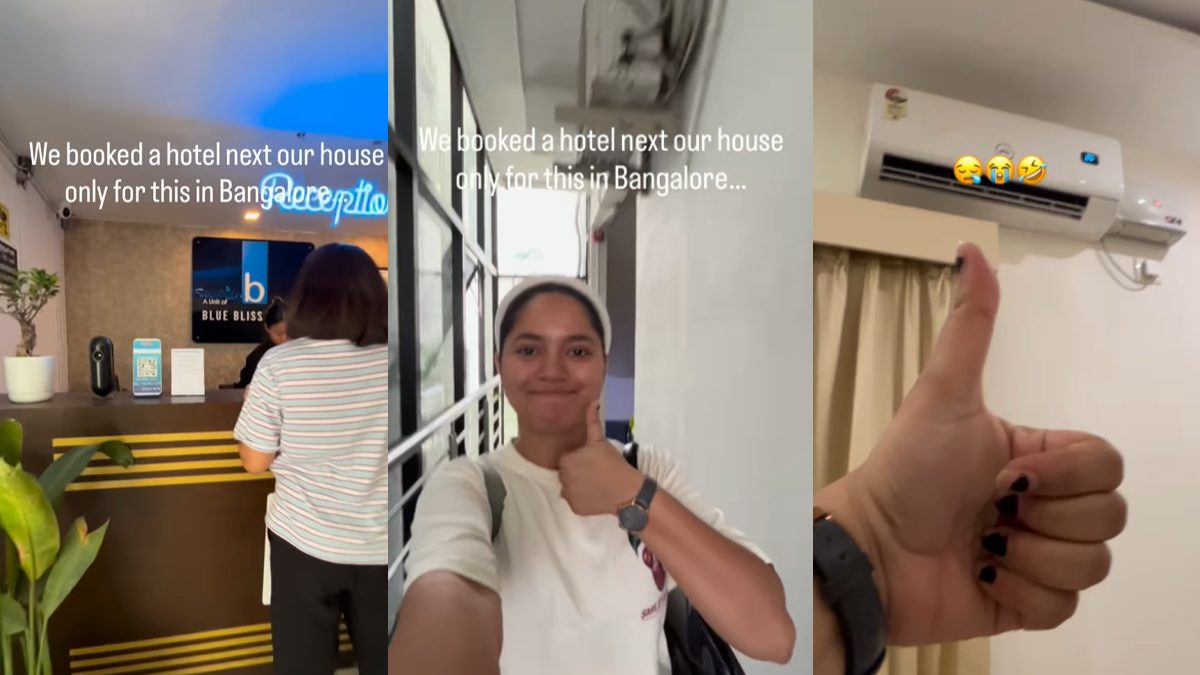
Matters such as the woman’s booking of an air-conditioned room in a nearby hotel, a solution that only allowed her to get away from the hot, muggy summer temperatures, stoked social media division. Since summer temperatures in Bengaluru have consistently stayed high, there are many residents who are hard hit to find comfort, particularly those who still have no air conditioning in their properties.
Instead of buying an AC unit to combat the heat, she moved temporarily to a room with cooling in the hotel instead. Her no-nonsense method of managing extreme weather received user praise and took off when her response appeared online. For those who rent a home or who experience short-term heat surges, they say, renting a room in a hotel for a day or two is sometimes cheaper than purchasing and paying for an air conditioner.

But the initiative has also been criticised. And others challenged the sustainability and privilege of such a choice and the notion that it’s probably not an option they’re taking or actually consuming. Others questioned energy use and whether those solutions address larger issues with the urban infrastructure and climate resilience. The case brought to focus a broader problem of how cities such as Bengaluru are dealing with rising temperatures.
Once known as a mild city, more and more heatwaves have been hitting the city lately. Residents in recent years have wondered how important a house’s thermal comfort is. This trend, experts said, is symptomatic of a wider one in urban India, where climate change and urbanisation have increased summer temperatures and decreased green space.
As a result, most households, particularly those in older buildings with inadequate ventilation, struggle to live sustainably. The woman’s choice demonstrates the economic effect of cooling options when taken together. For others, the upfront costs of an air conditioner installation, coupled with electricity bills, must cover maintenance costs.
Several other short-term solutions are also bubbling up, such as hotels, coworking areas or air-conditioned public spaces for some people. But the debate demands that urban heat stress mitigation be implemented on a long-term basis in the city.
Urban planners and policy makers are increasingly pushing for cooling approaches that push heat back down to the ground, such as more structure, tree cover, lower electricity bills, energy-saving infrastructure, and energy-saving technologies. Opinions are mixed, but the incident has done much to demonstrate what appears to be an expanding challenge for how both individuals and towns respond to rising temperatures. And as heatwaves become more frequent, conversations of this sort will only become more relevant.