A 20-year-old Bihar woman was allegedly murdered by a man she had eloped with to live a new life, police said on Saturday. The accused, named Rishabh Kumar Singh, has been arrested in Varanasi after he was allegedly living and working there under a new name.
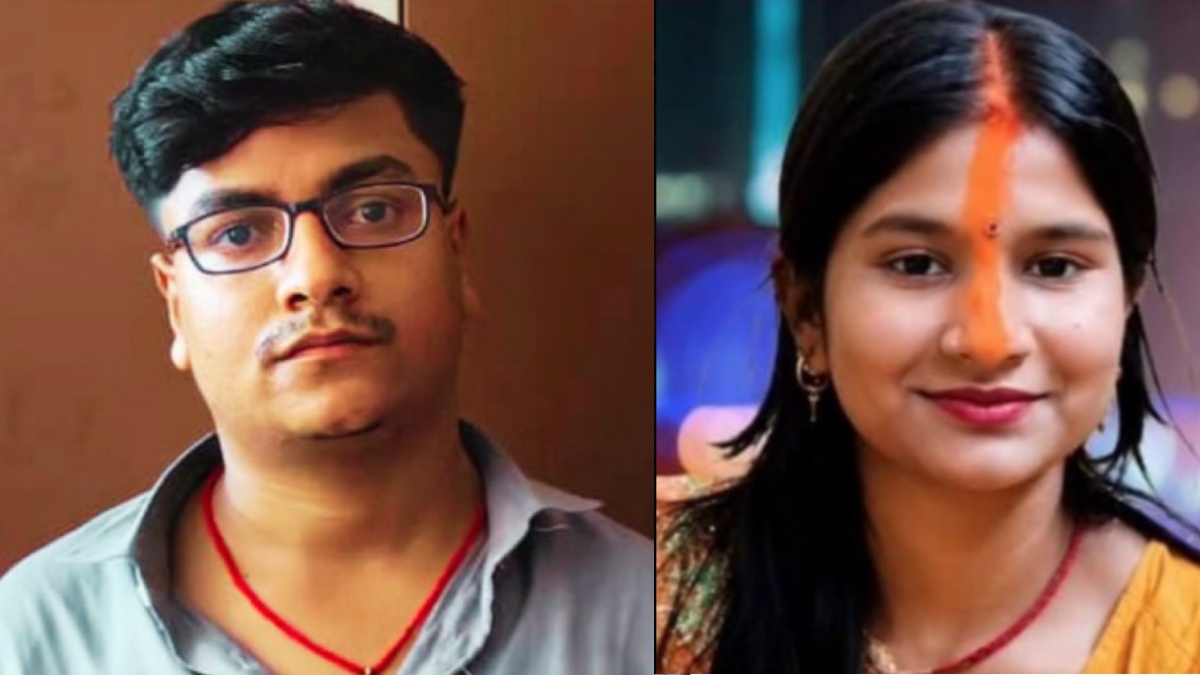
The incident took place almost two months after Chhoti Upadhyay was found dead in Dadra and Nagar Haveli.
According to the police investigation, Chhoti had been married before she started a relationship with Rishabh, who was reportedly from the same village in Nawada. The two eventually left their village together and moved to Silvassa in Dadra and Nagar Haveli. They got married there and tried to establish a life away from their families, who allegedly opposed their relationship and did not accept Chhoti.
But the relationship turned sour after the couple settled in Silvassa. Chhoti repeatedly wanted Rishabh to return to their native village, and fights over the issue had been reported, the police said. An FIR was also registered against Rishabh after the family left their village for the kidnapping incident.
The situation escalated after the couple had an argument on the morning of June 9. The police said Rishabh killed Chhoti later that day in a dispute. And then they claim the accused tried to cover up the crime and fled the area.
The alleged concealment meant that the case was not discovered for several weeks. Police said Rishabh locked the room before leaving Dadra and Nagar Haveli and went to Varanasi. There he got a job at a private company and lived under a different name in an attempt to avoid detection.
The murder was discovered on August 3, nearly two months after Chhoti was last known to be alive. The landlord had to enter the locked room because it was supposed to be rented to another person, investigators said. When they opened the door, there was an unusual smell and a suitcase in the bathroom. The contents made the landlord call the authorities.
Police then began to investigate the identity of the deceased woman and how she died. The investigation, they said, was to trace people who had been living on the property and why the room had remained locked for so long.
The investigation finally led authorities to Rishabh. Police received information that he had travelled to Varanasi after the incident. A joint police team tracked him to a private company where he had been working. He was using a different name when he was staying in the city, the investigators said.
The police team then arrested Rishabh in Varanasi. And his arrest has given investigators a chance to investigate the circumstances that led to Chhoti’s death, the couple’s movements after leaving Bihar and the reason for the accused’s departure from Dadra and Nagar Haveli.
The case has also raised questions about the difficulties couples experience when they leave their families against their wishes. The police said Chhoti and Rishabh faced opposition from their families at the start of their relationship. Their decision to move away and marry was apparently done in order to start a new life but then deteriorated into an affair.
Police will look at communication records, travel details, employment information and other evidence as part of the investigation. Such evidence could help investigators establish a timeline of the couple’s movements and determine what happened in the period between June 9 and the discovery of Chhoti’s body on August 3.
The use of a changed identity by the accused is another important aspect of the investigation. Rishabh was able to find jobs in Varanasi while concealing his real identity, the police said. Now investigators will try to find out how he travelled from Dadra and Nagar Haveli to Uttar Pradesh to see if anyone helped him after the crime.
The delay in discovering the case also shows the urgency of timely reporting when a person is missing or not contacted for a period of time. In this case, the locked premises apparently prevented discovery from being made until the landlord needed access to the room for another tenant.
The authorities are still investigating Chhoti’s death and will continue to investigate. Evidence collected at the residence, information gathered during the investigation and details gained through Rishabh’s arrest will be part of the investigation.
The accused's arrest does not establish guilt and the allegations against him will have to be examined through the legal process. The investigators will be responsible for presenting the evidence to the authorities and the court.
The case has received a lot of attention across Bihar and even beyond because of the couple’s relationship, their journey from Nawada to Silvassa and the eventual arrest of the accused in Varanasi. What started as an attempt by two people to leave their village and establish an independent life was later turned into a criminal investigation that went across the state.
Investigators will have to work to establish the full sequence of events in the next few weeks. They will need to figure out the circumstances of the alleged killing, the movements of the accused afterward and if any other people knew of the events.
A 20-year-old woman from Bihar’s Nawada district, who had left her husband and eloped with her lover to start a new life, was murdered by the same man, according to police.
— Hate Detector 🔍 (@HateDetectors) August 12, 2026
The accused then stuffed her body in a trolley suitcase, locked the room and fled from Dadra and Nagar… pic.twitter.com/H7TxMIKJi3
And the arrest in Varanasi is a big development in a case that went undiscovered for nearly two months now. As the accused is now in police custody, investigators will continue to probe him and seek evidence to determine what could have indeed been happening in Chhoti Upadhyay’s death.
But the case also serves as a reminder of the importance of dealing with relationship conflicts and family disputes through safe and lawful channels. Serious disagreements can have devastating consequences, and people who face threats, coercion or unsafe situations should seek help from trusted adults or appropriate authorities rather than attempting to address dangerous situations alone.
As the investigation continues, further details are expected to emerge regarding the events in Silvassa, the accused's travel to Varanasi and the circumstances in which police found him. The evidence collected in the investigation and the result of the judicial process will determine the answer.