India’s indigenous Kaveri engine programme has reached a crucial stage with the dry version undergoing high-altitude testing in Russia as the country works toward developing a domestic propulsion system for advanced unmanned aircraft.
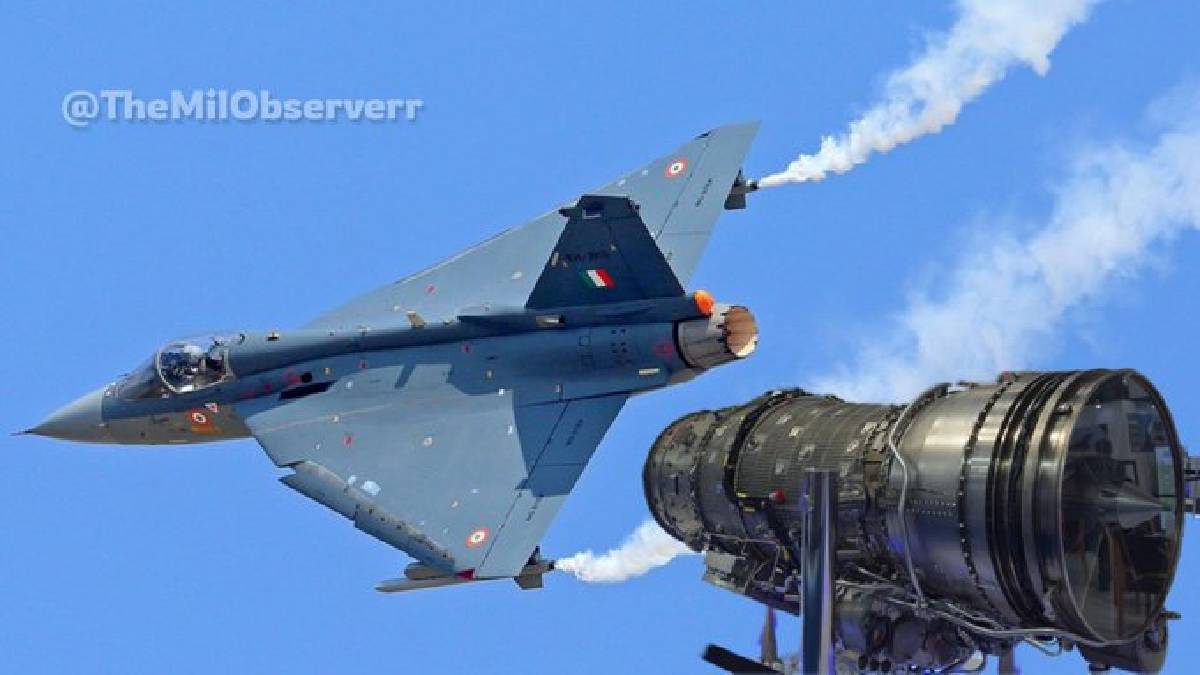
The Kaveri dry engine is being developed by the Gas Turbine Research Establishment (GTRE), a DRDO laboratory, and has been adapted to unmanned applications since the original Kaveri could not meet the thrust requirements for powering the Tejas fighter. The dry version is used for platforms like the Ghatak stealth unmanned combat aerial vehicle. DRDO has said that the dry Kaveri generates between 49 and 51 kN of thrust.
A big reason for doing the trials in Russia has been the availability of specialised high-altitude testing equipment. Aero engines need to be tested at low atmospheric pressure and temperature conditions because they can change significantly at altitudes. These specialised tests have been carried out in Russia in the past, and India has always relied on the Russian facilities for some of them.
The Kaveri dry engine was tested at Russian facilities, including the Central Institute of Aviation Motors and Gromov Flight Research Institute. In the earlier high-altitude tests, the engine was installed on an Ilyushin Il-76 flying test bed. The results of those tests show that the dry engine produced 48.5 kN of dry thrust against a simulated target of 46 kN.
The 48.5 kN figure is a huge improvement over the previous performance benchmark. But thrust is only one part of an aero-engine qualification programme. Reliability, endurance, fuel consumption, thermal performance, response to operating conditions and structural integrity are also to be established before an engine can be cleared for operation.
The Kaveri programme has been in development since the late 1980s. The intention was to work with the Light Combat Aircraft; however, due to technical difficulties, the engine was detached from the Tejas. DRDO opted to develop a dry, non-afterburning derivative of the technology gathered through the programme for unmanned platforms.
The dry configuration is especially suitable for an unmanned combat aircraft because it does not require the afterburner needed for high-speed fighter operations. Its development also allows GTRE to continue to develop knowledge in compressors, turbines, engine controls, materials and high-altitude performance.
The programme has also attracted Indian private industry. Godrej & Boyce has produced modules for the Kaveri derivative engine under a GTRE contract, marking an increase in private sector participation in indigenous aero-engine production.
Finally, certification and eventually integration into a plane will be the next step. Recent reports say the Kaveri dry engine has passed important testing stages and that final certification from the Centre for Military Airworthiness and Certification, or CEMILAC, remains necessary.
The difference between engine testing and aircraft integration is important. Successful high-altitude trials do not mean that the engine is already operational on the Ghatak airframe. More testing is needed for a working system, such as certification and installed-condition testing, to be done before the engine is ready for use.
India is also attempting to reduce dependency on overseas facilities. In Karnataka, a national aero-engine test facility is being developed for domestic testing of indigenous propulsion systems. Such a facility could potentially allow future engines to undergo a wider range of development and validation in India.
The Kaveri dry engine is thus two parallel developments in Indian aerospace. The first is a gradual development of an indigenous military propulsion technology that has been in the pipeline for decades. The second is the establishment of a domestic industrial ecosystem of DRDO laboratories and private manufacturers.
If certification and further integration were successful, the dry Kaveri would be a viable indigenous propulsion option for the Ghatak programme, and it would provide the Indian industry with the capability to manufacture and support military aero engines. And the long-term goal is far from one unmanned aircraft, as the knowledge gained by Kaveri is also relevant to India's indigenous aircraft propulsion vision.