The Karnataka government has recently passed what is being called the Hate Speech Bill. While the stated aim of the law is to control harmful speech and protect communities, many legal experts and citizens are worried about its wording and possible misuse.
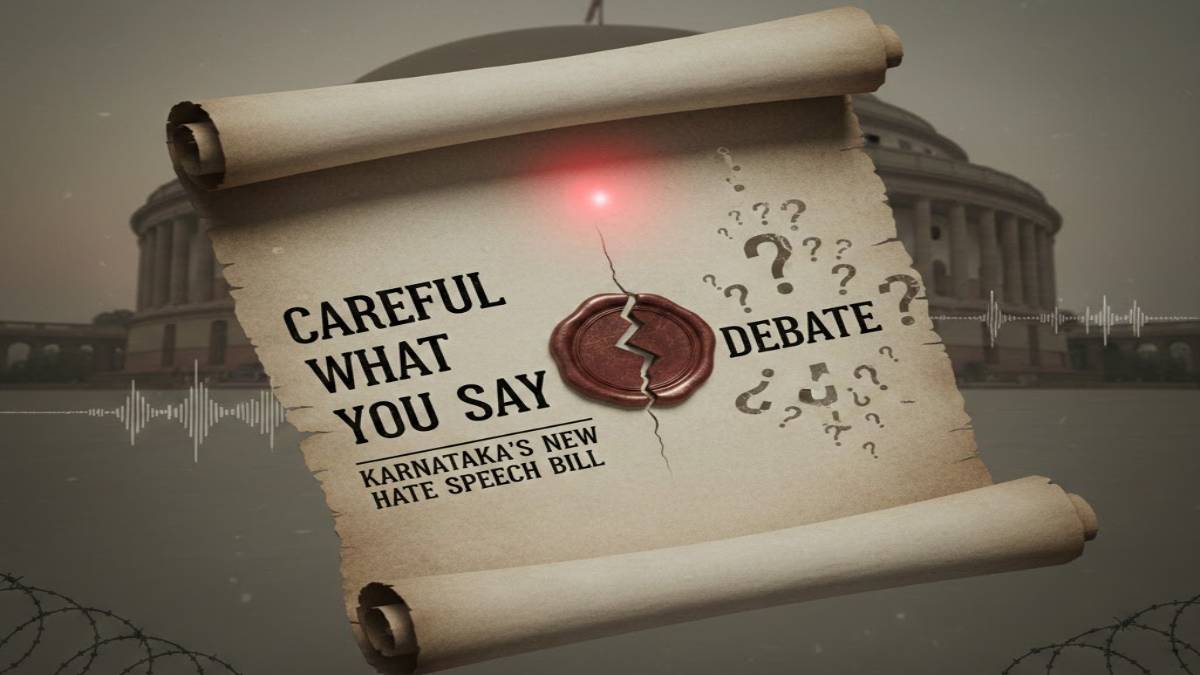
According to the bill, any spoken or written words, symbols, visible representations, electronic communication, or other forms of expression made in public that cause injury, disharmony, hatred, or feelings of ill‑will against a person, group, or community can be treated as hate speech. The law says that if such expression is made to serve a prejudiced interest, it will be punishable.
The main problem lies in the vague terms used in the bill. Words like “hatred,” “ill‑will,” and “disharmony” are not clearly defined. Because of this, almost any disagreement or criticism could be interpreted as hate speech. For example, saying that hijab should not be allowed in schools is a policy opinion. But under this definition, it could easily be treated as hatred or ill‑will. This blurs the line between political opinion and criminal offence.
Another concern is that the bill includes “individuals” as protected subjects. Traditionally, hate speech laws are meant to protect groups from collective harm or violence. But this bill extends protection to single persons. Most political, social, and moral criticism is directed at individuals such as ministers, judges, activists, religious leaders, or officials. If such criticism is filtered through vague ideas like hatred or disharmony, then the difference between lawful criticism and criminal speech becomes entirely subjective.
The bill also makes the offence cognizable and non‑bailable. This means police can arrest first and investigate later, giving them wide discretionary powers. In practice, this could turn the legal process itself into punishment, even before guilt is proven.
While the declared purpose of the law is to control real hate and protect harmony, its structure almost guarantees misuse. Critics argue that it will have a chilling effect on free expression and democratic dissent. Instead of only targeting dangerous speech that incites violence, the bill risks silencing legitimate debate and criticism.
In short, Karnataka’s Hate Speech Bill has raised serious questions. Supporters see it as a step to control harmful speech, but opponents believe it threatens free speech and could be misused against political or social critics. The coming months will show how the law is applied, but for now, it remains one of the most debated moves by the state government.