India is going to embark on a major overhaul in the way children and young adults are educated about health, safety and relationships, with the Central government telling the Supreme Court that “comprehensive sexuality education (CSE) will be introduced in schools and colleges across the country”.
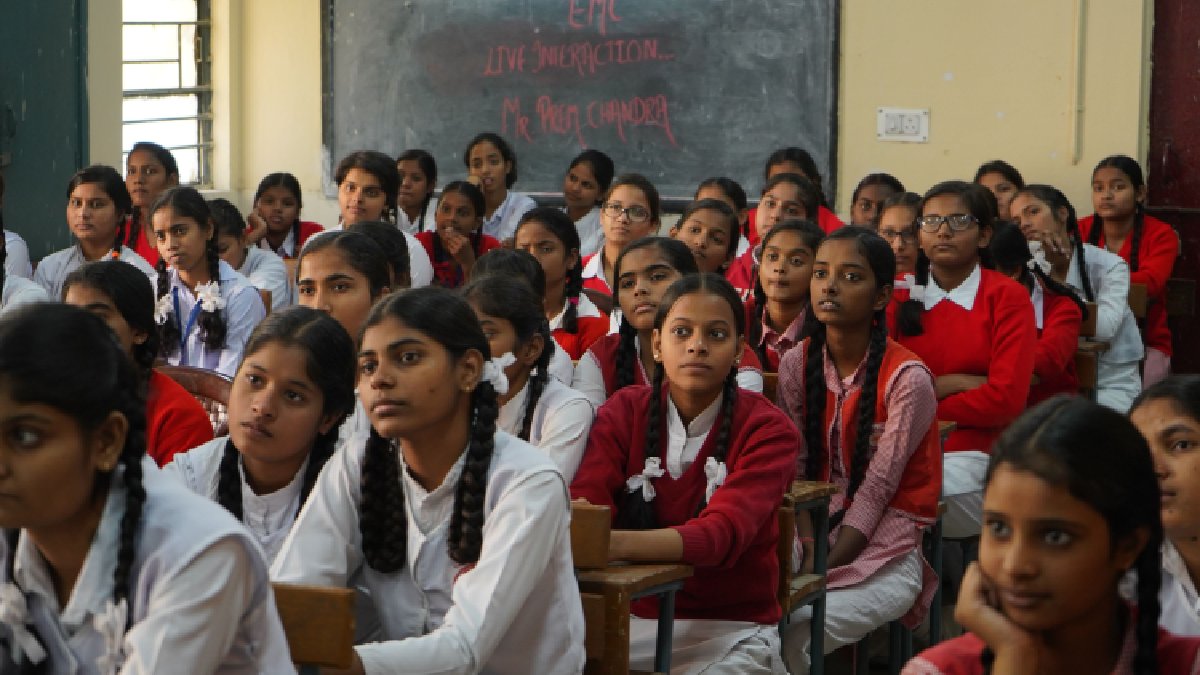
The move follows the Supreme Court’s continued observations that age-appropriate sexuality education is necessary to prevent children from being abused, develop healthy relationships and raise consciousness about reproductive health. This is a major policy change as sex education should eventually be a part of the education curriculum and will not be an optional or state-specific programme anymore.
Centre Accepts Need for Comprehensive Sexuality Education
By the government's submission before the top court, it agrees in principle to introducing comprehensive sexuality education in educational institutions. And an expert panel has also recommended that child sexual abuse awareness should be a core part of the curriculum.
The proposed programme aims to equip students with age-appropriate knowledge about bodily autonomy, consent, personal safety and how to identify and report unsafe behaviour. The entire curriculum has yet to be published, but schools and colleges will soon start integrating these topics into classroom teaching.
The initiative follows directions given by the Supreme Court when the Court heard the child sexual abuse case and the implementation of the Protection of Children from Sexual Offences (POCSO) Act.
Supreme Court Emphasised Education Over Silence
The issue gained prominence after a landmark Supreme Court judgment delivered in September 2024 in a case concerning child sexual abuse material.
The court found that sex education should not be viewed as incompatible with Indian culture. Rather, it also said comprehensive sexuality education is a child protection measure to establish healthy relationships for young people as well as protect them from abuse and exploitation.
The Supreme Court recommended that the Union government form an expert committee to develop a structured national programme covering sexuality education, reproductive health and awareness about the POCSO Act from an early age.
Moreover, when the court also heard another case about adolescent relationships in May 2025, it again said that the Centre should set up a national policy on sexual and reproductive health education and that better awareness would prevent young people from inadvertently violating strict legal provisions.
What Will Comprehensive Sexuality Education Include?
In contrast to common misconceptions, comprehensive sexuality education is far broader than lessons on human reproduction.
Internationally recognised CSE programmes are aimed at different age groups and typically address puberty, physical and emotional development, personal hygiene, consent, bodily autonomy, healthy relationships, gender sensitivity, reproductive health, digital safety and prevention of sexual abuse.
For younger children, lessons tend to focus on personal boundaries, personal safety and safe touch, privacy and how to reach out to trusted people for support.
For older students, there is more to the curriculum regarding reproductive health, emotional well-being, responsible relationships and online safety.
Why the Policy Matters
The government’s move comes as the number of crimes against children in India is on the rise in recent years.
According to the National Crime Records Bureau (NCRB), thousands of cases per year are registered under the POCSO Act, and it is clear that preventive education and greater awareness amongst children and adolescents is required for them.
Experts have always advocated that scientifically accurate and age-appropriate information enables children to identify inappropriate behaviour and to report abuse early and to make well-informed decisions about their health and well-being.
They also believe that comprehensive sexuality education is going to help dispel myths, decrease stigma around health and make the school environment safer.
A Shift Towards a Uniform National Framework
India has attempted to introduce structured sexuality education in terms of programmes such as the ‘Adolescence Education Programme (AEP)’, which was initiated with the National AIDS Control Organisation (NACO). But some states were not comfortable with or uncomfortable with this policy and it was viewed as incompatible with cultural values.
The Supreme Court has repeatedly rejected that argument, asserting that comprehensive sexuality education is compatible with Indian values when delivered in an age-appropriate and responsible manner.
The Centre’s latest assurance before the Supreme Court shows that the government is now moving towards a more uniform national framework for sexuality education.
The next step will be to build curriculum guidelines, train teachers and create age-specific learning materials that deal with scientific knowledge and child protection and cultural sensitivities.
If implemented well, the initiative might be one of the most significant reforms in India’s education system and will offer students essential life skill training and will also help in preventing child sexual abuse and promoting a healthier learning environment across the country.