Artificial Intelligence is evolving beyond simple question-and-answer interactions. Modern AI systems are becoming capable of doing complex digital work, for example, navigating websites, searching for information, filling out forms, and supporting users in online transactions.
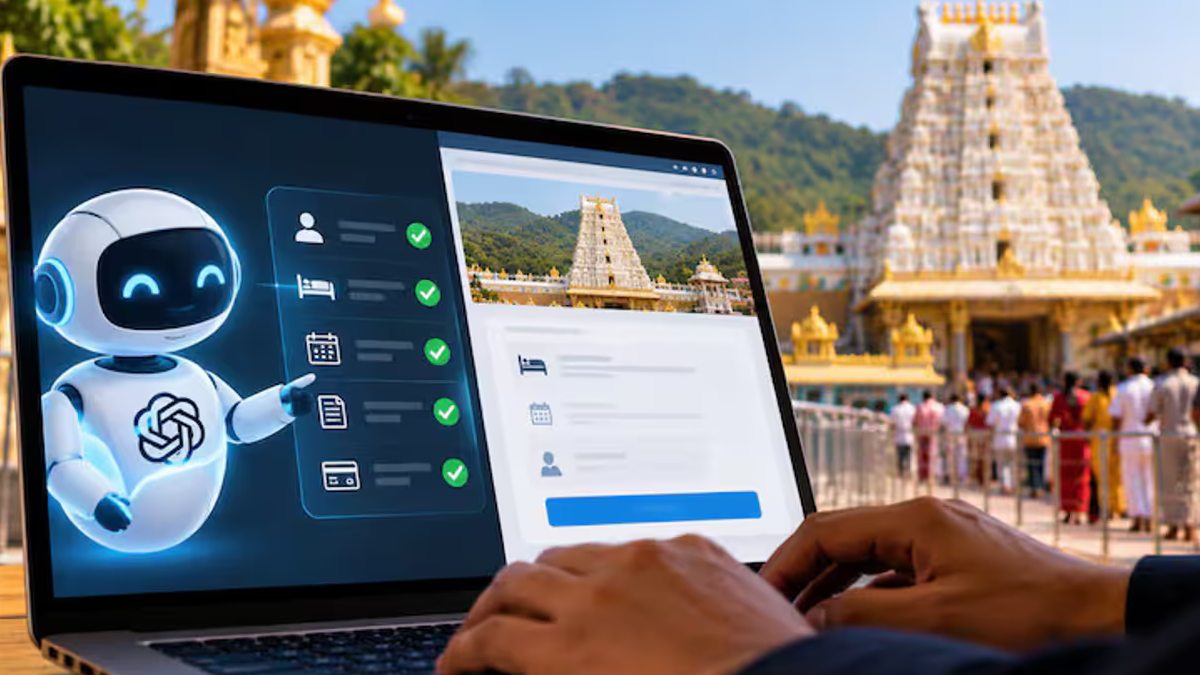
A recent viral experiment with OpenAI's ChatGPT Astra was among the first to receive a lot of attention when a tech artist demonstrated how the AI handled a large part of the accommodation booking process on the Tirumala Tirupati Devasthanams (TTD) website.
The experiment was posted by Instagram creator Pawan, who posted a video of ChatGPT Astra being instructed to book accommodation in Tirupati for a visit on December 21. According to the creator, he provided the AI with a simple prompt asking for some assistance in booking. The AI then went to the TTD portal and performed a number of steps to get the accommodation. The video quickly spread across social media as many users were surprised at the level of autonomy of the AI.
As shown in the viral clip, Astra then went through the TTD booking portal and went through various stages of reservation. Based on the information provided by the user, the AI was able to identify the booking options, fill in the required details, and navigate through the process like a human user. Astra even used his account credentials to continue and reached the final payment page.
But at the payment stage, the booking process stopped. Pawan admitted he did not provide the AI with any financial information, card information, or payment information. The transaction was not completed. This is a crucial aspect of the demonstration, as it is both a demonstration of the abilities and limitations of current AI systems. Although the AI could perform some of the tasks, sensitive financial transactions still required human intervention and authorisation.

The experiment has attracted so much attention because booking accommodation or darshan slots through the TTD portal can be hard, and there is always a lot of demand. Thousands of devotees try to secure reservations when new slots are available, and there is a lot of competition and heavy traffic on the website. The idea that an AI assistant could be used to handle these things on behalf of users has generated a lot of interest from technology lovers and regular internet users.
Besides the excitement and curiosity, the viral demonstration has also had an impact on privacy, security, and the future of AI-powered digital assistants. It is seen as a glimpse into the future in which AI systems could help people make basic online decisions like hotel reservations, ticket booking, travel plans, and appointment scheduling. But others have expressed concerns about account access, personal data security, and the trust that people have in autonomous AI agents.
We would like to note that there is no official comment from Tirumala Tirupati Devasthanams about whether any booking made through the experiment has been successful. The information we have is only from the creator's video and a description of the process. So we should view the incident as a demonstration of AI capabilities and not proof of a completed accommodation reservation.
But the experiment has succeeded in generating a conversation about how advanced AI systems have become. It shows that with some appropriate permissions and information, AI tools can already carry out some digital tasks that have historically been too hard for humans to handle. As AI technology develops further, such assistants will increasingly be instrumental in managing our everyday online activities and change the way we interact with digital services in the years to come.