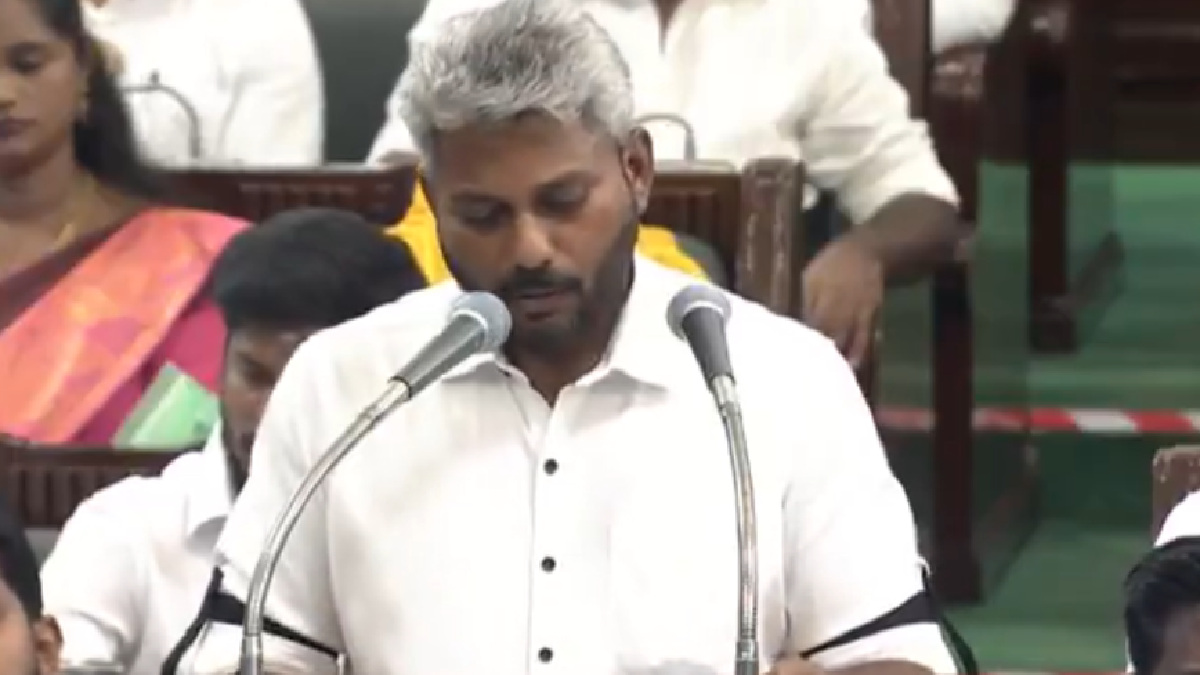
This was followed by the announcement of the Chennai–Bengaluru High-Speed Rail (HSR) corridor also known as the South Indian Bullet Train in the Union Budget 2026-27 in early February 2026. Though the core route links both main metros, Tamil Nadu BJP leader and Coimbatore South MLA Vanathi Srinivasan has advanced a revolutionary "branch" concept that would incorporate the state's bustling industrial heartland.
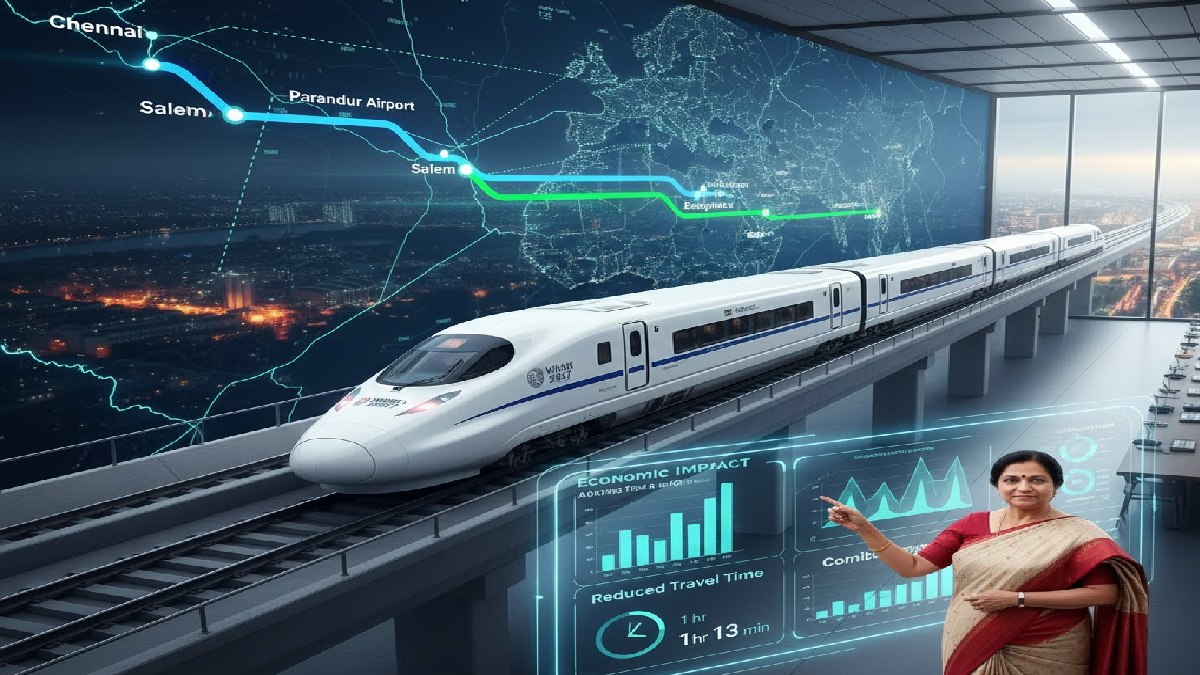
The Chennai–Bengaluru High-Speed Rail (HSR) project, which will cut travel time between the two cities to an official 1 hour and 13 minutes, is in progress. But now the National High-Speed Rail Corporation Limited (NHSRCL) is finalising its alignment and a "strategic pitch" has come to take place that ensures the project will benefit more than just the two capital cities.
Vanathi Srinivasan Proposal: The Branching Approach
Vanathi Srinivasan had objected in her letter to Union Railway Minister Ashwini Vaishnaw that a "straight-line" corridor connecting Chennai and Bengaluru neglected the economic viability of Western Tamil Nadu. She has proposed the following:
- The Salem–Coimbatore Branch: This section of the great line runs from Salem to Coimbatore; the next big spur branching off the main line at Salem itself.
- Future Extension: This plan envisions the line ultimately providing Kochi and Thiruvananthapuram as the southern part of South India, and a single high-speed spine with great continuity.
Coimbatore and Western Tamil Nadu are economic engines of South India.
— Vanathi Srinivasan (@VanathiBJP) February 5, 2026
Have requested Hon’ble Railway Minister Shri @AshwiniVaishnaw ji to consider a Salem–Coimbatore branch of the Chennai–Bengaluru High-Speed Rail, extendable to Trivandrum via Kochi integrating RRTS for maximum… pic.twitter.com/pF3MXid0vb
Why Coimbatore?
The clamor for high-speed connectivity in Coimbatore is already boiling, Srinivasan noted:
- Current Flow: Coimbatore currently hosts more than 1,000 daily bus services while 15 daily flights are integrated in Chennai and Bengaluru.
- Industrial Integration: As one of the manufacturing, textiles and MSME hubs, fast availability to the tech capital (Bengaluru) and the state capital (Chennai) would decrease business cycle time drastically.
- Synergies in Infrastructure: Integration with the newly-proposed Regional Rapid Transit System (RRTS) corridors in Tamil Nadu and Kerala would eliminate land acquisition bottlenecks and enhance ridership across the board. Project Specifications and Status as of February 2026.
Features of Chennai–Bengaluru HSR As of February 2026, the Chennai–Bengaluru HSR is to have the following elements:
- Operational Speed: 320 km/h (Max Speed: 350 km/h).
- Key Stations: Chennai Central (underground), Parandur (proposed airport), Chittoor, Kolar, Whitefield, Byappanahalli (Bengaluru).
- Current Phase: Final alignment surveys are complete and Vanathi Srinivasan urges the Centre to undertake a feasibility study for the Coimbatore branch before the final routes are “frozen.”
The Economic Vision
Provided that’s accepted, the Coimbatore branch would make a city-to-city link a regional lifeline. By linking textile clusters and IT parks to a high-speed grid, the project is in line with the national goal of Viksit Bharat 2047 and helps to form a more connected and investor-friendly Southern India.