The recent Instagram controversy in India has raised major questions about digital advertising and content moderation. Some advertisements with inappropriate or exploitative material and references were seen and reported on by users and digital watchdog discussions at the time and taken down on the platform.
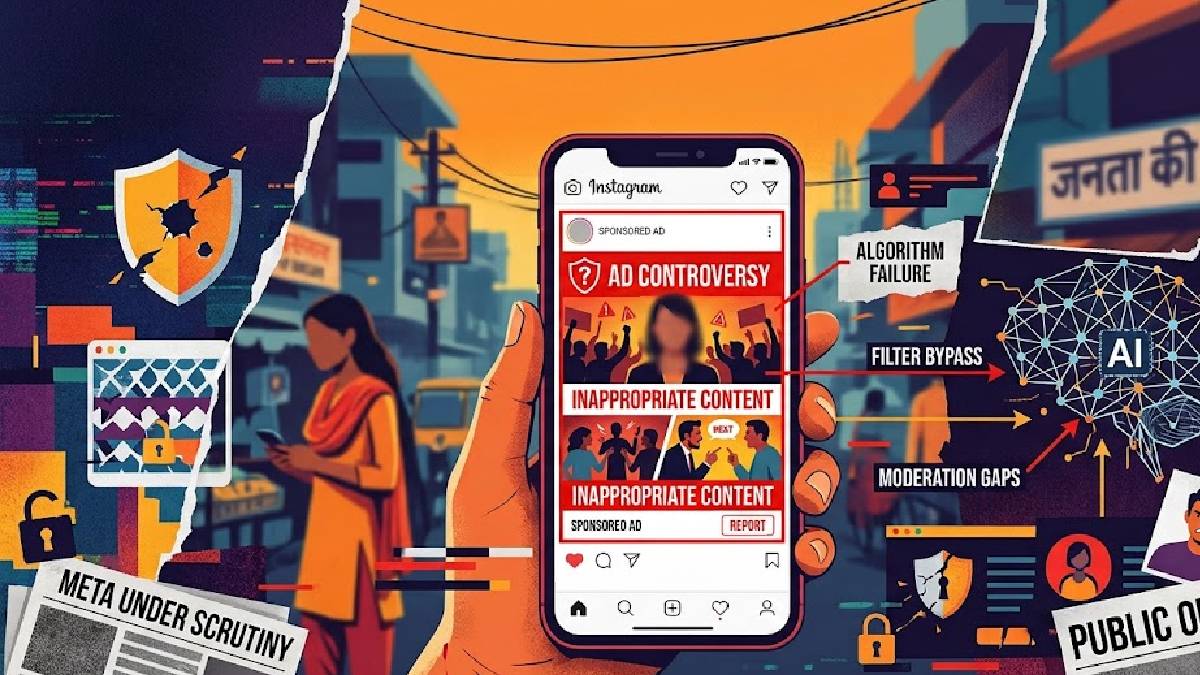
Meta has very strict advertising policies that prohibit child exploitation, abuse and any kind of harmful or sexualized content involving minors, but the incident suggests that enforcement gaps still exist in automated moderation systems.
These systems are supposed to scan millions of ads daily using artificial intelligence, but they are not foolproof. Harmful ads can sometimes slip through before human reviewers or reporting tools flag them.
In India, where Instagram has a huge and rapidly growing user base, even short exposure to such content worries parents, activists and digital safety advocates. In particular, because minors are a large part of social media users in the country, concerns are particularly high.
Researchers say the problem may stem from a number of factors: advertisers taking advantage of loopholes in ad submission systems, delays in manual review processes, and failures of AI-based content detection if context or coded language is used. In some cases, malicious actors disguise harmful intent using ambiguous visuals or text that bypass initial filters.

Meta has previously said it is heavily invested in safety infrastructure such as AI moderation tools, third party fact-checking partnerships, and user reporting mechanisms. But critics say reactive systems where content is removed only after it is reported aren’t enough to prevent harm in real time.
Digital rights advocates in India are now calling for stricter enforcement, faster response times, and greater transparency in how ads are approved and monitored. Local moderation teams, or regional teams with better understanding of regional languages, slang, and cultural signals that automated systems may miss, they have also suggested.
The controversy also illustrates a larger global issue balancing scale with safety. Instagram and similar platforms are generating billions of ad impressions daily, so perfect moderation can be very difficult. But child safety violations are considered the most serious and typically lead to immediate policy reviews.
This incident should remind users to report suspicious content and use the existing safety tools as ad feedback, content restrictions and parental controls.
With investigations ongoing and discussions continuing, Meta needs to make sure no harmful advertisements can be used again. The findings of these investigations could affect future advertising policy in India, and also in international markets where platform safety is still at the forefront.