India and Japan have taken another step towards a joint defence and maritime partnership with each other. They signed a Memorandum of Arrangement on Maritime Security Cooperation on Thursday in New Delhi.
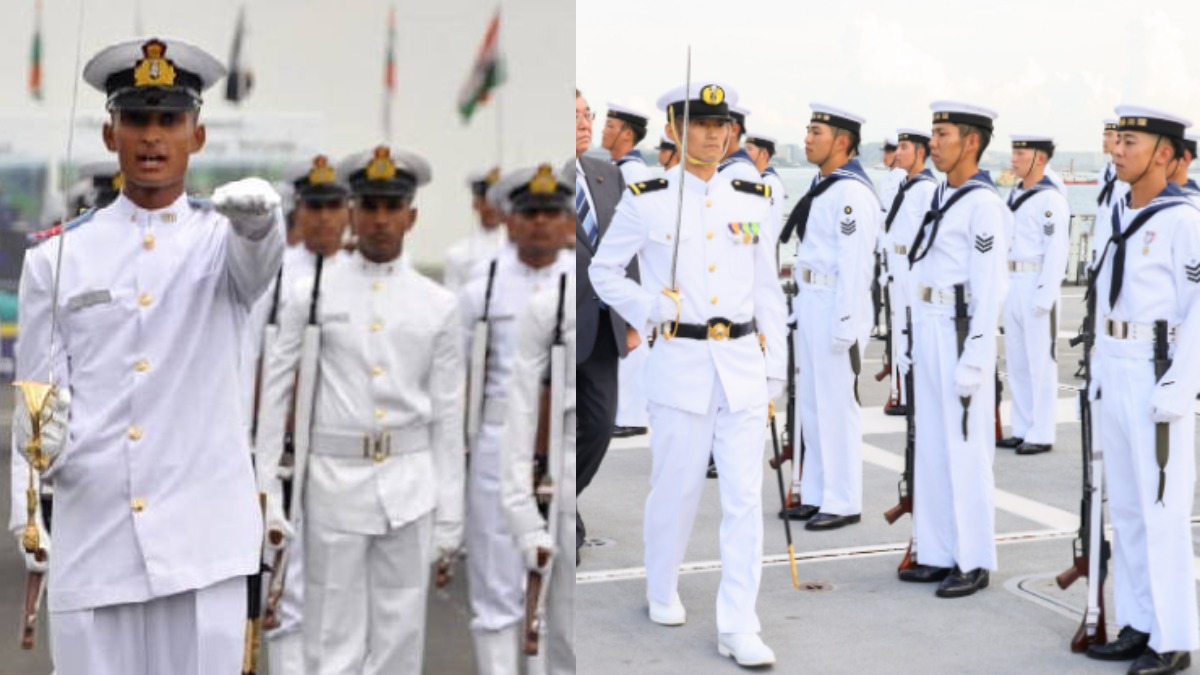
Defence Minister Rajnath Singh and Japanese Defence Minister Shinjiro Koizumi signed the agreement yesterday. The pact will strengthen cooperation between the Indian Navy and Japan Maritime Self-Defense Force.
The agreement comes as India and Japan step up security cooperation in the Indo Pacific region. India and Japan have also reaffirmed their support for a free and open Indo-Pacific.
The new arrangement includes maritime domain awareness, information sharing, search and rescue operations, and humanitarian assistance in disaster situations.
The two countries also aim at increasing naval cooperation and shipbuilding and ship repair.
What does the India-Japan maritime pact cover?
One of the key areas of the agreement is Maritime Domain Awareness, or MDA.
MDA allows countries to provide a clearer picture of the activities taking place at sea. It is about collecting and sharing information about vessels, maritime movements and developments in surrounding waters.
India and Japan will coordinate their naval forces to better share information. So they can deal with maritime security challenges more effectively.
The agreement also covers search and rescue. India and Japan can work together during emergencies at sea and improve coordination in the event that ships or people need help.
Humanitarian support and disaster relief are also part of the partnership. Both countries face natural disasters and better coordination could help them react faster in an emergency.
There was also agreement between the two sides to increase mutual visits by naval ships and units. They will conduct joint exercises and encourage exchanges between personnel and experts.
Logistical support is another focus area. They are using ports more and more and maintenance and repair facilities.
The countries also want to enhance coordination to protect key sea routes, known as Sea Lines of Communication. International trade relies on these routes because the majority of global goods move by sea.
The agreement is a natural progression of defence cooperation between India and Japan over the years of time. Such cooperation already includes naval exercises and other military exchanges.
The two countries conducted the JAIMEX naval exercise and have been expanding cooperation between their armed forces. At the India Japan annual summit in July, both countries had already agreed to enhance maritime security cooperation through exercises, MDA with satellite technology, and joint naval maintenance, repair and overhaul with each other.
Ship Repair and Shipbuilding Get Major Push
Ship repair is also a major part of the new maritime cooperation.
India and Japan have agreed to work together to reach mutual access to ship repair facilities. A separate ship repair arrangement is expected to take place in the near future.
This will also be a new opportunity for Indian shipyards.
India has been trying to enhance its shipbuilding and ship repair capabilities as part of its broader efforts to develop the domestic maritime industry. India’s shipbuilding capacity as well as maritime financing and skills have already been fortified with a package of Rs 69,725 crore.
Japan has more experience in shipbuilding and maritime technology. Combining Japanese technical expertise with India’s manufacturing and production capabilities could help both sides develop new opportunities in the sector.
The two countries have also agreed to explore joint development of naval shipbuilding and ship design. They will also look at the use of the Indian shipbuilding capabilities under the Make in India framework.
The agreement could therefore have benefits beyond military cooperation. More collaboration in shipbuilding could help India to develop its domestic manufacturing industry and technical and industrial skills.
The countries also discussed defence technology and equipment cooperation. India welcomed Japan’s review of its defence equipment and technology transfer framework.
Both sides have agreed to further cooperation in the defence industry and will hold a Defence Industry Forum.
The maritime partnership also comes at a time when both countries are paying close attention to security developments in the Indo Pacific.
India and Japan have always supported the concept of a free and open Indo Pacific and have resisted unilateral action that may threaten freedom of navigation and overflight.
The new agreement does not establish a military alliance between India and Japan. It is, however, a framework for deeper bilateral maritime cooperation between their maritime forces.
The focus is on information sharing, exercises, logistics, disaster response, ship repair and shipbuilding.
And for India the agreement will enhance access to maritime support and strengthen its naval capabilities. For Japan, a better relationship with India will allow for its broader participation in the Indo-Pacific.
The two countries are also expected to increase the complexity of their naval exercises. They’ve talked about unmanned systems and exercises that may be done at short notice.
Cooperation on mine countermeasures and exchanges between special operations forces are also being explored.
The new maritime pact therefore represents another step in the steady expansion of India-Japan defence ties.
There is a move from those naval exercises and maritime surveillance to ship repair and shipbuilding work on the part of the partnership to more practical cooperation.
As both countries navigate a changing security landscape in the Indo-Pacific, better coordination at sea is likely to be even more crucial.
If India is to have a strong domestic shipbuilding and maritime repair industry, the agreement is a game-changer for India.
Now we are in the next phase of translating the commitments into actual projects, exercises and agreements. If that happens, the pact will have a long term impact on both countries' naval capabilities and their wider maritime partnership.