Chief Justice of India Justice Surya Kant has strongly criticised the Bar Council of India's decision to prevent the 2026 graduates of NALSAR University of Law from enrolling as advocates, calling it “absolutely unnecessary” and “totally uncalled for.” It comes as NALSAR students have expressed their reservations over the Chief Justice’s invitation to be chief guest at the convocation in the university.
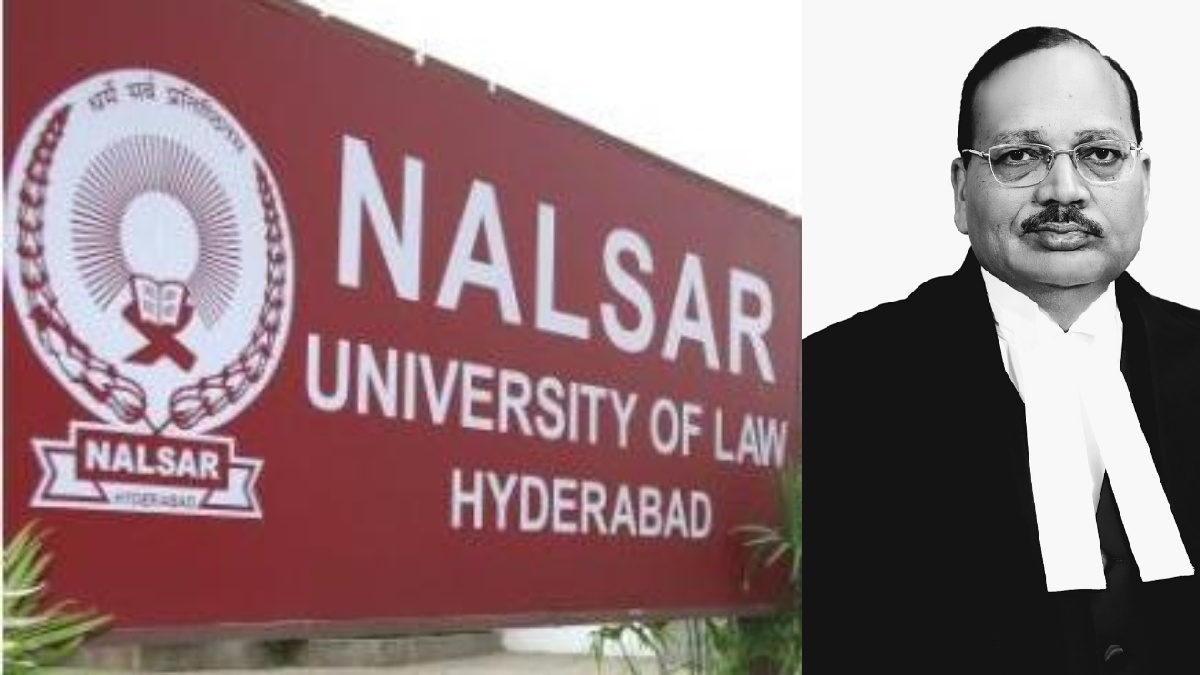
The CJI said students should be allowed to express their views peacefully and that the BCI should not interfere with their right to raise concerns. Justice Surya Kant said if students had a reason to protest, the BCI had no business in preventing them from doing so. He also pointed out that the communication from students to him was a matter of dialogue between the students and the Chief Justice.
The BCI had already ordered state bar councils not to take in any 2026 graduate of NALSAR as an advocate until further instructions. The regulator also wanted to know who was to blame for the controversies. It was a controversial decision because it might affect an entire graduating batch instead of taking action against a few people who might have been guilty.
The matter then reached the Supreme Court, where the Chief Justice took a strong view on the proposed punitive measures. The court ordered that no punitive action should be taken against students or faculty members of NALSAR or other national law universities in connection with the incidents referred to in the students’ communications.
The BCI informed the court in the meantime that the controversial circular was withdrawn. The court accepted the submission and gave the BCI two weeks to submit its counter affidavit. Despite the withdrawal, the Supreme Court held that there should be no punitive action taken against NALSAR students for the types of incidents mentioned in the letters.
The CJI also appeared to reassure the students that participating in protests or expressing strong opinions in university life can be done without permanently damaging their academic prospects. “Even if a young person makes an erroneous statement, that does not take away their fundamental right to protest or express an opinion.”
Justice Surya Kant also encouraged the students to continue doing their legal work and wanted them to get enrolled and join the Supreme Court Bar. He said they could be considered for legal aid opportunities, too. It was said that his comments were to prevent the controversy from deterring students from pursuing their professional aspirations.
What Triggered the NALSAR Controversy?
The dispute began after NALSAR students wrote to the university’s Vice-Chancellor, Registrar and professors in July to oppose a proposal to invite the CJI as the chief guest of the convocation at the university. The date for the convocation was not yet known at the time of the dispute.
The students’ objections and the subsequent developments led the BCI to seek information about the matter. On Thursday, the council issued its controversial advice to state bar councils to not enrol NALSAR’s 2026 graduates until further orders. The move quickly triggered criticism and an uproar on social media.
Within hours, the BCI reversed the order and withdrew the circular. The council will make its final decision on the matter on August 19 after reviewing the material before it.
The episode has raised deeper questions about the relationship between legal education institutions, students and professional regulatory institutions. Enrolment as an advocate is a key step for law graduates seeking to enter legal practice, so any blanket restriction on an entire graduating class is highly significant.
The Supreme Court’s intervention is, for now, the best option for the students affected by NALSAR graduates. The court’s order not to use punitive action also highlights the necessity of letting students speak up and say what they feel on the other side and to express their opinion peacefully without the consequences of not being able to do so on professional grounds.
The case is expected to remain under scrutiny until the BCI presents its detailed response. For NALSAR graduates, the immediate concern over enrolment has eased after the withdrawal of the circular and the Supreme Court’s clear direction against punitive action.