New Delhi: For millions of young Indians preparing for government jobs and competitive examinations, the pathway to getting a job is not so easy. Expected delays in exams, recruitment delays, administrative hurdles, and leakages of question papers have caused the aspirants to become frustrated in preparation for these highly competitive exams.
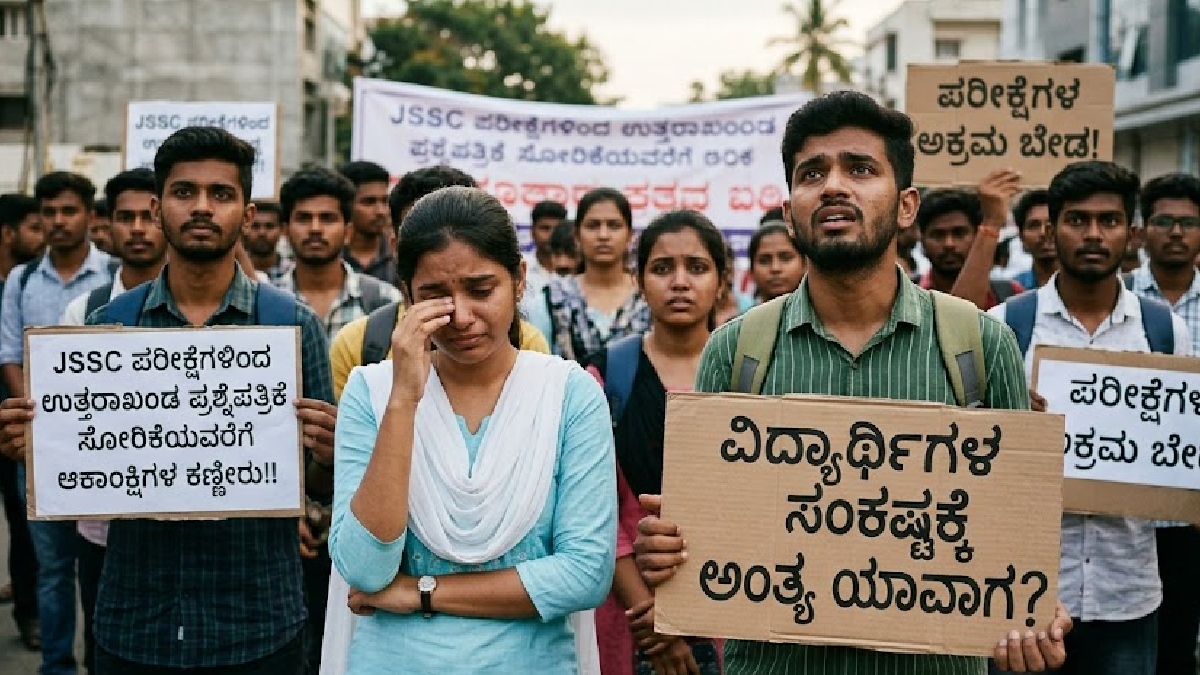
In several states, candidates have been repeatedly affected by disruption that not only delays recruitment but also affects their confidence, finances and mental health. From long-drawn-out examinations by the Jharkhand Staff Selection Commission (JSSC) to question paper leak cases in Uttarakhand, the questions of integrity and efficiency of the examination system are becoming more and more serious.
A recurring problem is that recruitment exams are delayed and results are never declared. Many aspirants spend years preparing and leave jobs or higher education in the name of government jobs. But when exams are postponed, or recruitment processes are incomplete for months or even years, candidates face uncertainty.
To add to these challenges are the issues of question paper leaks that have repeatedly undermined public confidence in the quality of the examination system. A few times in India, leaked question papers have led to examinations being postponed and/or cancelled, forcing honest candidates to prepare again, despite having done no wrong.
The situation in Uttarakhand, where question paper leak cases have drawn significant public attention in recent years, highlighted the need for stronger security measures during the examination process. The investigating agencies have taken action against several individuals accused of involvement in such cases, but aspirants continue to demand stricter safeguards to prevent future leaks.
The delays in the recruitment examinations conducted by JSSC are also a major concern for those candidates waiting for government jobs of all kinds. Long waiting times for JSSC recruitment exam results have become a major hurdle for aspirants hoping to work in various government departments. Prolonged recruitment cycles reduce the upper-age eligibility window for many candidates and increase financial pressure on families supporting years of preparation.
In addition to the academic preparation, these uncertainties can have a major emotional impact on students. Many candidates relocate to coaching centres, spend a lot of money on study materials and coaching classes, and dedicate several years solely to exam preparation. Every postponed exam or cancelled test means more money, longer uncertainty, and higher stress.
Education professionals have repeatedly stressed the importance of conducting exams in a transparent, timely, and secure manner. To build trust in the system, they say, digital security needs to be improved, coordination of administration needs to be strengthened, monitoring mechanisms should be put in place, and decision-makers accountable for recruitment processes need to be held to account.
Student groups in various states have also suggested quicker recruitment, time-bound examination calendars, transparent investigations into paper leak cases, and stricter punishment of violators of examinations.
For millions of government job aspirants, competitive exams are more than just a test; they represent financial stability, career growth and a better future. Any deviation from that plan not only affects the quality of the individual candidate but also affects public recruitment as a whole.
But until there are systemic reforms in place and their implementation, many candidates will continue in a cycle of preparation, postponement and uncertainty.