The Aerocity, a contemporary business and hospitality district of Delhi, just adjacent to Indira Gandhi International Airport, is now the place of attention, not for its luxury hotels or corporate offices but for its clean streets and good public infrastructure.
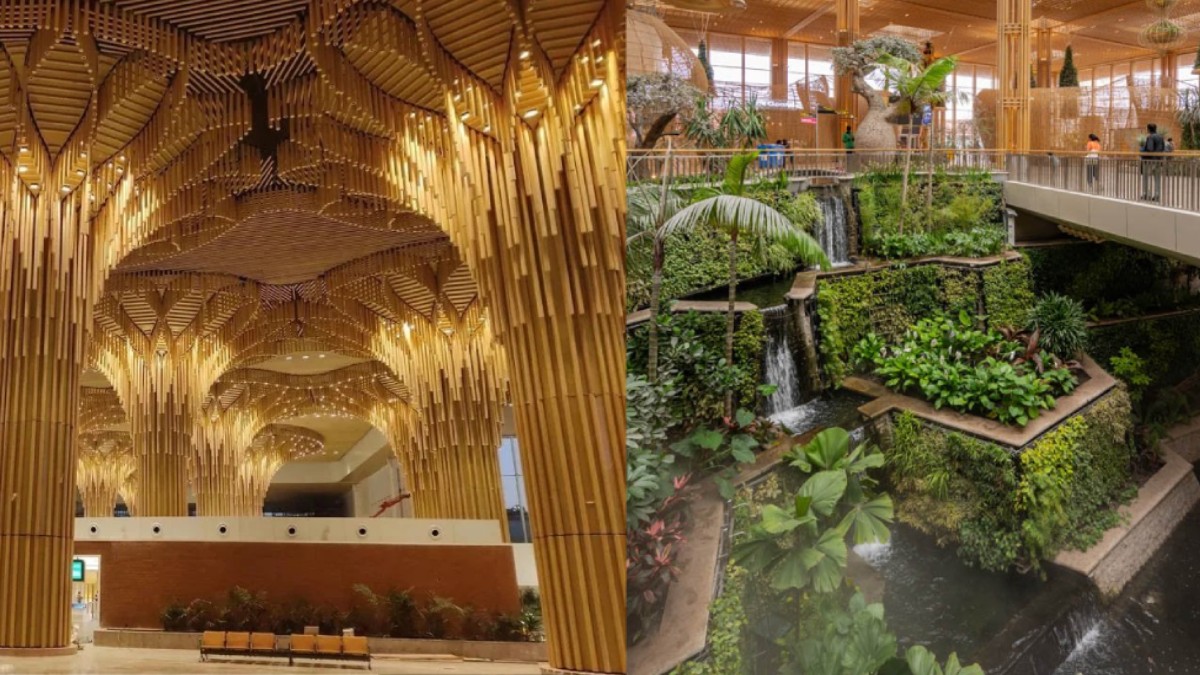
Though photographs and videos of the area’s clean roads and clean public spaces are still popping up on social media, residents have begun to compare Aerocity’s urban management with the urban conditions of other parts of the national capital. The contrast has revived a debate on whether private management models could enhance civic services in Delhi.
People around the world may not know: India is opening an airport or terminal every 75 days. Some 80 airports have been built in the last 10 years, more than what India has built in the preceding 7 decades since independence. And the airports look like this. pic.twitter.com/IKTzUMvlML
— Aravind (@aravind) July 6, 2026
A Modern Aerotropolis
Aerocity is spread over more than 230 acres of land and has been developed by Delhi International Airport Limited (DIAL) since 2011 to be a world-class aerotropolis for business travelers, tourists, and multinational companies.
The district features:
Wide, pedestrian-friendly sidewalks
Underground utility networks
Landscaped green spaces
Rainwater harvesting systems
Modern drainage infrastructure
Dedicated parking facilities
Round-the-clock private security
Well-maintained roads and public areas
These features have helped Aerocity become one of India’s most organized commercial districts.
Home to Hotels and Premium Offices
Aerocity has evolved into a major commercial hub with 11 international hotels, premium Grade-A office spaces, restaurants, retail outlets, and the rapidly expanding Worldmark business complex.
Its proximity to the airport has made it a preferred place of choice for multinational corporations, business travelers, conferences, and hospitality institutions and hospitality chains.
The district was designed to be connected to the community and to have clean and public facilities to the best of our ability.
Comparisons With Delhi’s Civic Administration
Aerocity’s clean environment has led many residents and urban planners to compare it with areas maintained by the Municipal Corporation of Delhi (MCD).
Many parts of Delhi still have a chronic problem of overflowing garbage bins, damaged roads, clogged drains, and irregular maintenance, even with enormous civic budgets.
There is support for Aerocity’s model because private management enables quicker decision-making, better accountability, and better maintenance of public infrastructure.
Waste Management Dispute
Aerocity’s civic management model also got legal backing when the Delhi High Court, in September last year, upheld DIAL's authority over waste management within the Aerocity area.
The company should continue to provide sanitation and municipal services in the commercial area as it has been required to do, the court ruled.
The judgment has been frequently mentioned in discussions of alternative governance models for urban infrastructure.
Critics Urge Caution
While many praise Aerocity’s high standards, urban experts are not comfortable drawing direct comparisons with the rest of Delhi.
Unlike typical city neighborhoods, Aerocity is mostly a planned commercial district that consists of hotels, office buildings, and businesses. It is not a city with densely populated residential colonies, traditional markets, or mixed-use neighborhoods that place far heavier demands on civic infrastructure.
But management of a commercial enclave is very different from maintaining services for millions of residents in a sprawling metropolis.
Lessons for Urban Development
But Aerocity is increasingly seen as one of the best examples of how integrated planning, modern infrastructure, and maintenance can change public spaces.
Urban planners say that while the exact management model may not be directly replicable across the entire city, several of the practices would be possible in other parts of Delhi (underground utility planning, preventative maintenance, waste collection, better pedestrian infrastructure, and accountability-driven governance).
As India’s cities continue to expand, Aerocity’s success has also been considered in the context of the wider conversation on how future urban development will allow for the merger of public oversight and operational efficiency to create cleaner, safer, and better-managed public spaces.