The Cyber Police Station in Delhi has arrested a person who identified himself as an independent journalist in connection with the alleged circulation of a fabricated video targeting Sh. Vivek Bhagat, ACP, Delhi Police.
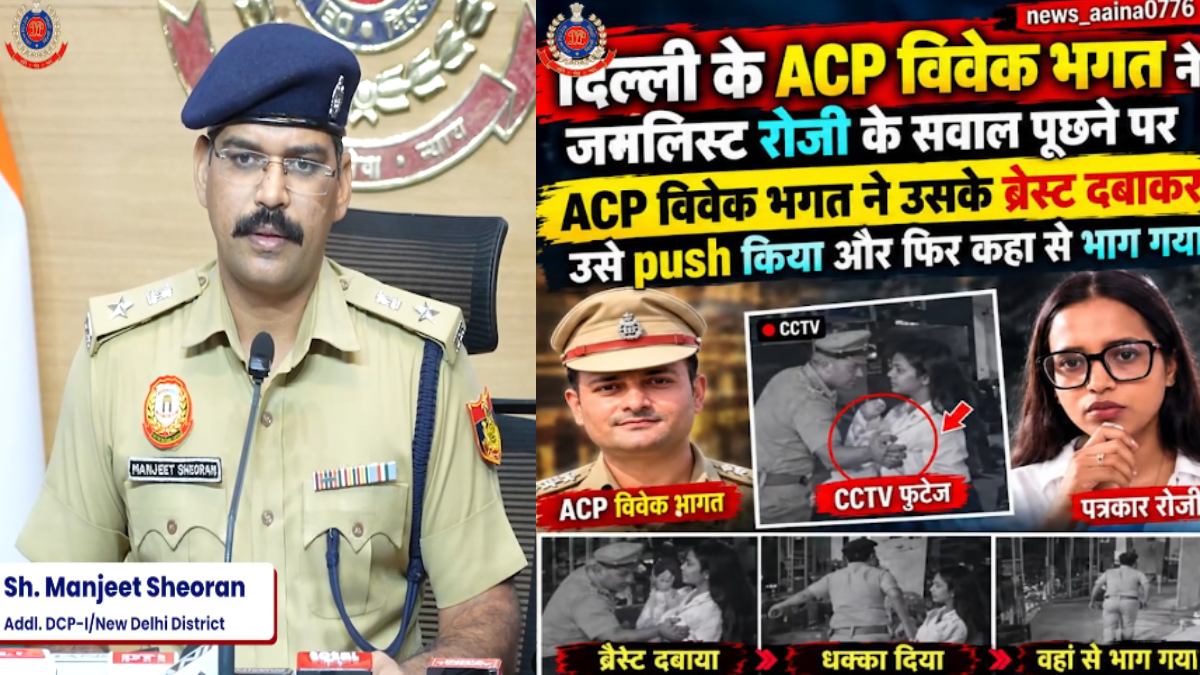
According to the police, the accused allegedly circulated an incriminating video reel through an Instagram account and presented it as authentic, despite the video being allegedly fabricated.
The case raises questions about social media platforms being used to promote manipulated or misleading media for public officials. Short-form videos and reels of that nature can be seen very easily by many people in a short time, and authorities are increasingly focused on identifying the origin of such content and the individuals responsible for it.
According to the Delhi Police’s report, the accused circulated the video that portrayed ACP Vivek Bhagat in a negative light. The police said that the content was fake and it was presented to viewers as genuine. This led to the Cyber Police Station investigating and subsequently arresting the accused.
The police also reported that the mobile phone allegedly used to distribute the video was recovered during the investigation. Because electronic devices may contain information about the creation, storage, editing, or dissemination of digital material, the recovery of the device would be significant from a digital-forensics perspective. The investigators can look at some digital evidence that may help to determine how the video was obtained, processed, and circulated.
Social media platforms such as Instagram have become important channels for news, commentary, and public communication. But the fast spread of such content also creates difficulties when digitally altered or fabricated material is presented as genuine information. Once the video is widely circulated, correcting the information can be much more difficult than it was at the beginning.
The case of the alleged fabricated video also provides further evidence that we need to verify digital content before sharing it. Videos can be doctored, distorted, and taken out of context, and the appearance of an even seemingly authentic recording does not mean that the material is genuine. Users who share such content without verification may contribute to its spreading.
For law enforcement agencies, a detailed investigation in such cases can involve several stages, including identifying the social media account, establishing the source of the content, examining digital devices, and analyzing the online activity associated with the alleged circulation. Digital evidence can help the investigators reconstruct the series of events and the movement of content from accounts or platforms.
In this case, Delhi Police said the accused used an Instagram account to spread the supposed fabricated video as authentic. The recovery of the mobile phone that is allegedly used for the circulation provides investigators with an electronic device that may be examined as part of the ongoing legal process.
The incident also raises broader questions about the responsibilities of individuals who describe themselves as journalists or independent media professionals when publishing information online. Journalism involves verification and responsible presentation of information when allegations or claims concern identifiable individuals and public officials, which is certainly the case in the context of social media publishing.
At the same time, an arrest is an allegation and the start of a legal process and not a final determination of guilt. The accused will be allowed to contest the allegations through legal processes, and the evidence will then be examined under the applicable law.
Team of Cyber Police station, @DCPNewDelhi arrested one self claimed independent journalist for circulating a fabricated video falsely portraying Sh. Vivek Bhagat, ACP, Delhi Police in bad light. The accused person circulated the incriminating video reel through one Instagram account as authentic. The mobile phone used for its circulation was also recovered. @LtGovDelhi #DPUpdates #HelloDelhiPolice
— Delhi Police (@DelhiPolice) October 6, 2026
The Delhi Cyber Police action is yet another testimony to the increasing role of cybercrime units in dealing with digital content-related complaints. With social media becoming an increasingly ubiquitous feature of daily communication, law enforcement and other government institutions are turning to digital investigation technologies to trace illegal or deceptive online activities and conduct investigations based on these activities.
The case of ACP Vivek Bhagat is far bigger than just one allegedly fabricated video. It is a reflection of the challenges that authorities, journalists, social media users, and technology platforms face in an environment that is rapidly spreading manipulated content. The recovery of the phone, as well as the investigation into the Instagram account, are all going to form part of the evidence-gathering process of the case.