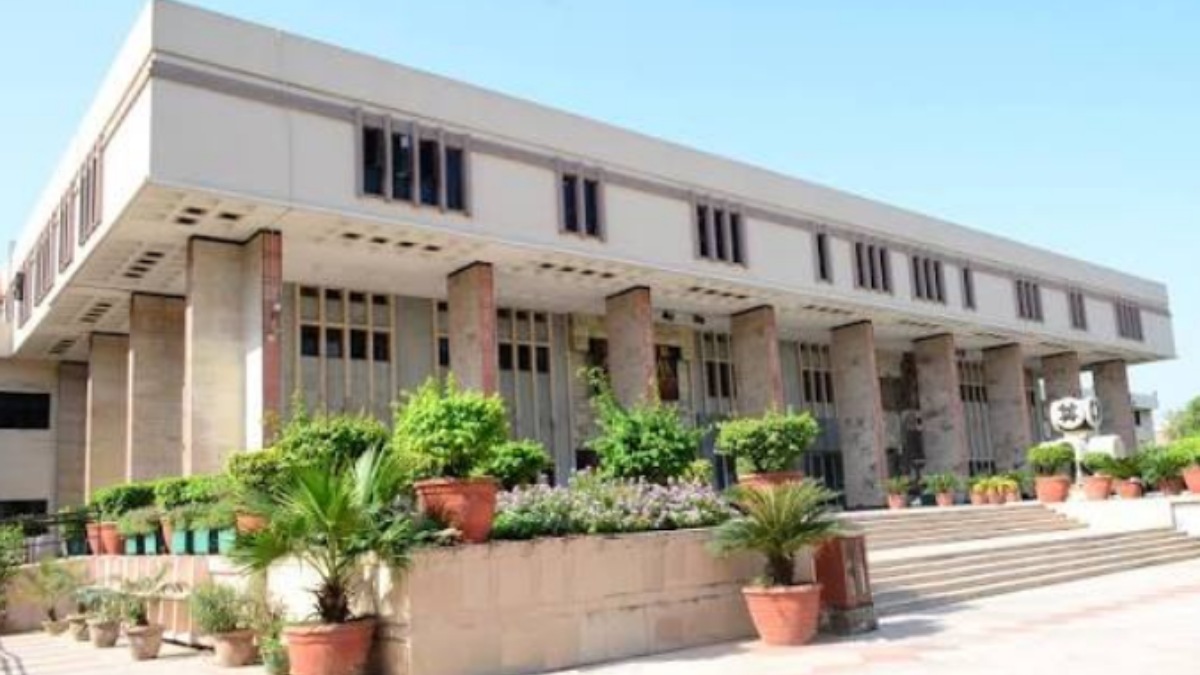
The Delhi High Court has ordered Moti alias Mohit to be released for the first time in more than two decades from prison after the court’s decision to revoke the conviction of the life convict after it found that there are serious shortcomings in the way in which authorities did not consider his request for early release and the authorities did not take into account his case for a life sentence because of procedural flaws in how authorities took into account his request for release. The court ruled that the repeated rejection of his appeal by the Sentence Review Board (SRB) and the rejection of his case by them in court did not show any genuine and fresh consideration of his case.
Justice Girish Kathpalia started the judgment by reading a prayer from the Rig Veda, and Oscar Wilde's well-known observation: “No saint is without a past, no sinner without a future.” The reference highlighted the court's emphasis on rehabilitation and the possibility of reform, particularly when a prisoner has spent a significant portion of his life in prison.
Moti had been convicted in a 2004 double murder and theft case and his conviction and sentence were upheld by the Delhi High Court and the Supreme Court of India. By the time his premature release was considered, he had completed more than 20 years of actual imprisonment and over 24 years when remission was taken into account.
Even after a long period of imprisonment, the SRB rejected his early release request on several occasions. The fifth rejection was again the subject of the latest court case in the High Court. Moti said the authorities had not revisited his case and it had been made clear that the court needed to re-examine it.
The High Court found much to be the case. The SRB's decision, according to the judgment, was very similar to its previous decisions and did not represent a meaningful reassessment of the factors for Moti’s release. Justice Kathpalia also argued that punishment, even if it is necessary for wrongdoing, cannot continue indefinitely without consideration for reform and rehabilitation.

The court particularly studied the police verification report which was prepared in Moti's case. It was favourable for him and stated that his only criminal involvement was in the case for which he had been convicted. It also stated that he was not associated with criminal gangs and that there had been no reported act of indiscipline, aggression or violence at times when he was released on bail, parole or furlough.
But despite the veracity of the verification report, the concerned Deputy Commissioner of Police did not recommend premature release. The High Court questioned the apparent contradiction between the favourable findings in the police report and the DCP's decision not to recommend release.
When asked to explain the discrepancy, the DCP made additional observations which were not present in the original verification report. Justice Kathpalia found the explanation unsatisfactory and concluded that the non-recommendation appeared to have been a lack of proper application of mind. The court also held that this defect affected the SRB decision and therefore it was an issue.
Moti’s conduct and progress during his long term in prison was also evaluated. He was a first-time offender without objectionable criminal past, it said.
Moti finished his graduation in prison and held several positions within the prison system. He was a store assistant, plumber, control room attendant, office attendant and video conferencing attendant. These roles were in line with the court’s view of constructive engagement and rehabilitation rather than continued criminal behaviour, the court said.
But his conduct outside prison also had to be considered. Moti had been released temporarily and worked as an attendant at a restaurant and used his earnings to support his family. He wanted to work in the restaurant field after he was released and said he wanted to reintegrate into society.
The authorities had also relied on a 2018 jail sentence for possession of two grams of tobacco as opposed to early release. But the High Court found that the minor prison offence was a matter of great concern to Moti, and since the misconduct had already served a penalty, it was disproportionate.
The judgment nevertheless recognized the seriousness of the original crime. It did not minimize the consequences of a double murder or imply that the offence itself was insignificant. But it stressed that after more than two decades in prison, the gravity of the original offence needs to be considered along with the reformative sentencing objectives and prisoner behaviour while in prison.
Justice Kathpalia’s observations were quite clear that punishment should not be excessive just because a person committed a grave offence in the past. Every wrong deserves a consequence, he added, but “every consequence must have a limit lest it became wrong in itself.”
Moti’s family’s personal circumstances were also considered in the case. The court pointed out that his daughter had been suffering from a congenital medical condition since she was only three months old. The family situation formed another part of the larger context of whether continued imprisonment was still appropriate.
The High Court ultimately ordered Moti’s release as the judge found that the repeated rejection of his applications had not been an effective, objective examination of the crime. The judgment confirms that premature-release decisions cannot be reduced to a mechanical assessment of the original crime alone.
Besides Moti’s case, the judgment also raised questions about the functioning and composition of the Sentence Review Board. Justice Kathpalia suggested changes to the process that could bring about more expertise in the process, e.g., sociologists, criminologists and jail officials. Such changes might help in a more comprehensive assessment of rehabilitation, prison conduct, social reintegration and the likelihood of reoffending.
The result is not so much as the release of one person. It is about the justice system of India as a whole in which punishment and reform should be treated in a harmonious manner. Once a convict has been in prison for decades and has made a sustained effort to rehabilitate, the High Court’s observation is that in the long run it’s time for authorities to take a serious look at whether continuing incarceration is still a legitimate thing to do.
A case that by saying that every sinner, in some way or another, has a future that goes beyond the past was made for rehabilitation. A criminal conviction is not an end of a person’s life and long-term imprisonment must be weighed not only on the seriousness of the crime and the evidence of change that comes with it, the court maintained.