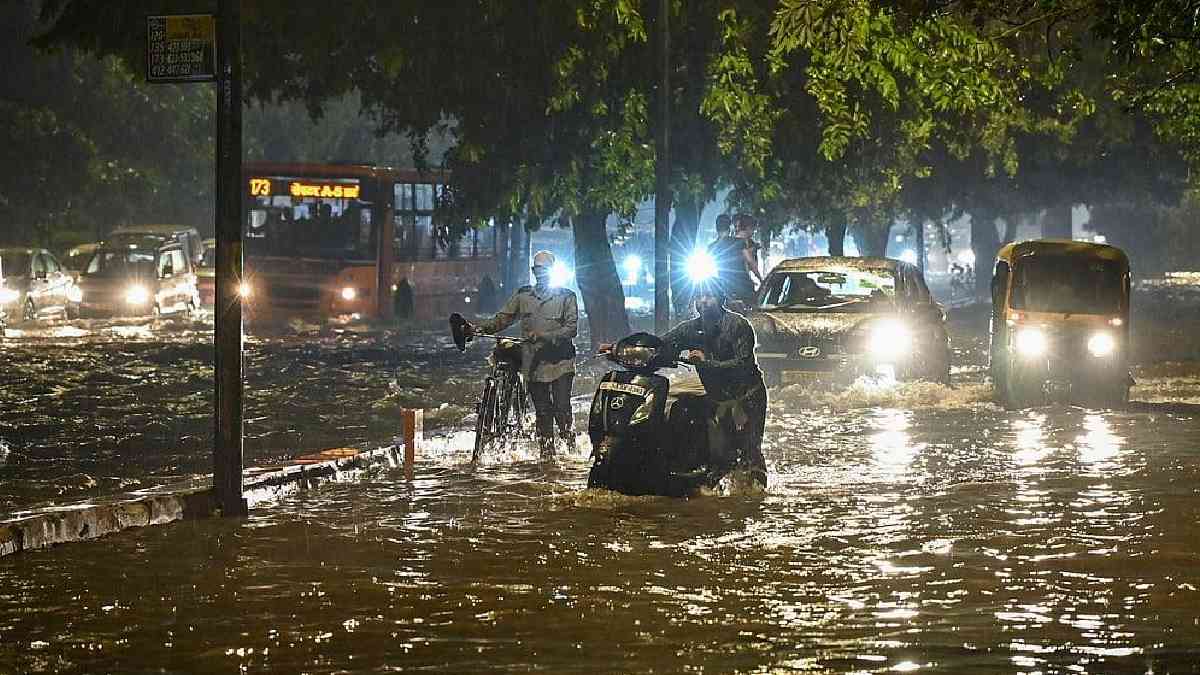
Delhi is in the midst of another spell of unsettled weather with heavy rainfall and thunderstorms raising concerns over waterlogging and possible flash-flood conditions in some parts of the country’s capital.

The latest warning comes after torrential rains on Friday disrupted daily life, blocked roads and inundated the Indira Gandhi International Airport. Heavy rain is expected to hit Delhi on September 5 and September 6 and authorities are on high alert.
This is coming after a particularly dank weather on Friday, when heavy rain hit Delhi-NCR where a lot of roads and low-lying areas were flooded and traffic in different sections of the capital had been shut down. It was particularly bad at IGI airport, one of the biggest airports in the country and water was at the airport’s center, where people were seen standing outside the terminal. The bad weather also affected flight operations and the city’s airport was struck with heavy rain.
As per IMD's September 5 warning, Delhi and Haryana should expect heavy rain on both the 5th and 6th September. The weather department shows no warning for September 7 onwards, implying the most significant period of concern is concentrated in the following few days.
Flash-flood is especially important and can be very hazardous for densely populated urban areas because heavy rainfall in a short period of time can overwhelm drainage systems. Even if rainfall does not linger throughout the day, concentrated downpours can quickly accumulate water on roads, underpasses and other low-lying areas. When all three areas are saturated and the rain is due to more rainfall, localized flooding can be challenging to deal with.
IGI Airport is still one of those areas that are the places to be studied given the impact of Friday's rain. Heavy rain led to waterlogged areas of the airport and flight diversions were affected and it caused flight delays. Nine flights were diverted between 3:30 pm and 4:30 pm on Friday according to local media reports, with aircraft diverted to Jaipur, Lucknow, and Ahmedabad. A different report said 11 flights were diverted across the general period of the day on the whole, highlighting the operational difficulties caused by the bad weather.
The weather also brought strong winds and thunderstorms. The IMD's warning indicated the possibility of thunderstorms accompanied by lightning and wind speeds reaching around 50–60 kmph in Delhi. Such conditions can create additional problems for commuters, aviation operations and outdoor activities, particularly when combined with intense rainfall.
The rainfall totals reported by different monitoring stations on Friday also reflected the unevenness of the downpour. Palam received 75.6 mm while Naraina received 54 mm and Janakpuri 48.5 mm. Lodhi Road and Safdarjung also received substantial rainfall. The difference in rainfall data shows why some neighbourhoods are still waterlogged even when rainfall totals are much larger across the city.
The renewed rain has come after the weather conditions have been wetter than normal August for Delhi. Between August 1 and August 30, the capital recorded 354.1 mm of rainfall (over the long-term average of 233.1 mm for that month), according to data reported by Hindustan Times. That wider pattern of rainfall has put a focus on the city's drainage capacity and preparedness to cope with more heavy rains in the future.
For commuters, the immediate worry is that people will be more impacted by road-related delays. Waterlogged roads can slow traffic down significantly and flooding in underpasses and low-lying roads can temporarily disrupt connectivity in different parts of Delhi and the Delhi-NCR. Travel time at the airport may be longer if heavy rain is occurring with peak traffic.
As far as weather is concerned air passengers will be most sensitive to weather. IndiGo and Air India already issued travel advisories and advised passengers to check their flight status before travelling to the airport. Travel-related delays can be swift and airlines and airport authorities need to keep a close eye on them.
The current forecast indicates that conditions should gradually become more stable after the immediate period of heavy-rain warnings. The IMD's latest subdivision warning shows no warning for Delhi from September 7 until September 11. Local showers can still take place even without a formal warning - so one should keep track of official weather updates.
The latest rain alert in Delhi shows the persistent problems of monsoon rainfall in a city of more than 1 billion inhabitants. With flash-flood fears, waterlogging and aviation problems already affecting parts of the city, the next 24 to 48 hours will be crucial for authorities, commuters and residents.
🚨 Delhi Airport Under Water! 🌧️✈️
— AirdropScoutBD (@Sumon1486554) September 4, 2026
Indira Gandhi International Airport witnessed heavy waterlogging after intense rainfall battered the national capital.
The monsoon strikes again! 😳⚠️ pic.twitter.com/LvqEe6Ui2m
How much more rain will likely occur, if drainage systems can handle the runoff and how quickly waterlogged areas should recover. Meanwhile heavy rain warnings and thunderstorms have put Delhi-NCR on weather watch as another wet spell is on its way through the capital.