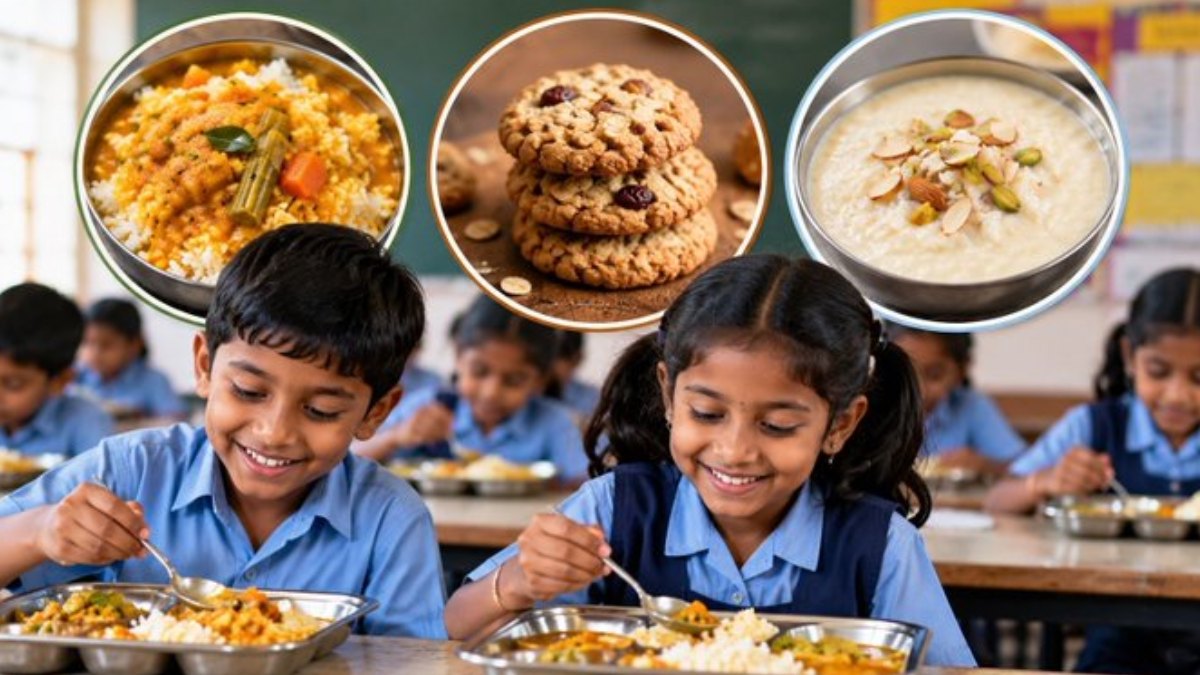
Children at Delhi government schools could soon see some new additions to their daily mid-day meal menu, with sambar rice, oat cookies and kheer likely to be added as part of an effort to provide students with a greater variety in their school meals. The changes might be made to the current menu but also provide kids with different kinds of staple foods and snacks during school hours.
The mid-day meal programme is important in the lives of all school-going children and those from families to whom a fresh meal at school provides nutrition in the day. School meals are intended to not only solve hunger but also to encourage regular attendance and to make children concentrate on their studies.
The addition of sambar rice, oat cookies and kheer could bring a greater diversity to meals at Delhi government schools. Rice-based meals are already common in school nutrition programmes but a rice and sambar combination can contribute to the taste and preparation of the meal and lentils and vegetables will help integrate them with the meal.
Sambar rice is a popular South Indian preparation of rice and sambar made with sambar, a lentil-based food usually served with vegetables and spices. Depending on the recipe, sambar can have lentils, vegetables and tamarind in it. Including such a dish in a school meal would provide children with rice carbohydrates and protein from lentils and nutrients from vegetables.
The menu could also include oat cookies, for students as a different snack option. Oats are a source of dietary fibre and have many nutrients. The nutritional value of a cookie is very much dependent on the amount of sugar and fat added in the manufacturing process and the recipe. For school meals, the entire recipe and portion size are also important.
Another proposed addition is kheer, a traditional Indian dessert made with milk, rice or other grains and a sweetener. Kheer is popular in various parts of the country and can be prepared in several regional ways. It could be a classic traditional food in the school menu and be fortified by milk.
The changes we have proposed underline the increasing importance of variety in school meal programmes. There is a clear impression that children will eat more with different food if menus are diverse and different dishes are served often and not all the time. A variety of meals might help students eat more frequently and reduce food waste.
At the same time, the nutritional balance of the proposed meals will be crucial. School meal programmes should be tailored to the nutritional requirements of growing children, including carbohydrates, protein, vitamins, minerals, etc. Menu planning will entail much more than simply adding popular foods.
The added foods may also be introduced to kids from different cuisines. Sambar rice is highly connected to South Indian cuisine whereas kheer has a long history throughout various parts of India. Introducing a variety of foods in school will teach kids to have different tastes and regional preparation.
The mid-day meal programme has always been a key component of India’s school education system. Feeding students at school can alleviate classroom hunger and promote the participation of children in education. For many students, the meal during school hours is key to their daily food supply.
Delhi's government schools serve students from a variety of social and economic backgrounds, making quality and consistency of school meals a public policy issue. Any change to the menu would require care with food safety, hygiene, portion sizes, procurement, preparation and distribution.
New dishes would also require schools and meal providers to ensure that ingredients are sourced and prepared according to appropriate standards. Food served to children needs to meet hygiene and safety requirements, particularly because large numbers of students may be served simultaneously.
The menu changes are also likely to enhance school meals for children, and introducing different foods could be more attractive. Students’ food preferences can be very different and so different food items in school meals could have a diverse food experience for children. But the success of any menu change will ultimately depend on taste, nutritional quality, affordability and schools’ ability to serve the meals consistently.
For parents, new offerings like sambar rice, oat cookies and kheer may also raise some questions about the nutritional composition of school meals. Parents and educators are looking for menus that provide kids with healthy food with moderate amounts of sugar, salt and unhealthy fats.
Oats and lentils, for example, can provide useful nutrients in the right way. And milk-based kheer provides protein and calcium, but it also depends on the recipe and the sweetener in question.
The proposed changes should therefore be seen as part of a broader effort to diversify school meals and not as a replacement for the nutritional principles that guide government school feeding programmes. A good school meal menu must be balanced on nutrition, taste, affordability, cultural preferences and operational practicality.
If the proposed changes are implemented, students in Delhi government schools could have a wider range of meals and snacks. Sambar rice could provide a new savoury option, oat cookies could provide a different snack, and kheer could add a traditional dessert to certain meal days.
The development also reflects the continuing evolution of school meal programmes in India. As child nutrition is becoming more and more of a focus of schools and the government and education authorities are working toward making school meals healthy and appealing, we’re seeing more and more of the need to provide healthy food in schools, and more and more the food is being put in front of the kids.
🚨 Sambar rice, Oat cookies, kheer are likely to be added to the mid-day meal menu for children in Delhi government schools. https://t.co/l2vmFYLjjT
— Indian Tech & Infra (@IndianTechGuide) October 8, 2026
In Delhi government schools, sambar rice, oat cookies and kheer may be a small but significant change in the daily food experience of students. But it will be a priority to make sure that any new menu is safe, balanced and nutritious for children.
If approved and implemented, the updated menu might give students much more variety while still fulfilling the central purpose of the mid-day meal programme: to provide children with nutrition and to keep them engaged in education.