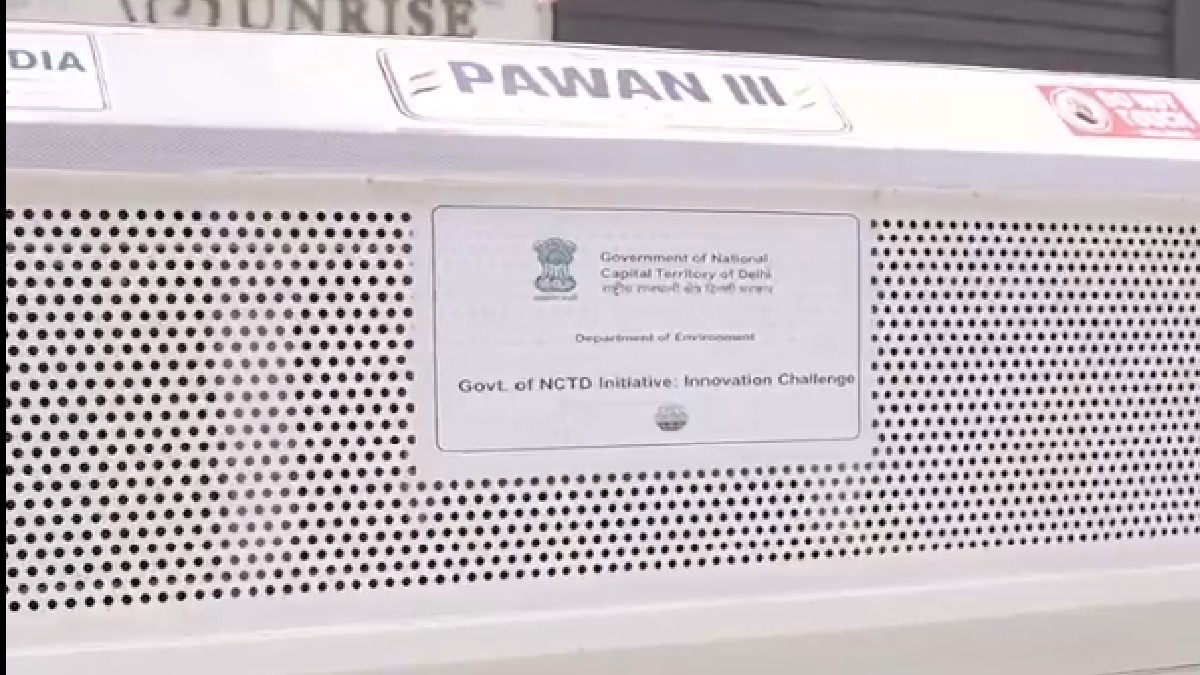
New Delhi's new initiative to curb urban air pollution in a new initiative to test Pawan III roadside air purifiers for the first time has been launched by the Delhi government as a pilot project to test Pawan III roadside air purifiers in Delhi to tackle urban air pollution in some of the most busy places in Delhi’s high traffic zones. Local air purification technology is targeted at local air purification technology to improve pollution levels in areas where vehicle pollution is most concentrated.
Delhi has consistently ranked among the cities with severe air quality issues, especially in winter when vehicle pollution, construction dust, industrial activity, and seasonal fluctuations result in hazardous pollution levels. Yet in this country, the Pawan III trial is a test to see whether advanced air purification systems can make immediate efforts to solve pollution hotspots.
The Pawan III units are installed on busy roads and intersections where traffic congestion leads to greater concentrations of particulate matter. Unlike conventional indoor air purifiers, the outdoor systems are designed for open environments. They filter out pollution, harmful particles, and release clean air into the air.
According to the people involved with the pilot project, the aim is to assess the use of the technology in real-world urban environments. Such a trial will include the reduction in particulate matter levels, operational efficiency, maintenance costs, electricity use, and cost-effectiveness.
The pilot installation will be closely watched over the next weeks and months. Environmental experts will compare air quality data collected before and after the deployment of the purifiers to see if they actually improve localized pollution levels.
The roadside air purifiers are not meant to replace comprehensive pollution control policies, officials have stressed. They are being tested as a complementary measure that could improve air quality in highly polluted micro-environments such as busy intersections, bus stops, pedestrian crossings, and commercial corridors.
Traffic-related pollution is still one of the top contributors to poor urban air quality, the experts say, and is still one of the most important factors that contribute to poor air quality in urban areas. Exhaust emissions from petrol and diesel vehicles, brake and tyre wear, road dust, and road dust resuspension create high levels of fine particulate matter (PM2.5 and PM10) that can be deposited in the lungs, which can cause serious health problems.
Doctors have warned us for years that long-term exposure to high levels of particulate pollution also increases respiratory disease, cardiovascular diseases, asthma attacks, and other chronic health problems. Children, elderly people, and individuals who have pre-existing medical conditions are also most impacted.
The Pawan III systems are part of Delhi’s larger strategy to go ahead with technology-based solutions and traditional environmental policies. Similar technologies have been proposed in the world and elsewhere, but scientists still debate the city-wide implementation. And while localized purification systems can improve air quality in some areas, reducing pollution at the source is the most sustainable approach.
Bharat without CONgress & Delhi without AAP😍
— BhikuMhatre (@MumbaichaDon) July 5, 2026
A new device, Pawan III, installed to control pollution on Delhi roads.
It's a stationary high-capacity suction-based pollution control system designed to capture vehicular emissions & road dust near busy roads or traffic hotspots.…
Public response to the initiative has been mixed. Some residents have welcomed the government’s willingness to experiment with new technologies, and hope such measures could provide cleaner air in crowded public spaces. But others think it’s better to concentrate on minimizing emissions through tougher vehicle standards, cleaner fuels, more green areas, and better public transportation facilities.
Environmentalists say the pilot will ultimately be successful if the data collection and scientific assessment are done transparently. If the trial shows significant improvements in localized air quality and is economically feasible, the government might consider more roadside air purifiers in other pollution-prone areas of the city as well.
At the moment, the Pawan III pilot is another step in Delhi’s ongoing search for new solutions to one of its most pressing public health and environmental problems. The results of the trial will inform future air pollution reduction strategies in the city, as well as be part of the bigger picture in bringing a cleaner and healthier city.