NASA scientists have found that some microbes from Earth may even survive in some protected areas of the Moon’s South Pole. NASA and other space agencies should be preparing for more human activity on the lunar surface.
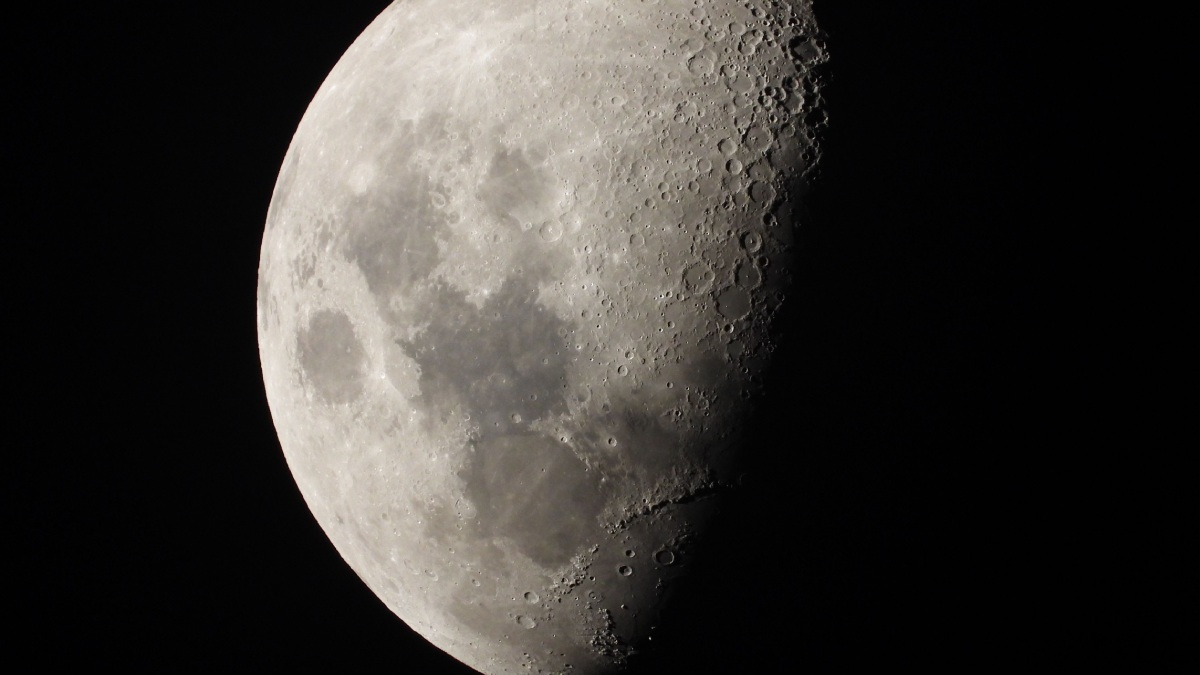
The study does not mean that the Moon has developed its own microbial life. NASA has found no evidence that the Moon naturally supports living organisms. Instead, researchers are looking at whether microbes carried from Earth by humans or spacecraft could remain alive in certain parts of the lunar environment.
The Moon is an extremely harsh environment. It has almost no atmosphere, no stable liquid water and is bombarded by radiation and large temperature fluctuations. Most Earth organisms cannot survive in this environment; they face serious hardships.
But not every part of the Moon receives the same amount of sunlight.
Some deep craters along the lunar South Pole remain permanently or almost permanently in shadow. These areas can be extremely cold and protected from direct sunlight. Scientists believe such places could provide conditions where some hardy microbes have a better chance of surviving.
Why could some Earth microbes survive on the Moon?
Microbes can be very adaptable. Some can enter a dormant state when conditions are too harsh. Instead of growing and reproducing, they can stay inactive and wait for conditions to improve.
NASA scientists studied how microbes associated with human space travelers might respond to the conditions around the lunar South Pole. Some could, they say, survive in sheltered areas rather than being destroyed by the lunar environment immediately.
How is survival different from growth?
Scientists are not suggesting that microbes could grow freely on the Moon. The lunar surface is still very hostile to known forms of life. The study suggests that some microbes might still be viable in protected territories.
Deep shadows could be important.
Direct exposure to the Sun causes intense ultraviolet radiation, which can damage living cells. A microbe in a protected area or permanently shadowed region would receive much less direct UV light.
The lunar South Pole is home to a number of deep craters on which sunlight rarely reaches the bottom. Some of these shadowed places have not seen sunlight for billions of years, NASA said. Scientists are particularly interested in these areas because they may contain water ice.
There is the possibility of microbial survival because humans may unintentionally carry Earth organisms to the Moon.
Astronauts are naturally covered with billions of microbes on and inside their bodies. Spacecraft also hold microorganisms despite extensive cleaning and sterilization processes.
This creates a planetary protection challenge.
If future astronauts ever go to the lunar South Pole, they could accidentally introduce Earth microbes into areas that scientists want to study in their natural state.
That is particularly important for places containing water ice.
Scientists want to understand the composition of lunar ice and other materials without confusing naturally occurring material with contamination brought from Earth.
What Does This Mean for Future Moon Missions?
What the finding may mean is that future lunar missions may be planned to go through this process.
NASA’s Artemis program aims to return astronauts to the Moon and establish a longer-term human presence there. The lunar South Pole area is a major target for this effort because of its permanently shadowed regions and possible water ice deposits.
Water is extremely important for future lunar exploration. Scientists may use lunar ice to produce drinking water, oxygen, and other resources needed for longer missions.
But if Earth microbes can survive in protected lunar environments, scientists will need to carefully assess how astronauts and spacecraft work with these areas and how to navigate these habitats.
But it doesn’t mean humans will not be able to go to the Moon. It only implies better planning and contamination control should be done.
Spacecraft are already thoroughly cleaned and tested prior to launch. Even more attention may need to be paid to areas in which scientists are hoping to find water or other materials that could offer clues to the Moon in future missions.
The research has implications for future scientific experiments as well.
Scientists might eventually conduct experiments directly on the Moon to study how different organisms respond to lunar conditions. NASA already is working on exploring how biological systems behave on the Moon and how microbes could impact future human missions.
Knowing microbial survival would also help astronauts.
People depend on microorganisms for many biological processes. Some microbes are useful for food production, waste processing, and other life support systems. Scientists will need to measure how these organisms function well in space environments if humans are going to be spending longer periods of time away from Earth.
At the same time, scientists have to keep contamination away from them.
The Moon has no known native life. NASA says previous missions have found no evidence suggesting that the Moon has its own living organisms.
That makes the possibility of Earth microbes living there especially interesting.
It also raises an important question about how humans should explore other worlds. Every spacecraft and astronaut has a tiny piece of Earth’s biological environment. Now that humans are going to be taking up space less and less, the biological footprint will need to be controlled.
The latest NASA finding does not prove that microbes are living on the Moon today. It shows that some Earth organisms may be tougher than previously thought when they find protection from the harshest conditions.
And the lunar South Pole is now of importance not only for water ice and scientific value but also because it raises questions about biological contamination.
Scientists will continue to study how humans, spacecraft, and microorganisms interact with the lunar environment with Artemis missions and other lunar programs going forward.
The Moon might appear dead on the horizon from Earth, but its extreme environment still has a lot of scientific surprises to be explored.