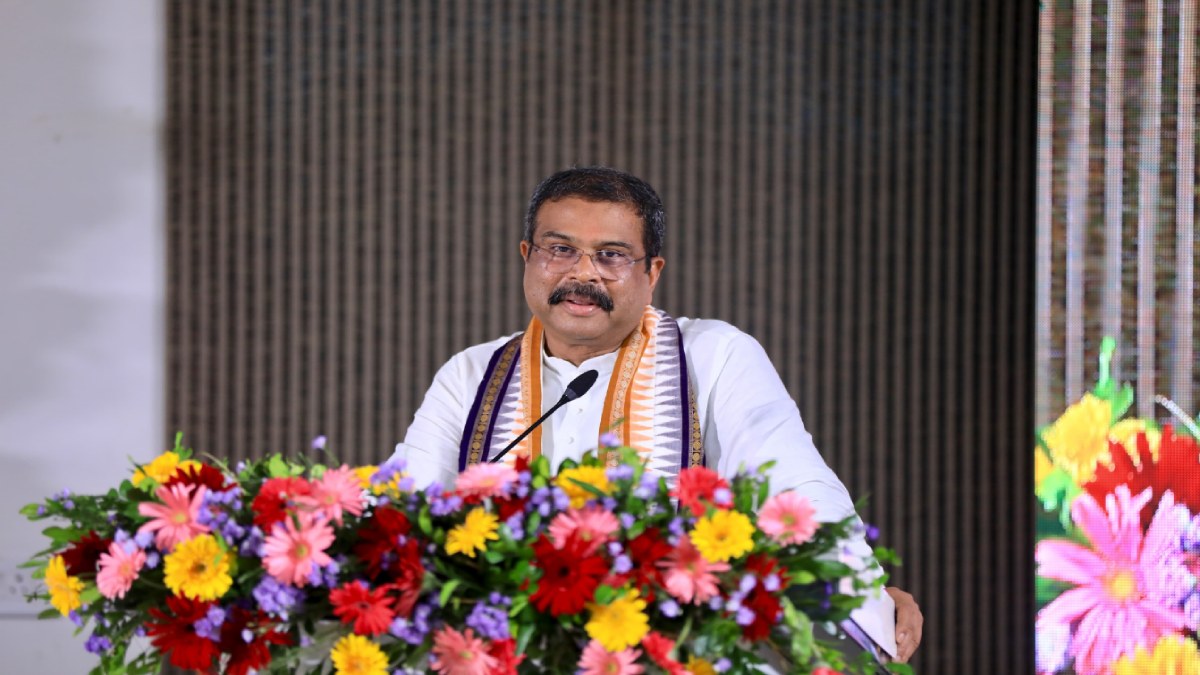
Union education minister Dharmendra Pradhan has submitted his resignation letter to Prime Minister Narendra Modi on Saturday, following weeks of nationwide protests in which students protesting against the NEET-UG paper leak controversy have forced him to resign after a week of protests by students from across India in the last few months, in the form of demonstrations at Delhi’s Jantar Mantar and later in various cities in several places.
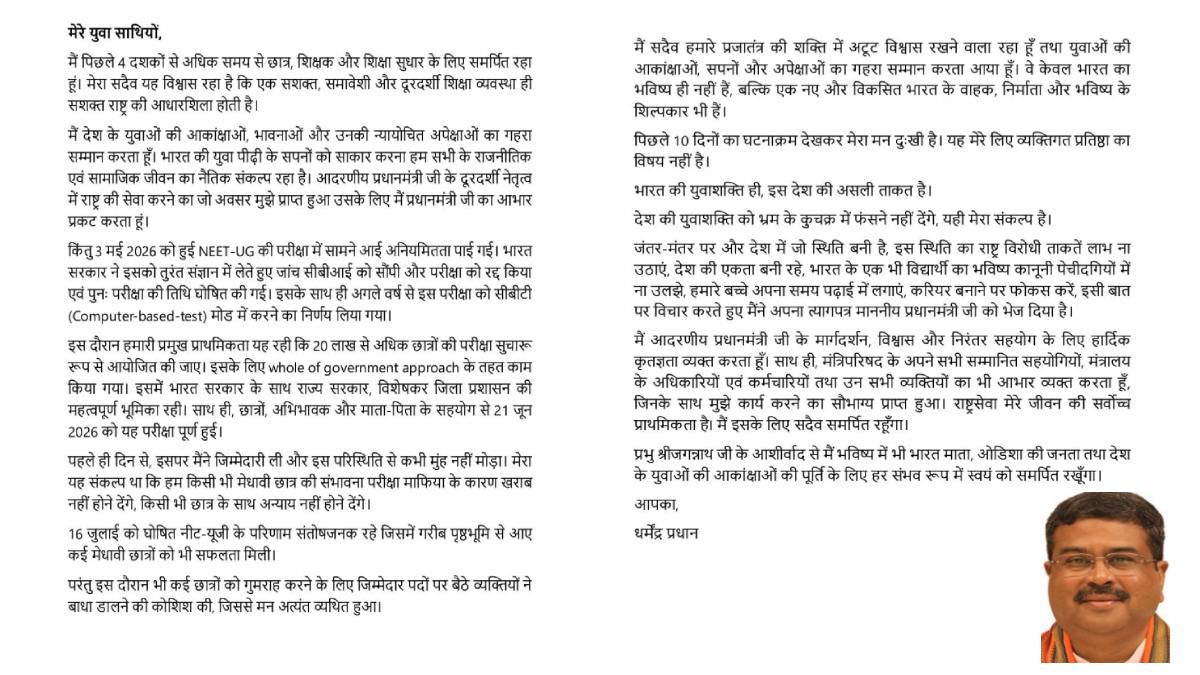
Pradhan posted on social media that he made his decision in order to protect students’ futures, to maintain nation-building and also prevent anti-national forces from taking advantage of the current unrest. At the time of writing, the Prime Minister had not yet accepted the resignation.
Pradhan’s tenure as Education Minister lasted for more than four years and witnessed a series of reforms, policy changes and controversies over national exams, curriculum changes and Centre-state disputes.
1. Opposition Protests in Oath-taking Ceremony
Soon after returning to the Union Cabinet in June 2024, Pradhan was severely criticized. At the oath-taking ceremony of the 18th Lok Sabha, opposition members interrupted the proceedings with slogans about the NEET controversy. There were growing doubts about examination irregularities and accountability in education.
2. NEET-UG Paper Leak Crises
The biggest challenge to Pradhan’s tenure was the National Eligibility cum Entrance Test (NEET-UG). Paper leaks, marking mistakes and examination security mistakes led to widespread outrage.
The 2024 controversy triggered investigations by the Central Bureau of Investigation (CBI), judicial scrutiny and strong criticism of the National Testing Agency (NTA). In 2026, the same concerns arose when authorities discovered leaked materials related to coaching centers. The examination was cancelled and then re-conducted with increased security.
So many medical aspirants were hurt in those cases and they have lost trust in the examination process as well.
3. UGC-NET Cancellation Shocked Students
In June 2024, the ministry cancelled the UGC-NET examination just one day after it had been conducted. There were intelligence reports that examination papers had been compromised and distributed through online platforms.
But the cancellation occurred at a time when the government was already facing criticism over NEET-related issues, which only increased scrutiny of national testing mechanisms.
4. Persistent Questions Over the National Testing Agency
With Pradhan’s tenure, the National Testing Agency was under constant pressure due to technical failures, security flaws, issues with data management and outsourcing.
The agency, which oversees the vast majority of entrance exams like NEET, JEE, CUET, NET, has had to undergo leadership changes and a series of reviews. There were several expert committees to recommend reforms, but critics also felt systemic problems were unresolved.
5. CBSE On-Screen Marking Controversy
In 2026, the Central Board of Secondary Education (CBSE) created an On-Screen Marking (OSM) system for Class 12. But students and teachers were upset about technical glitches, poor scanning quality, and purported evaluation discrepancies.
Reports of several problems had been identified during trial runs before implementation. Senior officials were transferred, and an inquiry was conducted to review the procurement and rollout process.
6. Resistance to PM SHRI Schools Scheme
The PM Schools for Rising India (PM SHRI) initiative to improve educational infrastructure and quality also met resistance from some opposition-ruled states.
Tamil Nadu and Kerala, for instance, questioned certain conditions of the scheme and claimed it was linked to policy compliance in education funding and implementation. The disagreement led to disputes over funding and implementation for years.
7. Three-Language Formula Debate
One of the most politically sensitive issues during Pradhan’s tenure was the implementation of the National Education Policy’s three-language formula.
Tamil Nadu strongly opposed the idea because it would promote Hindi indirectly. The Centre always denied these claims and argued that the policy promoted multilingual education and flexibility in language learning. But the issue remained a matter of great tension between the Centre and several southern states.
8. NCERT Textbook Rationalisation Controversy
Changes to NCERT textbooks between 2022 and 2023 generated considerable debate in academic and political circles.
Several chapters related to Mughal history, the Gujarat riots, the Cold War, and aspects of democratic movements were removed or revised. The government claimed the changes were part of an academic rationalisation process aimed at reducing student burden after the pandemic.
Critics, however, accused authorities of altering historical narratives and politicising educational content.
9. Proposed Rules for Vice-Chancellor Appointments
In 2025, draft regulations were published by the University Grants Commission that outlined broader eligibility criteria for vice-chancellor appointments, which involved positions in industry and non-academic areas.
The proposal was opposed by state governments and academic groups, who feared that it would reduce university autonomy and strengthen central control of higher education institutions.
10. Equity Regulations Face Legal Challenges
The UGC introduced regulations in 2026 to combat caste-based discrimination in higher education institutions through campus equity committees and new compliance mechanisms.
The rules generated extensive debate; supporters said they were necessary protections for marginalized communities while critics raised concerns regarding implementation and potential misuse. Legal challenges followed, and the Supreme Court temporarily stayed the regulations pending further review.
A Tenure Defined by Reform and Controversy
Dharmendra Pradhan’s time as education minister will go down as one of the most turbulent years in India’s education sector. He implemented the National Education Policy and institutional reforms in his ministry but also faced repeated controversies around examination and policy disputes and media scrutiny.
His resignation comes at an important moment for India’s education system, and millions of students, parents, and educators will be watching how the government addresses examination integrity, institutional accountability, and educational governance in future years.