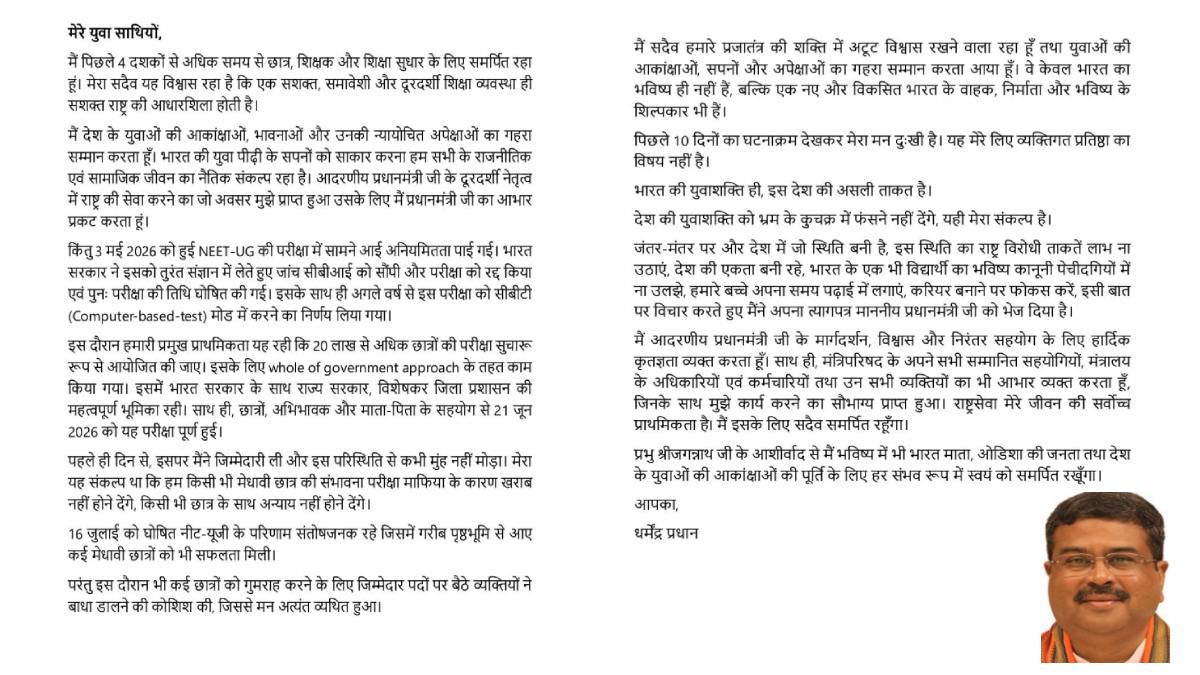
Pradhan broke his silence on his resignation from the Union Cabinet and revealed why he quit. He said this was because of the controversy over examination irregularities and protests that followed and he said that the youth must not be ignored today in India.
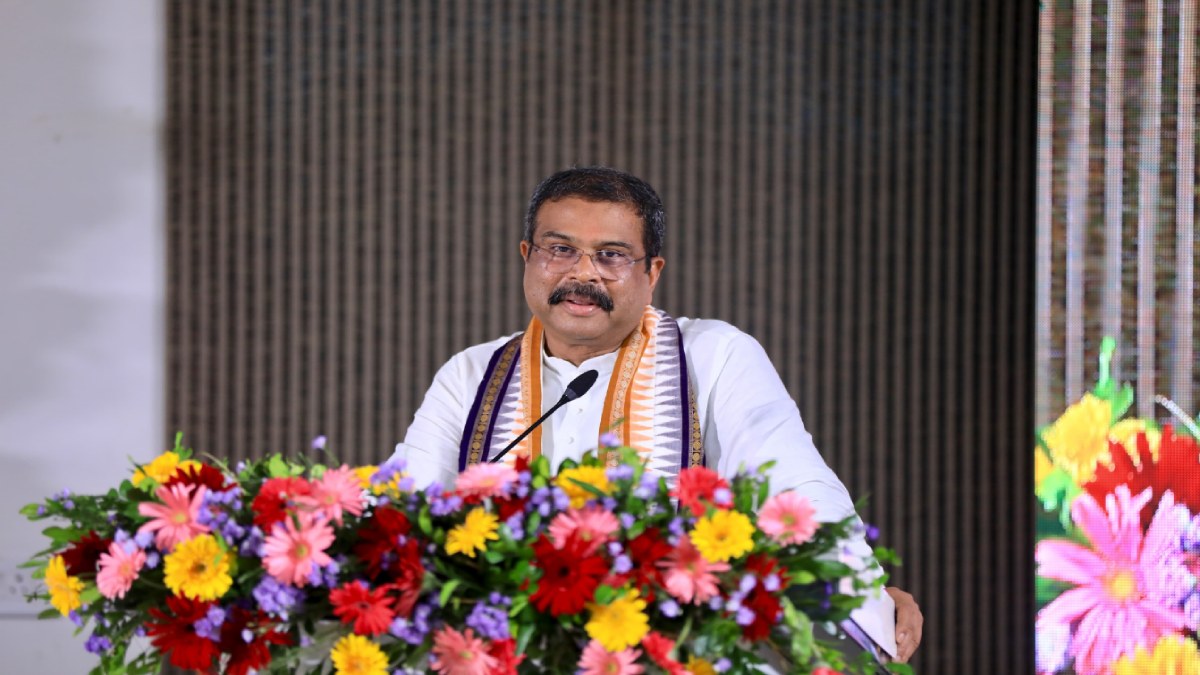
Pradhan resigned on 25 July 2026 after weeks of student-led demonstrations in which examination paper leaks were publicly reported and the education system was blamed.
The protests were spreading across the country and particularly in Delhi and the government had to come up with a solution to students’ concerns. His resignation was one of the turning points in the agitation and the students called off their demonstrations when the government made some concessions.
Pradhan said in his last comments that attempts were made to “mislead” members of Generation Z during the protests. His comments seem to take the situation not just as political confrontations, but as a larger communication issue with young people and their concerns about the education system. But he also emphasized the energy, aspirations and influence of India’s younger generation.
Pradhan’s comments are in line with the way Gen Z is becoming more visible in India’s public and political discourse. The student movement over examination irregularities showed how quickly young people can organize, communicate and mobilize through both physical protests and digital platforms; it has been described as one of the most significant events for youth activist campaigns and students have been calling for more accountability and reform in the examination system.
The former minister has also said he doesn’t view Gen Z as something that can be sneezed at. Recently he said that the generation is a powerful group whose aspirations and expectations will shape India’s future. His comments signal a shift away from viewing youth protests purely from a political point of view and toward acknowledging the larger aspirations driving them.
The resignation itself followed a 36-day student agitation. The protests were centered around examination irregularities and demands for accountability. Pradhan resigned, so the government accepted it and Union Minister Pralhad Joshi took over as Minister of Education. The protesters also secured commitments on other issues including the withdrawal of some cases against students and compensation for families affected by examination controversies.
Pradhan had earlier argued that his resignation was not motivated by personal prestige. He said he was responsible for the examination controversy from the start and felt it was important to protect students, and to retain the competitive status of exams.
The political significance of the episode goes beyond Pradhan’s resignation. The protests have been a signal of the increasing relevance of young voters and digitally connected citizens in India’s political context. The episode could shape how political parties communicate with younger Indians, especially on education, employment, examination transparency and institutional accountability, the analysis has suggested.
Pradhan’s remarks are of importance not only in the short term but also in the long term for India’s political future. Gen Z has been acknowledged as a major force and we cannot ignore its contribution so he has recognized that public engagement in India is changing from the one he was born with. And so the issues around education can quickly turn into a larger conversation about trust, accountability and the expectations of young people.
For Gen Z, the episode is a case in point how long-term public pressure can drive global attention to issues affecting students and to the government and political leadership’s hand in that young Indians are increasingly ready to demand answers on matters affecting their education and future.
And in the next stage of the issue, the bigger question will be how the government’s response will result in lasting improvements in examination systems and restore confidence of the students. Pradhan’s resignation may have closed one chapter of the dispute, but the demands for transparency and accountability and meaningful education reform are likely to remain central to India’s public debate.