Train services in parts of Karnataka’s Dharwad district were disrupted when scheduled overnight maintenance work extended beyond the scheduled hours and passenger trains such as the Belagavi Express and the Rani Chennamma Express were delayed. The unexpected delay impacted railway operations in the early hours and passengers remained stranded as restoration work continued on the affected section.
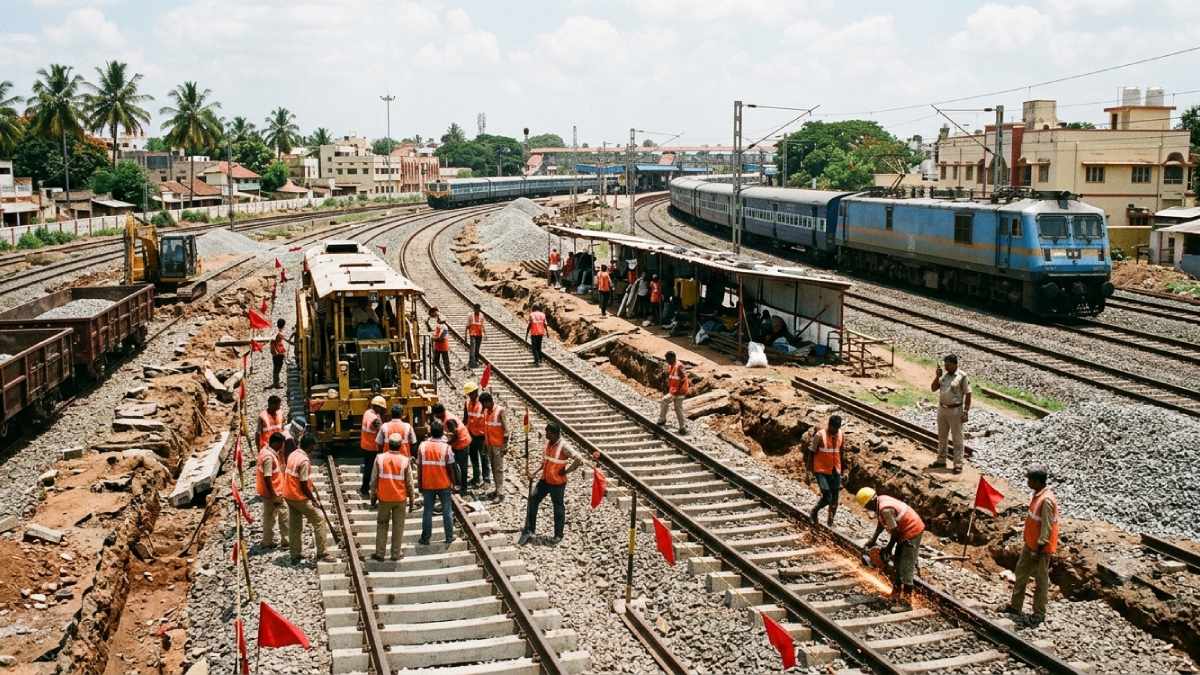
According to railway workers, power supply was interrupted for some work on railway infrastructure and they were waiting for the maintenance, even though the railway system was working. This maintenance work is carried out by Indian Railways to maintain track, overhead electric lines, signalling systems and other critical infrastructure for the safety, reliability and smooth running of the railway system. They worked at night because they did not want to inconvenience passengers and the disruption to train service would be minimal.
However, officials said that the maintenance work took longer than expected and the power supply was not restored at all, which delayed the restoration of power on the line. The trains in the section were unable to move in a timely manner and train movement was not resumed according to the timetable. The Belagavi Express and Rani Chennamma Express were among those to be stopped at Alnavar railway station where maintenance work had been completed and the overhead electrical system was declared safe for operation.
The trains had to be stopped to avoid delays for the passengers in the affected trains as railway administration monitored the progress of the repair work. There were no safety problems during the maintenance work but the longer waiting time for the trains affected the people on board, and to be able to travel to various destinations in Karnataka and other states, there was inconvenience on the route. Railway officials were in touch with station staff to keep passengers informed of the delay and only when the infrastructure was fully restored to full speed were services resumed at the railway station.
Maintenance of railway infrastructure is a major part of the safe operation of the country’s railway network. Indian Railways also schedules inspections, track renewal, signalling upgrades, overhead equipment repairs, and electrical maintenance to prevent technical failure and improve the overall process. However, although these activities are usually planned in periods of low traffic, technical problems can sometimes extend the work.
We have very strict safety protocols for maintenance of overhead electric equipment, said railway experts. Power supply must be shut off before work starts to protect the maintenance crew working on electrical infrastructure. The system must be thoroughly tested and checked once repairs are performed to ensure that power is restored and trains run again. If the train schedule is disrupted, any delay in these systems would have a direct impact.
Dharwad’s disruption shows the challenges faced by railway authorities in maintaining infrastructure and not causing inconvenience to passengers. In the ever-increasing progress of Indian railway networks, the need for frequent maintenance has grown as train speeds increase, passenger numbers increase, and freight traffic increases. Infrastructure upgrades and preventive maintenance for long-term safety are key to reducing long-term disruption and improving the reliability of the service and passenger safety.
All those who had been waiting for a long time were concerned about the delay, but said that safety was more important to maintain. Many travellers depend on express trains, like the Belagavi Express and the Rani Chennamma Express for daily commutes, business travel, education, and family visits. Delays can have ripple effects on connected journeys and scheduled activities, and timely communication from railway officials is essential.
Railway officials have stated safety is of the highest priority and train services are resumed only after engineers certify that the infrastructure is operating properly. Technical maintenance is not only a part of the problem that can sometimes cause short-term inconvenience, but it also prevents more serious problems in the future.
As Indian Railways has been increasingly investing in advanced technology (predictive maintenance systems, automated track inspection equipment, and real-time monitoring methods) to identify infrastructure problems before they become critical, they have the know-how to do so. Such efforts will help to put the maintenance plan into a better perspective and reduce service disruptions over time.
Once the maintenance work was completed, normal train movement resumed on the affected route. Railway authorities are watching to see if the schedule resumes and if there is any backlog of delayed trains. Passengers are advised to check the current train status via official railway information channels before beginning their journey, especially when maintenance work is announced.
The Dharwad incident is a reminder that while planned infrastructure maintenance will sometimes disrupt travel, such work is crucial for the long-term safety, efficiency, and reliability of India's railway network. By investing in preventive maintenance and modernisation, Indian Railways is moving towards safer and more reliable services for millions of people who depend on the railway system every day.