The Directorate of Revenue Intelligence (DRI) has launched a major crackdown on suspected wildlife trafficking networks and arrested 13 people and seized a large quantity of protected wildlife and animal parts in six separate operations across India.
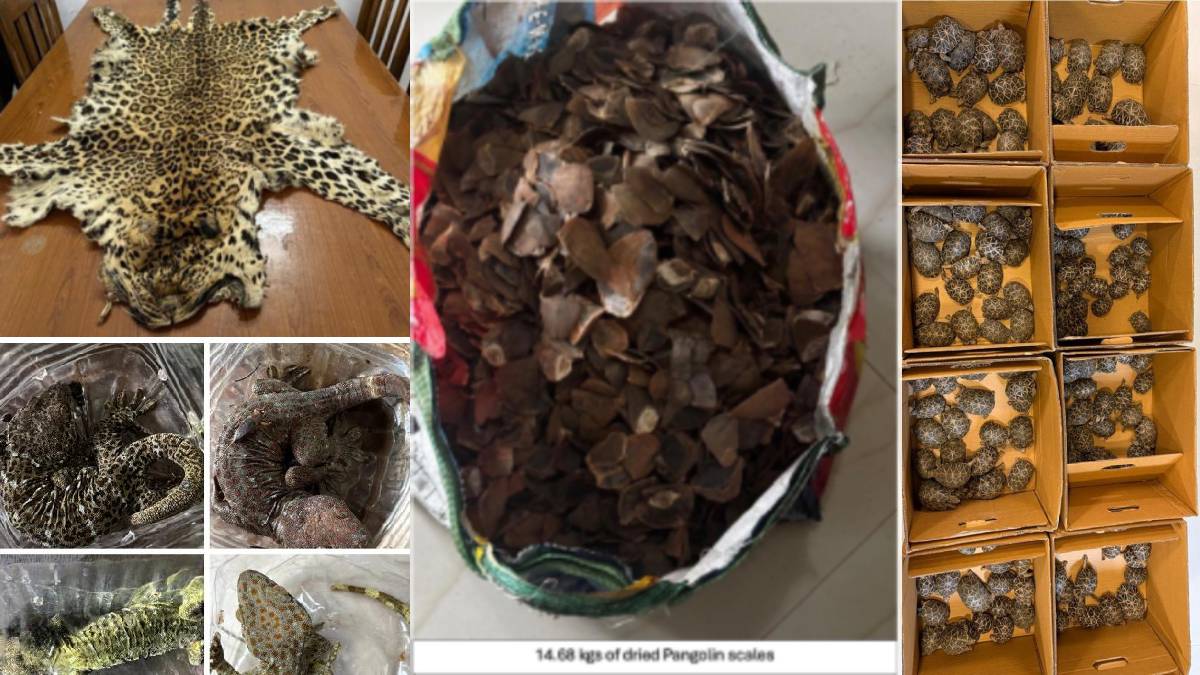
The seizures included two leopard pelts, 180 live Indian star tortoises, 12 tokay geckos, 24 kg of pangolin scales and 500 grams of tiger bones, highlighting the scale and diversity of illegal wildlife trafficking networks across the country. The operations involved live animals and wildlife derivatives that are often targeted by organised smuggling networks.
One of the most striking seizures took place in Bengaluru, where DRI officials acquired a trolley bag containing 180 live Indian star tortoises. The animals were being transported in the city’s Gandhinagar area when the operation was carried out. The carrier was arrested, and the tortoises were taken into custody for their safety.
The Indian star tortoise is a protected species and is now a target of illegal wildlife trafficking because of demand in overseas markets and the exotic-pet trade. Smugglers will try to hide the animals during transportation, making them more vulnerable to a mishap and death.
A further operation was conducted in Assam, where 12 tokay geckos were seized. Two smugglers were arrested in Sonitpur after the reptiles were found in their possession. The tokay geckos are protected under India’s wildlife laws, and illegal traders have taken a liking to them because of their medicinal potential and demand in international markets.
In addition, DRI operations also unearthed huge quantities of wildlife products. A total of 24 kg of pangolin scales, along with leopard skins and tiger bones, were seized by officials. These wildlife derivatives are highly sought after in illegal markets and are associated with organised trafficking networks operating throughout the country and beyond.
The seizure of two leopard pelts was particularly significant because leopard skins are among the wildlife products that poachers and traffickers are interested in. Their illegal trade could have serious repercussions on already weak wild populations.
The recovery of 500 grams of tiger bones has only deepened concern about the illegal trade in tiger parts. Tiger bones, skins and other body parts are often exploited by organised poaching networks to trade in foreign markets. Recently, enforcement in Madhya Pradesh has also targeted suspected networks involved in trafficking tiger skins, bones and other parts.
The latest DRI action illustrates how wildlife trafficking can be conducted among various species and takes different paths of transportation. Rather than being limited to one region, trafficking networks can move live animals and wildlife products across states and could even take them to foreign destinations.
The six operations also point to the need for better coordination between intelligence and enforcement agencies. DRI’s role in identifying and intercepting suspected smuggling consignments is yet another dimension to India’s fight against organised wildlife crime.
For the rescued animals, their immediate safety is of utmost importance. Live wildlife recovered during this type of operation will need specialised handling and veterinary care once the rehabilitation or relocation is in process.
The recent seizures come at a time of increased enforcement in India against wildlife traffickers. Recent cases involving star tortoises, tokay geckos, tiger parts and other protected species have been seized by investigators in a show of the continuing menace from illegal wildlife trade.
The DRI’s six-operation crackdown therefore represents a significant intervention against suspected trafficking networks. With 13 arrests and a wide range of wildlife seized, the investigation could also help authorities identify other individuals involved in the supply and transportation chain.
The case is just another reminder that wildlife trafficking is not only an environmental crime but also one involving organised networks from several states and international markets. There is still much to be done to protect India’s endangered and protected wildlife, and the sharing of intelligence, enforcement, and prosecution is a key aspect of that.
The Directorate of Revenue Intelligence (DRI) has launched a major crackdown on suspected wildlife trafficking networks and arrested 13 people and seized a large quantity of protected wildlife and animal parts in six separate operations across India.
The seizures included two leopard pelts, 180 live Indian star tortoises, 12 tokay geckos, 24 kg of pangolin scales and 500 grams of tiger bones, highlighting the scale and diversity of illegal wildlife trafficking networks across the country. The operations involved live animals and wildlife derivatives that are often targeted by organised smuggling networks.
One of the most striking seizures took place in Bengaluru, where DRI officials acquired a trolley bag containing 180 live Indian star tortoises. The animals were being transported in the city’s Gandhinagar area when the operation was carried out. The carrier was arrested, and the tortoises were taken into custody for their safety.
The Indian star tortoise is a protected species and is now a target of illegal wildlife trafficking because of demand in overseas markets and the exotic-pet trade. Smugglers will try to hide the animals during transportation, making them more vulnerable to a mishap and death.
A further operation was conducted in Assam, where 12 tokay geckos were seized. Two smugglers were arrested in Sonitpur after the reptiles were found in their possession. The tokay geckos are protected under India’s wildlife laws, and illegal traders have taken a liking to them because of their medicinal potential and demand in international markets.
In addition, DRI operations also unearthed huge quantities of wildlife products. A total of 24 kg of pangolin scales, along with leopard skins and tiger bones, were seized by officials. These wildlife derivatives are highly sought after in illegal markets and are associated with organised trafficking networks operating throughout the country and beyond.
The seizure of two leopard pelts was particularly significant because leopard skins are among the wildlife products that poachers and traffickers are interested in. Their illegal trade could have serious repercussions on already weak wild populations.
The recovery of 500 grams of tiger bones has only deepened concern about the illegal trade in tiger parts. Tiger bones, skins and other body parts are often exploited by organised poaching networks to trade in foreign markets. Recently, enforcement in Madhya Pradesh has also targeted suspected networks involved in trafficking tiger skins, bones and other parts.
The latest DRI action illustrates how wildlife trafficking can be conducted among various species and takes different paths of transportation. Rather than being limited to one region, trafficking networks can move live animals and wildlife products across states and could even take them to foreign destinations.
The six operations also point to the need for better coordination between intelligence and enforcement agencies. DRI’s role in identifying and intercepting suspected smuggling consignments is yet another dimension to India’s fight against organised wildlife crime.
For the rescued animals, their immediate safety is of utmost importance. Live wildlife recovered during this type of operation will need specialised handling and veterinary care once the rehabilitation or relocation is in process.
The recent seizures come at a time of increased enforcement in India against wildlife traffickers. Recent cases involving star tortoises, tokay geckos, tiger parts and other protected species have been seized by investigators in a show of the continuing menace from illegal wildlife trade.
The DRI’s six-operation crackdown therefore represents a significant intervention against suspected trafficking networks. With 13 arrests and a wide range of wildlife seized, the investigation could also help authorities identify other individuals involved in the supply and transportation chain.
The case is just another reminder that wildlife trafficking is not only an environmental crime but also one involving organised networks from several states and international markets. There is still much to be done to protect India’s endangered and protected wildlife, and the sharing of intelligence, enforcement, and prosecution is a key aspect of that.