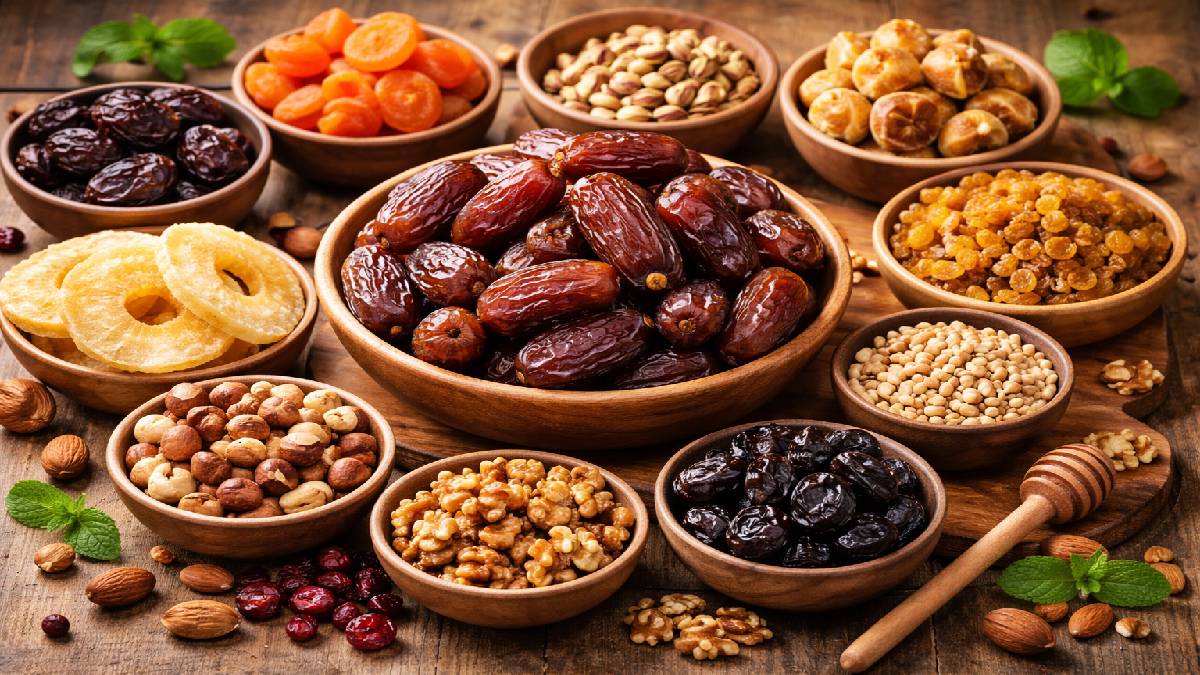
Prices of dry fruit soared in India in the context of the Iran‑West Asia standoff. India has experienced sharp price increases for dry fruit as imports from Iran and other West Asian countries are disrupted. Soaring prices have put the squeeze on both traders and consumers, and popular dry fruits, including dates, almonds, pistachios, figs, and apricots, are seeing a double‑digit increase in prices.
Supply Chain Disruptions
An ongoing conflict in the West Asia region, with Iran among the leaders, has caused serious disruptions to the dry fruits supply chain. Shipping routes and ports next to the conflict zone are closed or subject to high‑risk restrictions, which are hampering imports. Premium Iranian varieties, including Kalmi and Ajwa dates, and high‑end pistachios have become scarce, adding to supply pressure, traders said.
Impact on Retail Prices
- Dates: Prices have increased from ₹210–₹250/kg in certain markets to ₹350/kg.
- Pistachios and almonds: Prices have increased by 15–20%, and some varieties now sell for ₹2,300/kg.
- Widespread dry fruits: Even in cities like Hyderabad, Delhi, and Pune, rates are averaging up 15–30%.
These spikes, particularly at times of year like Ramzan and Eid when it’s more common for demand to spike, are being felt by consumers. For instance, dry fruit is more expensive now and Sheer Khurma preparations are expensive as well.
Freight and Logistics Costs
Growing shipping expenses and insurance costs for routes close to the conflict zone have also driven up the price. Importers pay extra expenses, which are then passed to retailers and consumers.
Market Response
As supply is limited, traders are wary to store big. Some are increasing retail prices ahead of time, others are rationing stock. The limited supply of imported dry fruits has also caused higher demand for domestically produced substitutes, which often do not replace Iranian varieties in taste and quality.

Experts say that if the Iran‑West Asia conflict doesn’t stop, the prices of dry fruit in India could remain high or increase still more. Consumers should also budget for their purchases and traders may consider alternative sourcing from places like Afghanistan, Turkey, or the UAE.