Indian authorities stepped up health surveillance at major international airports due to increased global fears of the spread of the Ebola virus.

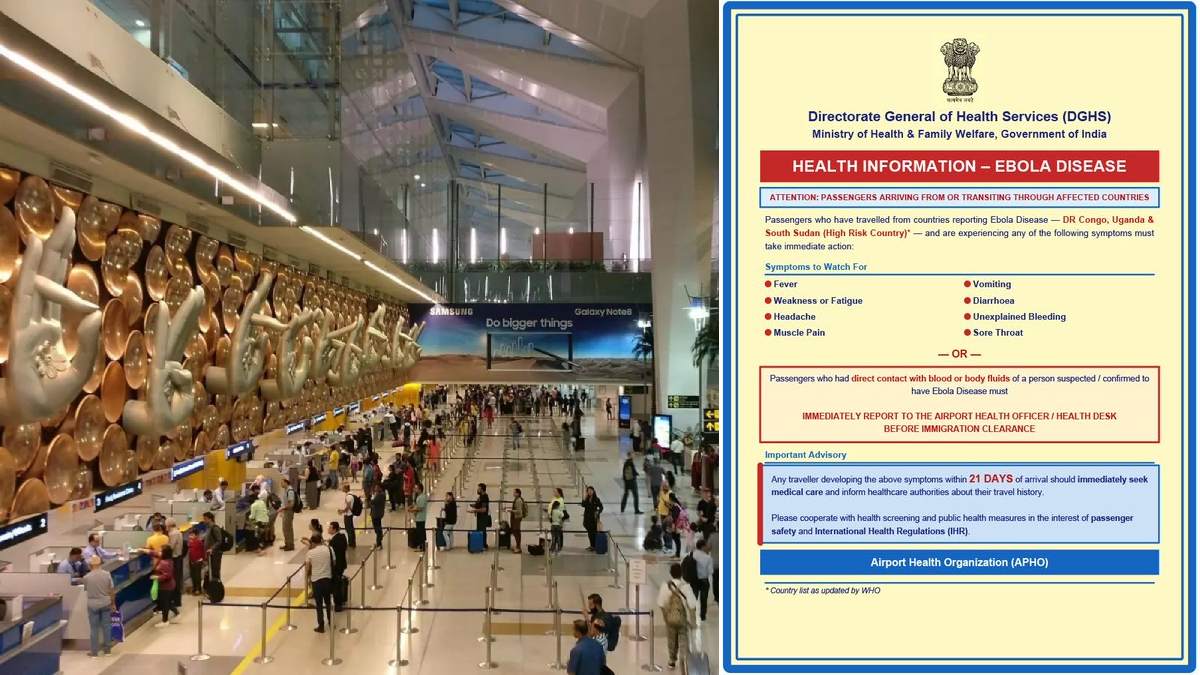
As precautionary steps towards monitoring incoming international travellers, enhanced screening protocols have now been implemented at Cochin International Airport and Chennai International Airport.
The response, the same year as the WHO’s warning of the danger of international transmission through air travel, comes at a time of intense global scrutiny of Ebola outbreaks. Now, airport health authorities in India are closely monitoring passengers arriving from affected or high-risk regions.
The screening process involves thermal checks, health declarations, symptom monitoring and scrutiny of passengers with recent travel experiences to countries where Ebola concerns have been flagged, officials said.
Medical teams and airport health officers have reportedly been placed on alert to respond quickly if any suspected symptoms are identified among travellers. Ebola is a serious and often deadly viral disease that can be transmitted by direct contact with the body fluids of infected people and contaminated supplies.
Symptoms include fever, weakness, muscle pain, vomiting, diarrhoea, and in severe cases, internal and external bleeding. Due to its high fatality rate and possible rapid-transmission nature, health services worldwide manage even rare outbreaks with high caution.
Cochin and Chennai airport officials are reportedly working together with the central health authorities and with immigration authorities to implement adequate health assessment procedures whenever relevant for passengers coming from international destinations.
Although no confirmed Ebola cases have been reported in India in connection with the latest alert, authorities are paying attention to preventive surveillance that can be performed to reduce any risk associated with imported infections. Early identification and immediate isolation still are key to stopping highly infectious diseases at the door, health experts said.
Airport officials are also required to provide information and advisories to passengers on arrival from overseas destinations. Any passenger who presents with symptoms such as fever or shows signs of illness may be transferred to a medical consultant under the current public health protocol.
The surveillance, to a larger extent, is in line with what we have learned in previous cases of global sickness, including the COVID-19 pandemic, where international airports evolved into key surveillance monitoring points for disease surveillance and containment operations. India has a known history of implementing robust airport screening systems in case of outbreaks of infectious diseases such as Ebola, Monkeypox, Zika virus and COVID-19.
Whenever international health organisations issue alerts of infectious diseases that affect people, health departments commonly trigger emergency surveillance measures. These precautionary measures are not panic-inducing and should not cause panic in travellers, medical professionals have made it clear.
But they have warned international airline travellers on the verge of their arrival to remain alert for symptoms, keep cleanliness, and report to the health authorities at once any potential illness. The bolstered screening also underscores growing international alarm over the extent to which infectious diseases can spread across international travel networks.
Large airports are typically the initial bastion for identifying and isolating threats to public health before they spread to local communities. Authorities are likely to keep watching the international situation closely and could bolster surveillance at more airports where necessary.
Health departments are also said to be re-evaluating preparedness procedures, isolation facilities and emergency response systems in the event of an Ebola-related emergency in the country. It has been advised to cooperate with airport screening staff and follow all health instructions issued by authorities. Officials emphasised that preventive vigilance remains critical to the public’s safety and the smooth running of worldwide travel.