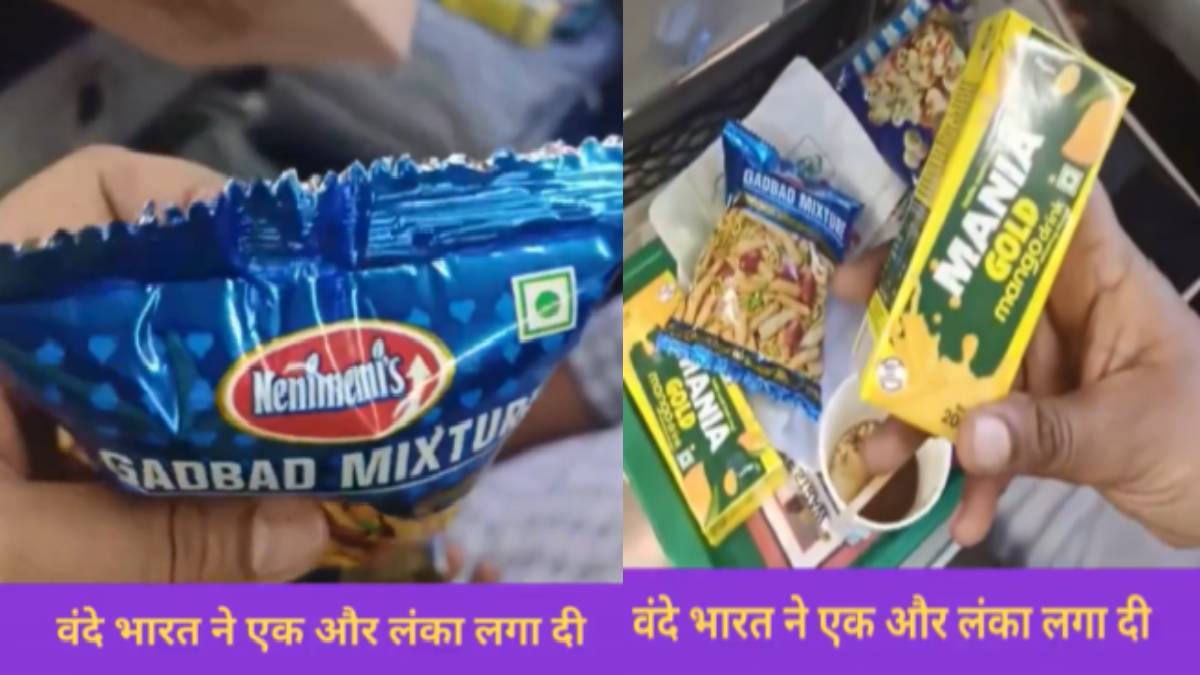
Vande Bharat & Rajdhani passengers report eating a range of rotis & kachoris directly inside sealed plastic packs. That is raising considerable food safety concerns as the packets state “Store in a cool & dry place” and bear no indication that they are microwave‑safe. If food is heated in non‑certified plastic packaging, the heat can trigger harmful chemicals to enter the food. This poses a public health problem for lakhs of passengers every day.

On either trip, passengers also observed that the rotis and kachoris were given warmth, even though they were wrapped in plastic packages. On further review, catering personnel also confirmed that the food was being heated directly in the packet possibly for operational reasons. There were no instructions on heating or cooling in the in‑pack containers; however, the “Halka Phulka” roti packets were hot to the touch.
Food‑grade plastic is not automatically safe for heating unless it’s specifically certified for use with a microwave or steam system. If multilayer packaging is repeatedly heated without specific directions, higher risks of chemical contamination can occur. That shortcut can save time for catering staff, but it puts passengers at risk.
Passengers have taken to social media tagged @IRCTCofficial, @RailMinIndia, @AshwiniVaishnaw demanding clarification and accountability. Many expressed anger that efficiency was taking priority over safety, and called it a “hot food scam.” Some worried that blame was being shifted amongst the IRCTC, Railway Ministry, FSSAI, and third party vendors and no fixed responsibility.
Unsafe food packaging is a violation of the fundamental food safety guidelines. If the packets aren’t heating certified, then the technique could also be subject to negligence. Authorities are being asked to certify these institutional packs for in‑pack heating, and to publish the certification if approved.

This issue reveals the pressing need of the Railway Ministry and IRCTC for clarification and measures of rectification. Convenience cannot trump passenger safety. They need to be clear about what is required, certified packages must be used which are maintained under careful supervision to make sure the food served on trains is safe. With lakhs of passengers depending on railway catering on a daily basis, accountability and transparency are non‑negotiable.