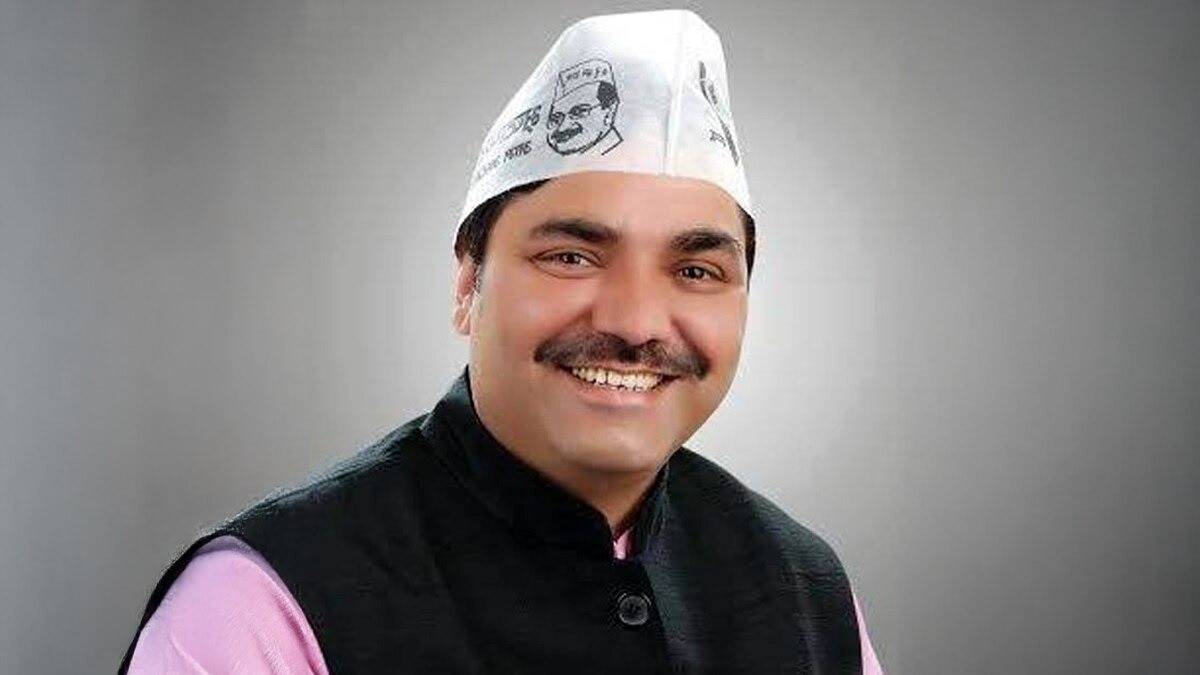
The High Court has ruled in a major legal setback for former AAP MLA Naresh Balyan after the High Court refused him bail in a case under the Maharashtra Control of Organised Crime Act (MCOCA).
The prosecution has argued that Balyan operated as a facilitator of an organised crime syndicate based around Kapil “Nandu” Sangwan, who fled from jail. Balyan will still be in custody in relation to the case and will be given legal remedies to pursue action.
The MCOCA case has attracted widespread political and legal attention because of Balyan’s previous position as an AAP legislator and serious allegations about an alleged organised crime network.
According to the prosecution, Balyan played a role in facilitating the activities of the syndicate allegedly led by Sangwan. The prosecution’s case is based on its interpretation of the evidence and material collected during the investigation.
The charges have not been established as a final finding of guilt. The criminal proceedings are ongoing, and Balyan has the right to defend himself before the court.
The High Court’s decision is about Balyan’s request for bail and does not constitute an ultimate verdict on the charges against him.
But the denial of bail is a big deal as courts weigh multiple factors in deciding applications in cases involving allegations of organised crime. These include the nature and seriousness of the accusations, the material presented by investigators, the possibility of influencing witnesses, the risk of tampering with evidence and the likelihood of the accused being available for trial.
MCOCA is a special law to prevent organised crime. Its provisions in such cases of alleged organised crime syndicates can impose additional conditions on bail.
The prosecution has maintained Balyan’s alleged role was connected to the functioning of the organised crime syndicate. It has said the evidence before the court was sufficient to oppose his release on bail.
Balyan has denied wrongdoing and challenged the allegations against him. A legal team will assess the High Court’s order and take further legal action.
The former MLA may seek relief before a higher court depending on the detailed reasoning contained in the High Court’s order and the legal advice provided to him.
The case has also become a political issue because Balyan was associated with the Aam Aadmi Party and previously represented the Uttam Nagar constituency in the Delhi Assembly.
Political opponents have referred to the case while criticising the AAP, while party leaders and Balyan’s supporters have questioned the allegations and the circumstances surrounding the investigation.
The High Court’s order is likely to bring a new level of political debate to the case, because the allegations are around the possibility of a criminal syndicate.
Kapil “Nandu” Sangwan is called the alleged leader of the organised crime syndicate at the centre of the case by investigators. The prosecution has claimed Balyan acted as a facilitator for the network.
The exact legal basis for the High Court’s decision will become clearer through the detailed order. The court’s reasoning may take into account the evidence presented by the prosecution, the case made by Balyan’s defence and the legal requirements surrounding bail in MCOCA.
The order is anticipated to be very closely reviewed by legal experts because cases under special laws tend to have much higher bail requirements than ordinary criminal cases.
The denial of bail does not decide whether Balyan is guilty. The prosecution has to prove its case during the trial, and the accused has the right to challenge the evidence and provide a defence.
The case will now proceed according to the legal process, and further hearings are expected as the investigation and judicial proceedings proceed.
For now, the High Court’s decision is a big setback for Balyan, who will be held without bail until his court date in the MCOCA case.
The development also keeps the allegations of an alleged organised crime connection at the centre of political and legal discussion in Delhi.
We expect more updates when the detailed High Court order becomes available, and Balyan’s legal team decides to challenge the decision before the Supreme Court.