Union Minister Gajendra Singh Shekhawat has said that the time has come to begin a fresh delimitation process in India, noting that the last delimitation exercise came into effect in 2008 and that the legal framework provides for a new exercise after 2025.
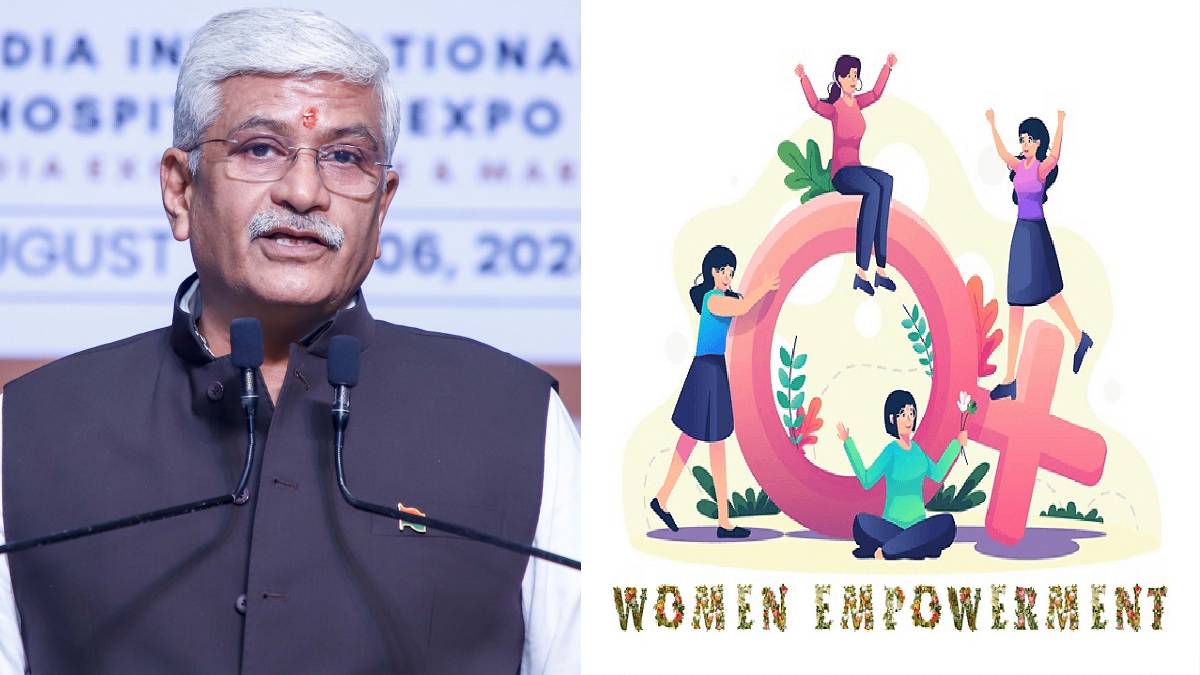
Shekhawat said the decision on delimitation would ultimately be taken by the Lok Sabha and stated that the exercise is necessary to reflect demographic changes due to population growth.
The last delimitation came into being in 2008. I think the time is now to start again. It will be decided in Lok Sabha. It is because of the increase in population. The Act made provision that delimitation will be performed after 2025. We need to give women empowerment now, the Union Minister said.
Delimitation is the process of redrawing parliamentary and state assembly constituencies so that each constituency represents roughly the same population. We want fair and balanced political representation as the population changes over time.
The last delimitation exercise in India was conducted by the Delimitation Commission in 2008, and the new constituencies were adopted in 2008 based on the 2001 Census. However, Lok Sabha and State Assembly seats remained unchanged due to a constitutional freeze on the expansion of seats, which still extends until after the first census conducted after 2026.
The issue of delimitation has gained renewed attention since the passage of the Women's Reservation Act (Nari Shakti Vandan Adhiniyam). It guarantees 33% of the seats in Lok Sabha and State Legislative Assemblies for women, but its implementation can be linked to the future delimitation exercise after the relevant census.
Supporters say a new delimitation exercise would better reflect the present population distribution and women's representation in elected legislatures, and hence reservation in the state would be done in a way that is more democratic and increases women’s participation in politics.
At the same time, delimitation is still a matter of political debate. Some states, particularly in southern India, have expressed concern that population-based seat redistribution would change the balance of parliamentary representation between states. They claim that states that successfully manage population growth should not be left out of the future allocations of seats.
The central government has maintained that any decisions on delimitation will be made in accordance with the constitutional and legal provisions governing the process. A formal delimitation exercise would require the establishment of a Delimitation Commission after the necessary constitutional conditions are met.
Political analysts believe the next delimitation exercise could become one of the most significant electoral reforms in recent decades, indeed, one which will transform parliamentary constituencies in the next few years and shape the political landscape of India’s democracy for years to come.
In the course of dialogue, the issue will remain a central matter of national political debate and will have implications for representation, federal balance, electoral reform and the implementation of women’s reservation in Parliament and state legislatures.