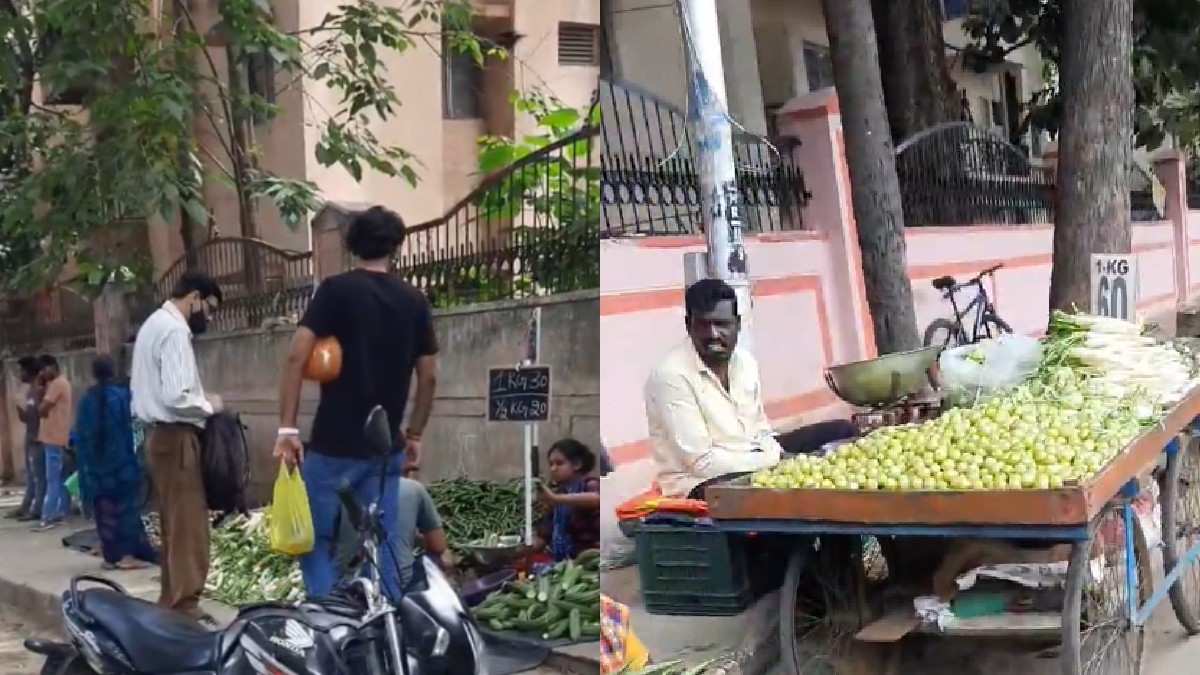
A recent clearance drive by GBA has provided temporary relief to residents of Munireddy Palya in Jayachamarajendra Nagar, but a few days later, the situation has returned to its earlier state. Street vendors are once again in sight of the residents of Munireddy Palya and in front of other streets and along the road, and there are now so many more worries about pedestrian safety, traffic jams, and how effective the short-term enforcement measures are.
The GBA had undertaken an encroachment removal drive in the locality to clear public spaces and make them more accessible to pedestrians. When the work was done, temporary structures and roadside obstructions were removed, and people could travel on the footpaths. Residents initially welcomed the action and described it as a necessary and much-needed action in the busy neighborhood.
However, the relief was short-lived.
Within two days of the clearance operation, vendors were once again back in the same places, and again occupying footpaths and roadside areas. The return of encroachments has disappointed many residents who say the repeated process of eviction and reoccupation is a manifestation of a lack of a permanent enforcement mechanism.
A lot of people living in the area say they understand the livelihood concerns of street vendors, but public spaces can’t be blocked forever. Footpaths are for pedestrians—older people, kids, and people with disabilities. People who are occupying them are often forced to walk on busy roads, so accidents are more likely.
Local commuters also point out that roadside vending in busy areas causes traffic bottlenecks, especially in the morning. Vehicles stopping to purchase goods and pedestrian traffic flowing into the carriageway slow down traffic and raise safety fears.
However, many of the residents of Bengaluru know street vending is a major source of income for thousands of families. They don’t regard it as a problem of enforcement but as part of city planning. Instead of a series of eviction drives, it would be easier for the authorities to identify vending zones where vendors can do business legally and not block public movement.
ಮತ್ತೆ ಶುರುವಾಯಿತು ಬೀದಿ ವ್ಯಾಪಾರಿಗಳ ಕಾಟ.
— ಕನ್ನಡಿಗ ದೇವರಾಜ್ (@sgowda79) July 3, 2026
ಎರಡೇ ದಿನಕ್ಕೆ ಮುಗಿಯಿತು ಜಿಬಿಎ ತೆರವು ಕೆಲಸ
ಮುನಿರೆಡ್ಡಿ ಪಾಳ್ಯ ಜಯಚಾಮರಾಜೇಂದ್ರ ನಗರ@krishnabgowda @ICCCBengaluru pic.twitter.com/CGDCaxcyjU
Urban planning experts have long argued that balancing the rights of street vendors with the need for unobstructed public infrastructure requires long-term policy implementation rather than periodic clearance drives. The Street Vendors (Protection of Livelihood and Regulation of Street Vending) Act, 2014, is a legal framework for street vending; it protects the livelihood of vendors through the establishment of vending zones and proper licensing.
Munireddy Palya residents are now asking civic authorities to go beyond the now-tokenist measures and think about a sustainable solution. They want constant monitoring, tougher enforcement of illegal encroachments, and proper planning for the proper management of pedestrians and legitimate vendors.
If follow-up inspections are not done on clearance drives, encroachments are likely to occur again and again, reducing the effectiveness of civic action and increasing the cost of public resources.
The situation in Munireddy Palya is representative of a lot of the rapidly growing urban areas in Bengaluru, where a lot of commercial activity takes priority over public space. The balancing act between economic opportunities and orderly city infrastructure is one of the most important tasks for civic authorities.
Residents hope that the recent experience serves to remind us that clearance drives may provide immediate relief, but only consistent enforcement, proper planning, and long-term policy implementation will be the solution to recurring encroachment problems.