The student-led protests in New Delhi’s Jantar Mantar have evolved beyond conventional political activism to a fast growing social movement that draws on internet subcultures, K-pop fandoms and viral social media. In fact, the rallies, as far as teenagers and young adults are concerned, have completely rewritten the playbook of public protest, using memes, satire and playful absurdity to articulate their anger at the establishment.
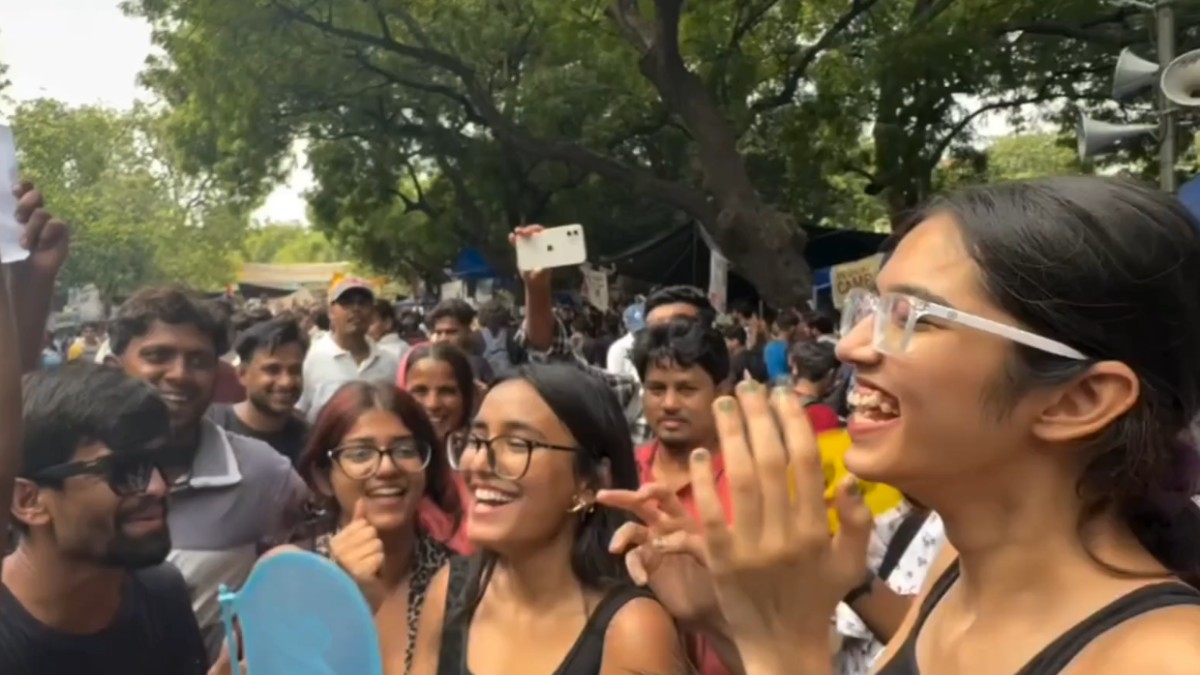
The Jantar Mantar movement is as much a digital community as traditional political protests—with senior leaders, hierarchical structures and, of course, sloganeering. Protesters often call on live-streaming, Reddit-based jokes and modern web slang to mobilize their peers. Things like “gaslighting” and the phrase “the system is cooked” are now made on handmade placards and are representative of a generational shift in how youth express political frustration and demand administrative accountability.
One of the most striking cultural phenomena from the protest perimeter is the ubiquitous use of meaningless, absurdist phrases that frustrate the law and go beyond the usual definitions of legal language. The viral nonsense phrase “Vasteguna Huiya” has attracted huge online attention; according to linguistic analysis, it has no literal meaning, no slurs, and no dictionary. But student demonstrators use it along with exaggerated sound effects and deadpan delivery when it comes to police barricades.
Media sociologists argue this kind of satirical performance art effectively disarms security protocols. The nonsense chants and meme-inspired gestures lack hate speech, incitement or damage to property, so law enforcement personnel often get distracted by the funny side of it and respond to it with a smile or a laugh. This peaceful meme-driven approach has created a communications gap between older administrative authorities and tech-savvy protesters who prefer viral shareability over traditional confrontation.
Social media metrics are also a critical factor in the survival of the movement. Fear of missing out, often referred to by the acronym FOMO, sends thousands of young students to central Delhi daily, fed by constantly updated online news and viral reels. So in transforming anger into witty digital media, this generation is leading a new kind of peaceful, decentralized activism that is so difficult for old administrative systems to categorize or control on its own.