Goa Chief Minister Pramod Sawant has hit back against criticism over the law and order situation in the coastal state, saying that Goa is “safe and secure” and that a negative narrative on social media is sending the wrong message about the state. His comments came as the opposition and online criticisms of the experience of tourists visiting Goa grow.
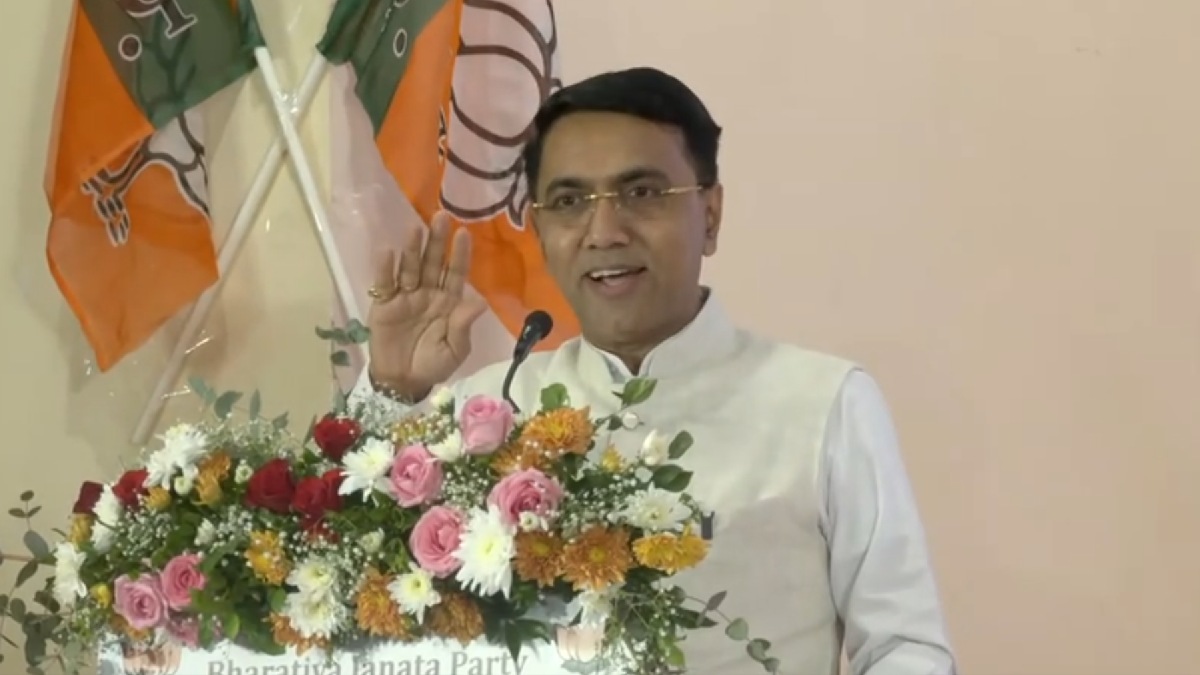
Sawant defended the state’s police department and dismissed the claim that Goa's law and order machinery was failing. He said the police force was in operation and the department was running smoothly. The Chief Minister’s remarks came as opposition intensified its criticism over various safety and tourism problems in the state.
The debate about Goa itself has taken off in recent years with social media influencers and visitors often talking about problems they have gone through when visiting the beach town. Law and order problems as well as taxi disputes have recently become the topic of online discussions about the popular tourist destination.
The Goa government, too, has said it monitors online sentiment about the state closely. During the ongoing monsoon session of the legislative assembly, Tourism Minister Rohan Khaunte said the number of negative comments about Goa on social media and other digital platforms has decreased significantly.
Khaunte made the remarks in reply to an unstarred question raised by BJP MLA Nilesh Cabral. The minister said the tourism department regularly monitors public feedback on digital platforms as part of its efforts to understand visitor sentiment and identify recurring concerns associated with tourism in Goa.

But the government has not formally categorised the major complaints received from tourists in the last three years. Khaunte said the department also continues to respond to any concerns as they arise and work with various government agencies and stakeholders.
Some of the issues that have been highlighted are taxi fares, alleged harassment of tourists, touts, cleanliness, traffic congestion, public conveniences, beach conditions, safety and the quality of tourist services. The tourism department coordinates with departments like transport and police to respond to these concerns from time to time.
The government also tried to counter negative perceptions by highlighting Goa’s broader tourism potential. Khaunte says the state is not just promoting its beaches, but also trying to promote responsible, experiential and diverse types of tourism.
The government’s efforts to counter negative perceptions were not based on the findings of any single standalone study, the minister said. Rather, the tourism department uses a combination of tourist feedback, stakeholder inputs, tourism statistics, media coverage and trends emerging on digital and social media platforms.
Goa Tourism’s internal public relations apparatus is also involved in monitoring online conversations about the state. This includes receiving good and bad mentions, recurring concerns, engagement and broader perceptions emerging in the public domain.
The department also has mechanisms through which tourists can provide feedback, suggestions, complaints and queries. Through these channels, information gathered on visitor experience is used to identify the areas where improvements can be made.
Khaunte said the government is also using digital platforms in Goa to be able to share factual information about Goa and to show tourism options that go beyond the beach-centric image. The strategy is to promote responsible travel and experiential tourism but in partnership with stakeholders, influencers and content creators.
Importantly, the minister said no separate expenditure has been incurred for these initiatives. So far, the department has mainly relied on existing organic social media and digital channels, as well as partnerships with tourism stakeholders and online content creators.
The government is also considering a more permanent mechanism to monitor Goa's reputation and tourist experience. When asked about a proposal to establish a dedicated Tourist Experience and Reputation Monitoring Cell, Khaunte said the matter was currently “under process.”
The developments have been part of the struggle Goa is facing being one of the most popular tourist destinations in India but with the infrastructure, visitor safety and the overall quality of the tourist experience in question. The state is safe, the government assures, but our online sentiment should be listened to and we should all be taking the concerns to the level of concerned people to see how Goa is perceived.
Sawant's passionate defence of the police and the fact that Goa is “safe and secure” suggest the government wants to counter what it sees as an exaggerated negative image of the state. The tourism department's monitoring of complaints and online discussions suggests they are aware of the real concerns they face and are trying to counter negative narratives.
As Goa gets closer to a tourism reputation, the government is increasingly focused on digital engagement, visitor feedback and coordination between departments. If these efforts can lead to a positive tourism experience (as social media continues to be a major factor in the decision-making process), then it will be crucial for the tourism sector in the state.