India and Russia have made significant progress in their efforts to strengthen bilateral trade settlement mechanisms, with 96% of their bilateral trade now being facilitated through a payments infrastructure based on the Indian rupee and Russian rouble.
The development was revealed by Ivan Nosov, Sberbank’s chairman in India, who said that the payment channel between India and Russia is now working and has overcome several hurdles.
Nosov said there are no major problems with settlements between the two countries and described the mechanism as one of the most reliable and well-established international payment arrangements.
It is so important because India and Russia have rapidly expanded their economic ties in the last few years, as the sharp increase in India’s imports of Russian crude oil after Western sanctions disrupted traditional trade patterns.
96% of trade uses Rupee-Rouble infrastructure
According to the latest information, the rupee-rouble payment infrastructure now accounts for 96% of bilateral trade transactions between India and Russia.
The system allows businesses in both countries to settle transactions using their national currencies and therefore does not require payments to be routed through third currencies.
The development is especially striking given the difficulties that came when India’s purchases of Russian oil increased dramatically. Russian companies had worried about accumulating Indian rupees because the currency is only partially convertible, and the trade balance heavily favoured Russia since India’s imports were much larger than its exports to the country.
These problems seemed to have calmed down as banks on both sides developed better mechanisms to deal with settlement and currency flows.
Transactions Becoming Faster
The payment infrastructure can also be described as very efficient.
Nosov said 90% of transactions between India and Russia are done in 10 minutes, and more than half of transactions are done in less than one minute. This would enable bilateral payments to be made more viable and local currency settlement more attractive for companies involved in cross-border trade.
Currently, 22 Russian banks and 17 Indian banks are involved in the service of bilateral trade transactions. Sberbank, also Russia's biggest lender, has played an important role in developing the payment infrastructure.
The banks’ involvement would help to expand that system to businesses beyond the big brokerage firms.
India-Russia trade grows in scale.
The payment development is occurring in a context of a remarkable increase in India-Russia trade.
The trade between the two countries reached a record $70 billion in 2024—a record high, and almost tripling from the start of the Russia-Ukraine conflict in 2022. The rise was largely because India purchased cheap Russian crude oil after Western sanctions were introduced.
Trade declined in 2025 as sanctions were tightened, but it is reported that bilateral commerce rebounded in the first half of 2026.
Energy is still at the heart of the economic relationship, but the two countries also have significant trade links in pharmaceuticals, chemicals, machinery, agricultural products and defence-related goods.
More broadly speaking, the use of rupees and roubles is part of a larger effort by India and Russia to scale down reliance on traditional international currencies for bilateral trade as well.
For Russia, alternative payment channels were important when Western sanctions limited access to parts of the global financial system. For India, a local currency settlement is another way of maintaining trade with important partners without exposure to fluctuations and restrictions with third-country currencies.
India has taken steps to encourage greater use of the rupee in international trade. In August, the country relaxed rules for rupee-denominated export payments and made them subject to the same treatment as foreign-currency export earnings for some trade-policy incentives.
Formalisation of the regulatory system and bilateral payment arrangements may in time increase the global role of the Indian rupee.
This is one of the biggest transformations in India-Russia economic ties.
The 96% figure shows how far the financial relationship between India and Russia has evolved.
Instead of the usual international payment channels, most bilateral trade can now be settled by means of the national currencies of the two countries. This might make businesses more resilient if geopolitical tensions still disrupt conventional financial channels.
But the local-currency settlement does not solve all the problems of currency and trade balance. The rupee's limited convertibility and the continued imbalance between Indian imports and exports remain important considerations.
However, the latest comments from Sberbank indicate that the payment infrastructure has become considerably more mature.
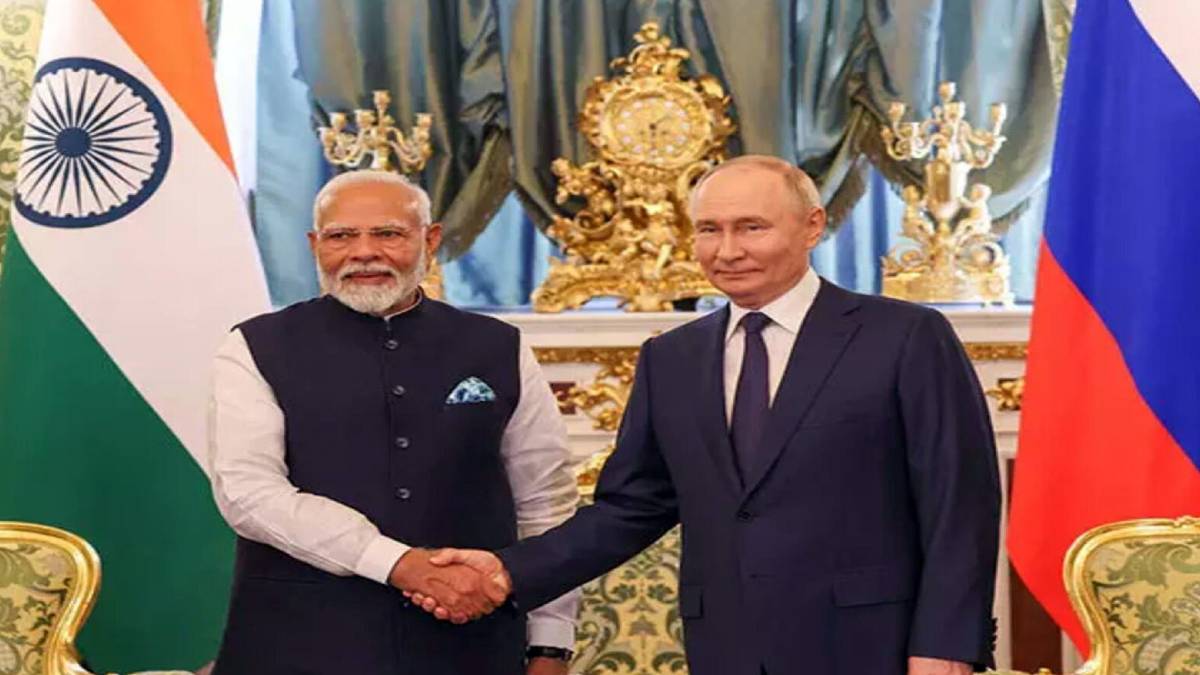
The development comes as Indian Prime Minister Narendra Modi and Russian President Vladimir Putin are still talking about the importance of their economic relationship. Modi recently hailed the growing relations with Russia during his meeting with Putin in the context of the Shanghai Cooperation Organisation summit in Bishkek.
With 96% of bilateral trade now moving through rupee-rouble payment infrastructure, India and Russia are demonstrating how local-currency settlement can support major international trade relationships while reducing dependence on conventional global payment currencies.