A series of photos and videos showing a spiritual figure wearing what looks like golden footwear at an event in the name of the Ambani family has stirred up discussion on social media. Gold footwear has been associated with gold in Hindu culture since it is traditionally considered the most holy.
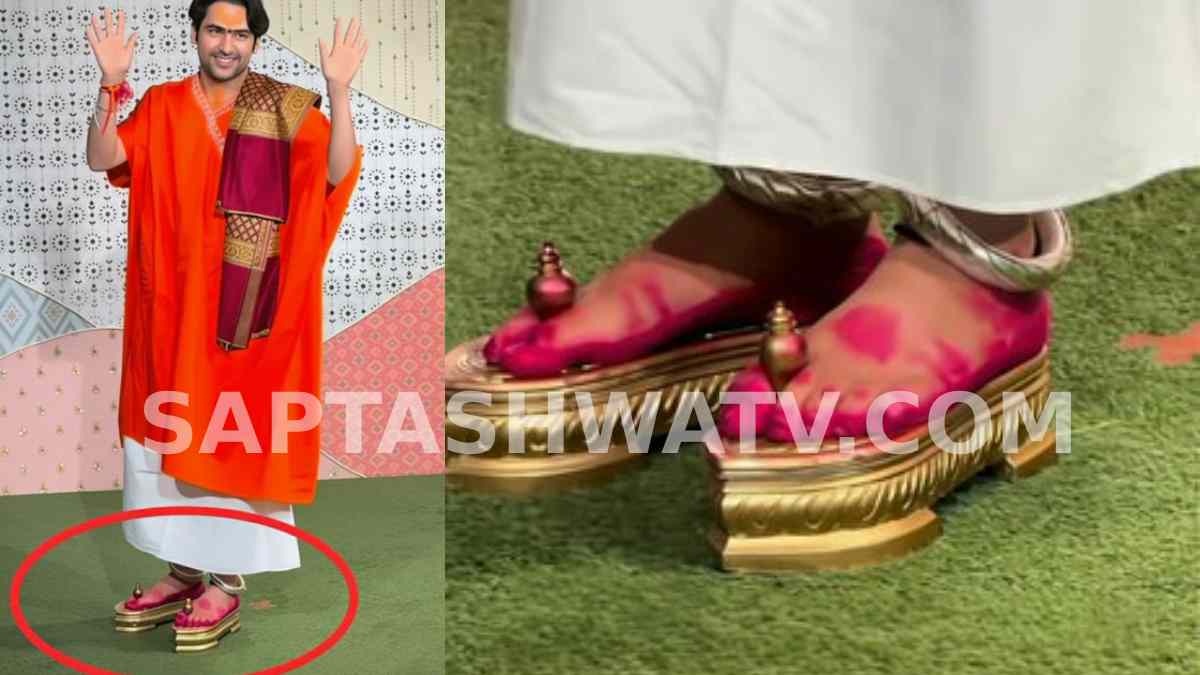
The images have generated reactions from many social media users, with some users saying that it is not appropriate to wear gold-looking shoes or even gold-like attire at a religious or high-profile ceremonial event. Some have also argued that gold is associated with prosperity and divinity, especially in Hinduism.
Gold is often considered an auspicious metal in Hindu religion and culture. It is traditionally associated with purity, prosperity, wealth, and good fortune. Goddess Lakshmi, who is worshipped as the goddess of wealth and prosperity, is often depicted with gold and other symbols of abundance. Gold in a religious context can be symbolic and thus can be very meaningful in this respect.
As a result, some social media users have criticized the use of golden footwear as disrespectful to Hindu religious sentiments. This is the opinion of the users of those platforms and is not a religious code, and should not be taken as a universal religious ruling or agreed upon.
The controversy has also raised the question of the relationship between religious symbolism and personal or ceremonial fashion choices. Gold has been used for centuries in jewellery, clothing embellishments, decorative objects, and ceremonial items in various Indian communities. At the same time, cultural attitudes toward using particular materials in footwear can vary greatly depending on customs, traditions, and individual beliefs.
The identity and background of the spiritual figure, as well as the detailed nature and material of the footwear shown in the circulated images, are critical factors to consider when assessing what happened. Photographs and short videos circulated online may not always provide enough context to establish when or why an item was worn.
The reference to Goddess Lakshmi in the online discussion comes from the traditional association between gold and prosperity. But whether a specific use of gold is an insult to a deity is a matter of religious belief and personal taste rather than something that can be established as an objective fact without an authoritative religious basis.
The connection with an Ambani event has also added to the public’s interest in the visuals. Events related to the Ambani family are often highly publicized due to their scale, celebrity presence, and elaborate arrangements. Images of such events can quickly spread on social media, where components of an event can lead to their own discussions.
With the images as we share them, we’re seeing people react negatively, and we’re hearing about the cultural aspects and the symbolism of gold. One user has questioned the choice of footwear; others say gold’s religious significance should not automatically be a factor in how we use it.
The episode shows how visual images from high-profile events can be a trigger for wider conversations about religion, culture, and social customs, and how to verify the original context of a photo before concluding from social media posts.
At least the online criticism is mostly about the perceived religious symbolism of gold and the golden-looking footwear. Anyone who claims that the act was an insult to Goddess Lakshmi would have to take that assessment to be made rather than be taken as fact.
Further context about the event, the footwear, and the spiritual figure would help to clarify the context of the viral visuals and the debate surrounding them.