Bengaluru's traffic congestion is one of the most visible examples of the mobility challenges facing rapidly growing Indian cities. From long commute times to bottlenecks at major junctions, the city’s transportation system faces numerous obstacles.
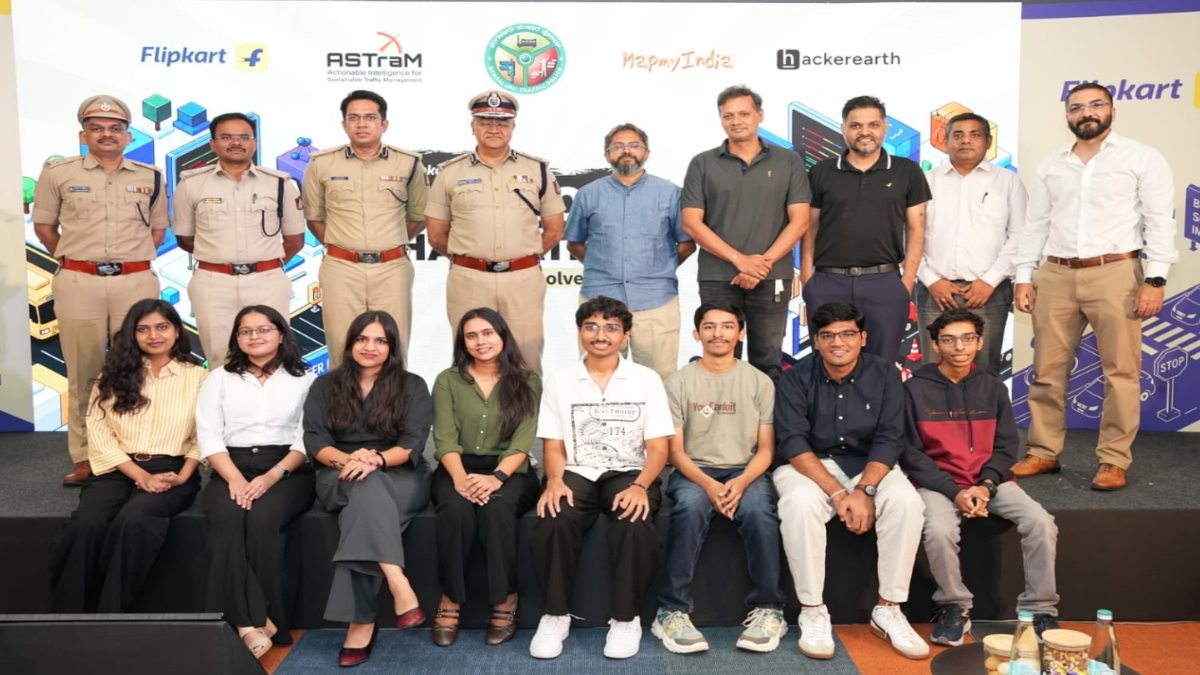
Gridlock Hackathon 2.0 has created the perfect scenario for exploring practical, data-driven urban mobility solutions by the city’s public sector and technology companies and innovators to begin to brainstorm and discuss how public institutions, technology companies and startups can come together to achieve the same type of urban mobility solutions that can be done in a data-driven way.
The initiative brought together the Bengaluru Traffic Police, Flipkart and a wider ecosystem of partners to facilitate innovative thinking on traffic and mobility challenges. Integrating the operational knowledge of the authorities with technology talent and innovative ideas of others, the hackathon provided a forum for participants to look at the problem and see the solutions.
In such a manner Bengaluru is a perfect location for such an initiative. As one of India’s major technology and business centres, Bengaluru has seen huge growth in population, commercial life and the movement of people and goods. That has resulted in a lot of traffic congestion and road and transportation infrastructure problems and traffic management has never been easy. But many of Bengaluru's problems are also reflected in other central Indian cities as well and so lessons from the city may be useful beyond Karnataka.
The thrust of Gridlock Hackathon 2.0 is that technology can also help cities to understand and manage transport better. Traffic management takes huge amounts of information from roads, junctions, vehicles, public transport systems and so forth. If the data is analysed properly it can reveal patterns of congestion and traffic flow and the resulting bottlenecks.
But data alone can’t solve urban mobility problems. Knowledge about how roads actually work in real-world situations is as important. Traffic police and other public agencies have a lot of operational knowledge about junctions, peak-hour congestion, emergency situations and local traffic behaviour. Combining such knowledge with technology and fresh thinking can help innovators come up with solutions that are more closely connected with actual conditions on the ground.
Flipkart and Bengaluru Traffic Police have collaborated in the past to explore and exploit the opportunities in urban mobility. With a huge logistics operation, Flipkart is also interested in efficient city mobility. The delivery of goods in the city is dependent on the regularity of its travel time and on the way of roads and highways. So an improvement in traffic flow can benefit not only the commuter but also businesses, logistics providers and the entire city.
Gridlock Hackathon 2.0 also gives technology professionals, students, entrepreneurs and the like the opportunity to think about traffic management outside the box. In most cases, hackathons do not only encourage participants to think outside of the box but also they will trial new things that could eventually be put to use and work in practical ways.
We could see technology-driven urban mobility strategies based on smart traffic management, predictive analysis, route optimization, congestion management, and better coordination among different agencies. Artificial intelligence and machine learning can also be used to find patterns in large data sets and help to make quicker decisions. But any technology is ultimately useful only if it is able to meet the needs of the people and institutions it is used to serve.
One of the most important aspects of projects such as Gridlock Hackathon 2.0 is collaboration. Urban mobility is not managed by a single organisation. Traffic police, municipal authorities, transport agencies, technology companies, logistics providers, researchers and citizens all interact with the transportation ecosystem. Bringing all these stakeholders closer to one another can help to pinpoint problems and think about solutions.
The Bengaluru experience also underscores the need for mobility innovation to be scalable. A solution that is built for one junction or corridor only benefits if it can be adapted to other locations. Innovations that are multi-layered and can address road design, traffic patterns and local conditions will have a much greater impact.
The collaboration will be especially important to cities in India as the population of metropolitan areas grows. Traffic congestion impacts productivity, travel time, logistics and the quality of life in India. Infrastructure investment and enforcement, better planning and technology-driven decisions that are more effective at planning and decision making are key strategies to solve these challenges.
Participating innovators are especially important because new technologies are changing how cities are handling transportation. More cities can now do more than build up existing road networks by better information and coordination—rather than just expanding them by building more infrastructure—and use new technology.
The success of Gridlock Hackathon 2.0 will ultimately be judged by what happens after the event. Ideas developed in a hackathon are really valuable when we can take the next step and put them to testing, implement and provide tangible results. We strongly believe collaboration between public authorities, technology companies and innovators is needed.
That initiative has also served as a very tangible message: complex urban mobility challenges in our city can be solved with different perspectives. Bengaluru's traffic problems are serious but they also create an opportunity for innovation. Through government institutions, technology companies and innovative problem solvers, programs like Gridlock Hackathon 2.0 will help to explore new ways to make city transportation smarter and more efficient.
Bengaluru’s traffic challenges are a good example of how govt, public institutions, tech companies & a wider community of innovators can come together to solve real-world problems.
— Rajneesh Kumar (@rajneeeshkumar) September 4, 2026
Gridlock Hackathon 2.0 brought together 33,600 participants & over 1,100 AI/ML prototypes.… pic.twitter.com/EiYFwDhRWt
If Indian cities continue to grow, partnerships built on data-driven operational expertise and innovation will be increasingly crucial in shaping the future of urban mobility. The Bengaluru model is a good example of how collaboration can turn complex transportation challenges into opportunities for technological experimentation and practical problem-solving.