The night sky is preparing for one of the most beautiful and culturally significant full moons of the year. The Harvest Moon will be in full form on 26 September 2026, and skywatchers can expect a bright full moon for the rest of the fall season. The full moon is expected to occur at about 10:19 pm IST in India according to astronomical data.
Although the Moon is at its full state on September 26, it will appear almost completely illuminated to the unaided eye on September 25 and September 26. That means skywatchers don’t necessarily have to wait for the full illumination to see it.
Why Is It Called The Harvest Moon?
The Harvest Moon is traditionally the full moon closest to the autumnal equinox. In 2026, the September full moon will be close to the equinox, making it the year's Harvest Moon.
The name is agricultural. Before electricity was widely available, the bright moonlight in the fall harvest periods allowed farmers to get some light after sunset. That allowed them to be in the field for longer hours and even to carry in crops.
So the term is a practical connection between the lunar cycle and traditional farming communities instead of suggesting that the Moon itself changes because of the harvest.
When Will The Harvest Moon Be At Its Fullest?
The full moon is expected to reach its peak at around 10:19 pm on September 26 in India.
However, the Moon will be visible at other times during the event. The evening of September 25 and the evening of September 26 both provide opportunities to see an almost completely illuminated Moon.
As the best viewing opportunity, the eastern horizon around moonrise after sunset should be visible to the eye. The best place to see the horizon is in an unobstructed view.
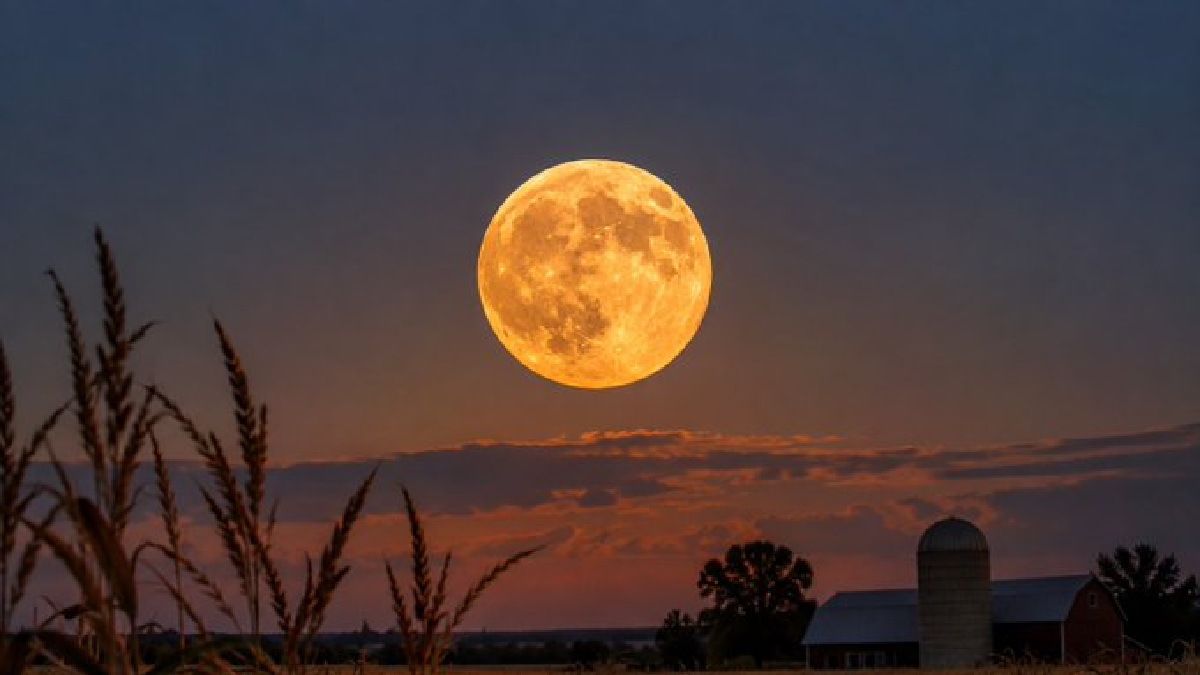
Why Does The Moon Look Golden?
One of the most attractive features of a full moon close to the horizon is its colour. When the Moon is low in the sky, the light from a full moon is carried away by more than three times as much of the atmosphere of Earth before reaching a person’s eyes.
The atmosphere tends to scatter short wavelengths of light more efficiently, and warmer colours can become more prominent. When seen from the horizon, the Moon may appear yellow, orange or golden when it is close to the horizon.
The effect can be most pronounced when the sky is clear, and the Moon is rising against a darkening evening sky.
It is interesting to recall that the Moon itself does not lighten up golden. The colour is primarily a result of looking at the Moon through Earth’s atmosphere.
How to Watch Harvest Moon 2026
The best part about this celestial event is that special equipment is not needed. The Harvest Moon can be seen with the naked eye, provided the weather is clear and the viewing location has a relatively unobstructed horizon.
Skywatchers will follow a few simple steps:
- Choose an open location with a clear view toward the east.
- Begin watching around sunset and shortly afterwards.
- Look for the Moon rising above the eastern horizon.
- Avoid areas with excessive artificial light if possible.
- Give your eyes a few minutes to adjust to the darker surroundings.
- Binoculars can be used for additional detail, although they are not necessary.
And photographers can also photograph the Moon alongside buildings, trees, monuments or far-away landscapes to make a more visual composition.
A Full Moon With Cultural Significance
The Harvest Moon has a well-established cultural history in various regions of the world. The full moon around this time in East Asia is associated with the Mid-Autumn Festival, also known as the Moon Festival. In China and other parts of East Asia, the festival is associated with family celebrations, moon viewing and mooncakes.
The Moon has also been a key part of agricultural calendars and seasonal practices in different cultures.
Is the Harvest Moon Bigger than other Full Moons?
The Harvest Moon is not a supermoon. Its speciality is its place on the seasonal calendar and its relation to the autumnal equinox.
But the Moon can look so large when it is close to the horizon. This is known as the Moon illusion, a phenomenon of the Moon appearing larger to humans when it is near the horizon than when it is higher in the sky. Atmospheric conditions may also contribute to its warm colour and striking appearance.
The 2026 Harvest Moon therefore brings together the timing of the moon, seasonal traditions and a visual appeal to an evening display.
With the full phase on September 26, skywatchers across India and elsewhere can look forward to a bright lunar spectacle. Whether seen with the naked eye, photographed against the evening skyline or just as a peaceful night sky event, the Harvest Moon is a perfect picture of Earth’s natural cycles and human culture and the universe.