Chief Air Chief Marshal AP Singh, the Chief Air Force officer, has said that India should accelerate the development of indigenous advanced medium combat aircraft (AMCA) which has been delayed and may force the country to seek other platforms.
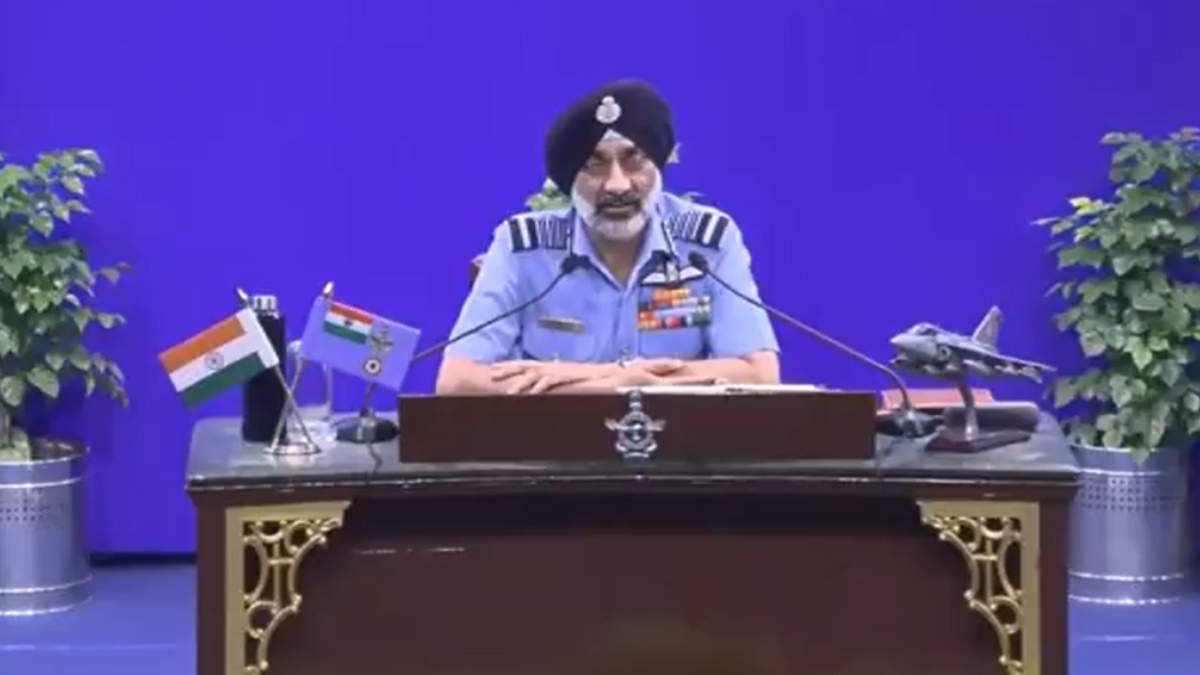
Singh made his comments at his annual press conference in New Delhi on 3 October 2026 to celebrate Air Force Day. His comments come at a time when the IAF is still fighting a shortage of fighter aircraft squadrons in addition to a shortage of fighter aircraft squadrons.
IAF may consider other fighter platforms
The Air Force might need to look at other fighter aircraft if the AMCA programme is delayed further, Singh said.
The comments do not constitute a final decision to purchase a foreign fifth-generation fighter, however. According to Singh, Russia has offered its Su-57 aircraft to India but no decision has been taken on the proposal.
He also stressed the requirement to increase the number of aircraft available to the Air Force, with the IAF trying to bridge the gaps in its fleet that exist due to its aging fleet and the retirement of older platforms.
AMCA remains India’s Indigenous Option.
The AMCA programme remains central to India's long-term plan for developing an indigenous fifth-generation fighter aircraft.
The programme is being developed within India's defence research and industrial ecosystem, with the Aeronautical Development Agency playing a key role. The first AMCA prototype is currently expected to fly around 2028 and induction plans for the years to follow are in place.
The IAF wants the programme to move forward without further delay and alternative options for the near-term capability needs are also being considered, according to Singh's recent comments.
China and Pakistan factor into India's concerns
India's fifth-generation fighter debate is also taking place against the backdrop of developments in China and Pakistan.
China has already deployed the J-20 and its J-35 programme has attracted international attention. Pakistan could acquire China's J-35 aircraft as well.
In March 2025, Singh admitted that reports of Pakistan acquiring a fifth-generation aircraft from a neighboring country are circulating in the open-source intelligence domain. At that time he said India would need to be ready for technological developments and to be ahead of emerging threats.
#WATCH | Delhi: On China developing fifth-generation aircraft, Indian Air Force chief Air Chief Marshal AP Singh says, "Reports suggest that Pakistan may acquire them in the near future. There are even reports that their pilots are already undergoing training in China.… pic.twitter.com/6b71s8EdyE
— ANI (@ANI) October 3, 2026
Capability Is More Than One Aircraft
Singh has also stressed that air combat capability is not only in the aircraft itself but also how all platforms, weapons, sensors and support systems are integrated.
This approach is especially useful as India is growing to have fighter aircraft, unmanned systems and advanced weapons.
The chief of the IAF, too, has highlighted the growing role of drones and loitering munitions, stating that such weapons have to work alongside other weapons rather than operate alongside them.
India faces decision on AMCA Timeline.
The latest comments put the spotlight on the timeline for India's fifth-generation fighter capability.
India is continuing with AMCA and investigating how to address capability gaps during the development period. Any decision on an alternative foreign fighter would involve separate government and defence procurement processes.
For now, Singh’s message is that the AMCA programme needs to progress quickly, while the Air Force must retain options if delays affect the planned induction timeline.