Saudi Arabia is preparing for a possible military operation to take control of Yemen's Houthi forces as Riyadh goes to war over the strategically vital Bab el-Mandeb Strait. This may be at a time when the wider Middle East is already experiencing widespread disruption to maritime trade and energy channels.
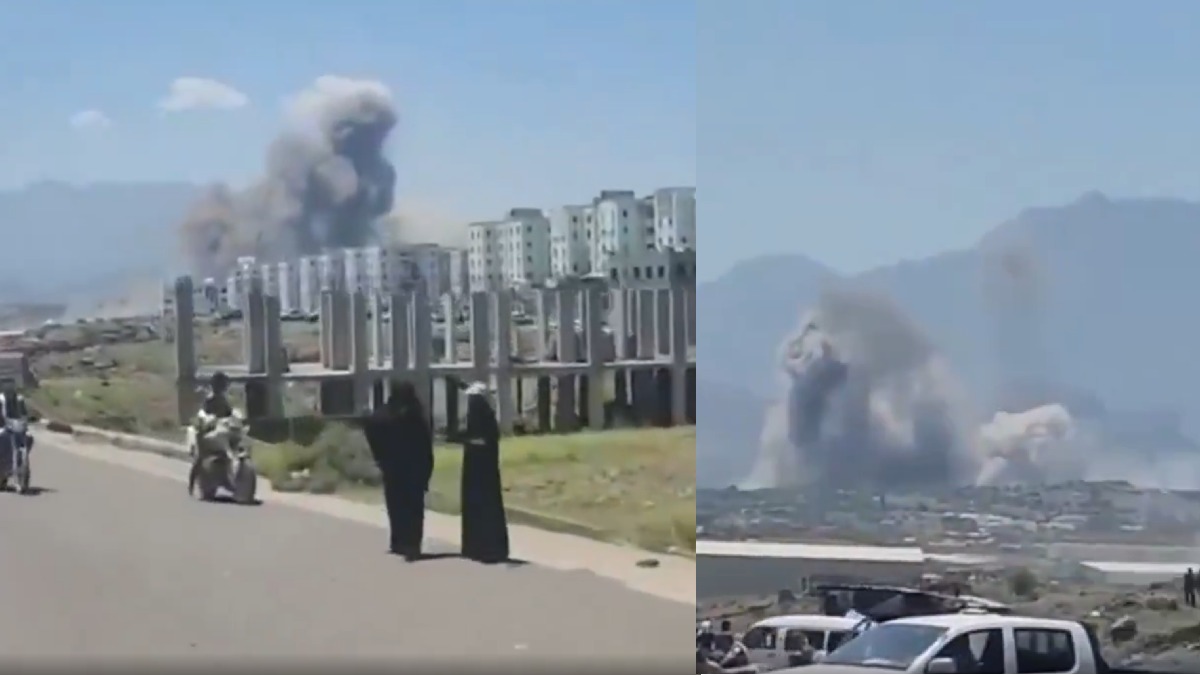
Regional and Western officials say Saudi Arabia is considering options ranging from a regional coastal operation around Bab el-Mandeb to a wider offensive on multiple fronts. The campaign is likely to take place in the next weeks and will depend heavily on Saudi-backed Yemeni forces on the ground, backed by air support from Saudi air power.
The development has also revealed a changing network of military and security support in Saudi Arabia. The U.S. is providing intelligence and other non-combat assistance while Pakistan and Turkey have provided military equipment. France is also preparing defensive support for Saudi Arabia's Red Sea port city of Yanbu.
Bab El-Mandeb Becomes More Important For Saudi Arabia
Bab el-Mandeb is one of the world's major maritime chokepoints, connecting the Red Sea to the Gulf of Aden and providing a route between the Indian Ocean and the Mediterranean through the Suez Canal.
The waterway has become strategic because of the disruption of the Strait of Hormuz during the Iran conflict. With shipping through Hormuz so badly affected, alternatives to the Red Sea have become critical for regional energy exports and international trade. Houthi expansion in Yemen’s Red Sea coast has also been described as a major change in the maritime security environment there.
Houthi forces recently made rapid gains along Yemen’s western coastline and took control of areas around the Bab el-Mandeb passage, Reuters reports. Riyadh now faces pressure to restore access and prevent the strait from becoming a longer-term source of leverage for the Houthis.
US Support Without Direct Combat Role
The potential Saudi operation also illustrates a shift in Riyadh’s relationship with foreign military assistance. Washington is sharing intelligence and targeting information with Saudi Arabia but the United States is not currently expected to take part in combat operations directly.
Trump refused a request from Saudi Crown Prince Mohammed bin Salman for direct involvement of American military involvement in the situation. Reuters reported that President Donald Trump rejected a Saudi Crown Prince Mohammed bin Salman’s request for direct American military involvement, including air support.
The distinction could prove crucial for the Saudi campaign. Riyadh would have access to American intelligence tools, while relying entirely on its own forces and regional partners for the offensive itself.
The US-Saudi relationship has traditionally been one of close security cooperation -- at least regarding Saudi energy infrastructure and regional threats. But the situation currently is one in which Saudi Arabia has to work with a wider set of partners to deal with a conflict affecting its territory and its oil exports.
Pakistan And Turkey Provide Support
Pakistan has emerged as another important part of the security arrangement around Saudi Arabia. Reuters reported that between 30,000 and 40,000 Pakistani troops are deployed in Saudi Arabia to protect the kingdom’s borders and assist with missile and drone interceptions. Islamabad has not decided to send these forces into Yemen for combat operations, said a Pakistani official cited by Reuters.
Pakistan has also supplied military equipment, including air defence systems, artillery and drones, to Yemen's Saudi-backed government, officials cited in the Reuters report said.
Turkey is also part of the emerging support structure. Turkish drones purchased by Riyadh have been deployed over Yemen, according to regional and Pakistani officials cited by Reuters.
The military cooperation is also in line with the Saudi-Turkish-Pakistani Mecca Joint Defence Agreement signed in August. Pakistan's foreign minister has also announced plans for an emergency meeting of the pact's members in Riyadh to discuss the Houthi escalation and possible diplomatic engagement.
France To Help Protect Yanbu
France is also preparing a defensive role in Saudi Arabia. Reuters reported that Paris plans to deploy defensive systems and troops to help protect Yanbu, the important Saudi Red Sea port city.
Yanbu is strategically significant because Saudi Arabia utilizes its Red Sea infrastructure and East-West pipeline network to move oil to the west coast, as opposed to routes through the Strait of Hormuz.
The protection of such infrastructure is more important as Houthi missile and drone attacks pose more security risks. Saudi Arabia has thus been seeking defensive assistance from several partners even as it considers offensive operations in Yemen.
The Biggest Challenge Could Be On The Ground
The proposed operation would rely heavily on Yemeni factions backed and equipped by Saudi Arabia. This is a challenge because anti-Houthi forces in Yemen are divided among different political and military groups.
Reuters quoted Yemen analyst Mohammed Albasha, who said that many anti-Houthi forces are still poorly structured to carry out a sustained campaign against the Houthis. Clashes among rival Yemeni factions have weakened the anti-Houthi camp as well, the report said.
This is what makes the proposed operation different from the conventional campaign, in which a single military command controls all the forces involved. Riyadh would need to coordinate multiple Yemeni groups together and keep them together enough to hold territory if the offensive was successful.
The local forces issue was also raised by Saudi political analyst Ali Shihabi, who said success of the operation would depend largely on how effectively those forces perform.
Limited Coastal Operation Or Wider War?
Saudi Arabia is likely to take two broad approaches, one in particular, to the Red Sea coast and Bab el-Mandeb. The other would involve attacks on the Red Sea coast and Bab el-Mandeb itself. The second would cover a number of different areas of Yemen, particularly the Al-Bayda, Marib, Taiz and Al-Jawf. Some officials in the media have speculated that up to 100,000 Yemeni soldiers could be mobilised depending on the size of the operation.
Saudi Arabia is preparing to fight for the Red Sea. The bigger story is who is standing behind it, and who is not.
— Anomalon (@Ferm0s) October 3, 2026
A Saudi offensive against Yemen's Houthis could start within weeks. Last month the Houthis seized Bab el-Mandeb, the narrow strait at the Red Sea's southern end.…
A small coastal operation could keep the immediate objective of reopening the maritime route in mind. A larger campaign, however, would carry much greater military and political risks.
The Saudi-led intervention that started in 2015 is relevant to the calculations regarding any new offensive. The war clearly demonstrated the difficulty of achieving lasting military and political results in Yemen, in which competing local factions, tribal interests and regional power have complicated efforts to reach a single settlement.
Red Sea Security Has Become A Global Issue
The potential Saudi offensive is not only about the country's relationship with the Houthis. Bab el-Mandeb is an international shipping route, so a long-standing conflict around the Strait could affect global trade, energy shipments and maritime insurance costs.
It is being compounded by more profound turbulence in the Strait of Hormuz and Gulf. Some analysts have said that simultaneous disruptions at several maritime chokepoints could put additional pressure on international supply chains.
The immediate priority for Saudi Arabia is to secure its territory, infrastructure and access to the Red Sea. For its partners the challenge is to provide security assistance without being directly involved in another prolonged regional war. The coming weeks will be crucial to Riyadh as it weighs the scope of any operation. If Saudi Arabia decides on a limited coastal campaign or a larger campaign, the effectiveness of its Yemeni partners, the level of foreign support and the threat of Houthi retaliation will be key to what happens next.