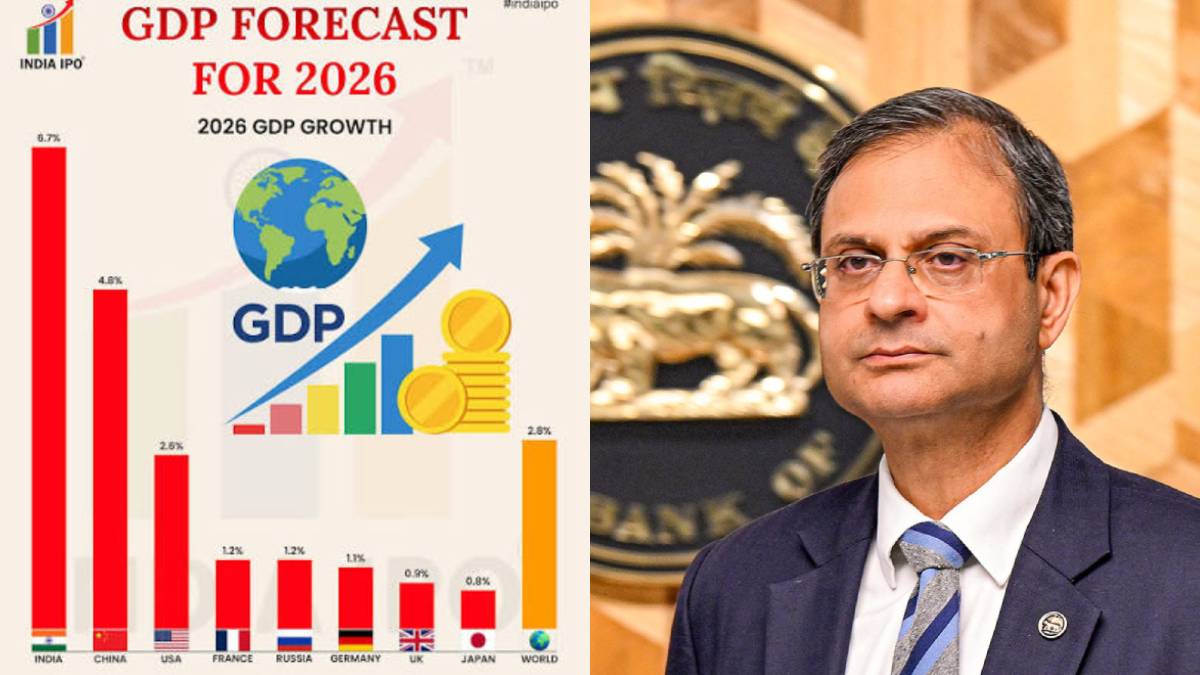
Narendra Modi has said that India has maintained a strong 7.7% economic growth rate despite the continuous conflict in West Asia and other global economic challenges, showing the country's resilience and that its economic policies are working against world markets.
On this, he noted that the economy of India is very strong while countries in the world are still struggling with geopolitical tension, supply chain challenges, inflationary pressures, and slow global demand.
PM Modi said the economic progress of India is a result of the good cooperation of the people, businesses, industries, farmers, entrepreneurs, and policymakers. He said the country has good macroeconomic fundamentals, fiscal prudence, and long-term reforms that enable it to navigate an uncertain world while still growing at a fast rate among the largest economies.
The Prime Minister pointed out that the conflict in West Asia, a strategically important region for global energy supplies and international trade, has created significant economic uncertainty around the world. Rising geopolitical tensions have affected oil prices, shipping routes, logistics networks, and investor sentiment. In spite of these external pressures, India has been able to sustain strong economic momentum through domestic demand, infrastructure investment, and policy continuity.
Modi says India’s growth has been supported by increased public investment in infrastructure, digital transformation, manufacturing expansion, and ease of doing business, which has been helped by the government’s investment in roads, railways, ports, airports, renewable energy, and digital infrastructure, which have brought more jobs in different sectors.
The Prime Minister also highlighted the role of India's rapidly growing digital economy. Digital payment systems, technology-enabled governance, financial inclusion efforts, and startup growth have transformed various sectors to enhance economic activity and make the economy more efficient and accessible. Digital innovations continue to drive productivity and service delivery for millions of people, he said.
PM Modi also mentioned that the manufacturing industry in India has been growing with the help of domestic production and global investment. In the next ten years, industrial development, electronics manufacturing, semiconductor investment, and advanced technology are expected to strengthen India as a manufacturing destination worldwide.
Agriculture is still an essential part of India’s economic resilience. Rural infrastructure, irrigation, digital agriculture, and support mechanisms are ongoing projects to develop farmers’ productivity and improve their incomes in the country. The Prime Minister has made it clear that balanced development in urban and rural areas is the focus of the country’s long-term growth plan.
International economic conditions continue to be challenging for many countries with high inflation, tighter monetary policies, slower trade growth, and geopolitical instability. The West Asia conflict has added fuel to international energy security, transportation costs, and supply chain reliability fears. These developments have impacted economies worldwide, making sustained growth increasingly difficult.
Against this background, Modi said India’s performance indicates the strength of India’s domestic economy and the confidence of investors. Foreign investment, growing exports in various sectors, expanding services, and increasing domestic consumption have helped maintain growth despite external uncertainties.
Economists have frequently identified India's huge consumer market, demographic advantage, infrastructure expansion, and ongoing structural reforms as major drivers of medium- and long-term economic growth. Investments in renewable energy, artificial intelligence, logistics, healthcare, education, and advanced manufacturing are expected to continue to drive future economic growth.
The Prime Minister has reaffirmed that the government will continue investing in infrastructure and social welfare and that it will maintain fiscal discipline. He said economic development should be inclusive and that growth must ensure that the benefits of growth are provided to all sectors of the population, from better jobs to public services, more connectivity to access to financial resources.
He also said India is becoming stronger in the global economy and is still an important player for global economic stability. Updates to the regulatory system have also helped build confidence and attract international partnerships with investment in India.
PM Modi maintained India's economic fundamentals remain strong enough to sustain future growth. The long-term vision of India is based on innovation, infrastructure development, manufacturing, digital transformation, and human capital development, which are core to the future progress of India.
The Prime Minister ended by saying India was able to maintain a 7.7% economic growth rate despite geopolitical tension and economic pressure on the global economy, reflecting the determination of its people. He said the government is committed to continuing reforms and development to achieve inclusive growth and long-term prosperity for India.