The RBI has raised its projection for the real GDP growth in India in 2026–27, and the economy is expected to expand by 6.7% in the current year.
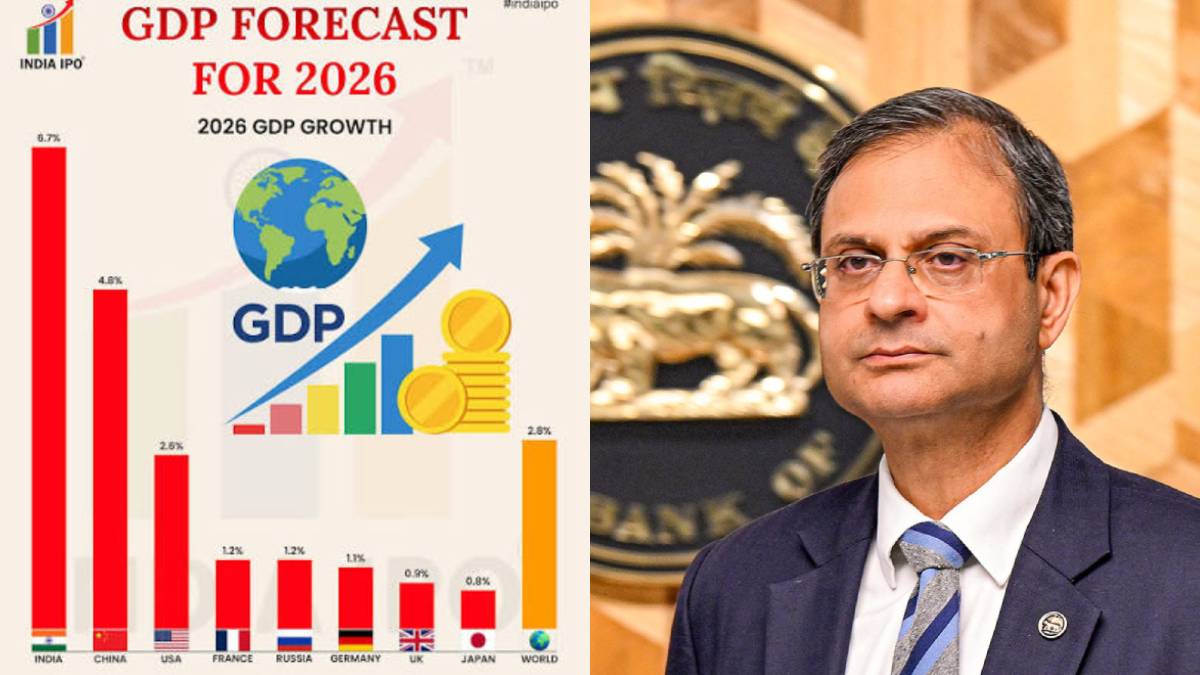
Looking forward to the revised outlook, Malhotra said India’s FY27 real GDP growth forecast was 10 basis points higher than the central bank’s previous one. As 100 basis points is equal to 1 per cent, this represents an increase of 0.10 per cent.
As the new projection is based on a better view of India’s economy from the RBI’s perspective and reflects the confidence of the central bank in India’s growth momentum, it is not surprising that the new projection is coming at a time when India’s economy is faced with changing global trade dynamics and geopolitical uncertainty, and fluctuations in international commodity markets.
Real GDP measures goods and services produced in an economy after inflation is factored in. It is therefore an important indicator of underlying economic growth because it reflects changes in actual economic output rather than price increases.
The 6.7% growth rate would keep India among the fastest-growing major economies. With domestic consumption, government capital expenditure, infrastructure development, investment activity and the expansion of several services and manufacturing sectors, the country’s growth outlook has been supported.
The revised RBI estimate also points to domestic economic demand as an important driver of growth. Stronger household consumption, public infrastructure spending and private sector investment can aid in economic momentum even when external conditions remain uncertain.
The central bank regularly reviews its growth forecasts based on domestic demand, inflation, agricultural output, industrial production, global trade and financial market conditions. In the future, changes in those factors could affect economic activity and the RBI will have to revisit its forecast of the growth rate in future monetary policy reviews.
The increase of 10 basis points is small, but it is meaningful because it means the RBI expects economic activity to be somewhat better than previously estimated. It also provides an updated benchmark for policymakers, businesses, investors and financial institutions that will be looking at India’s medium-term economic outlook.
The latest growth projection will be closely watched along with the RBI’s inflation assessment and monetary policy decisions. Central bank policy generally tries to balance the need to support economic growth with the goal of price stability.
The 6.7% growth projection is a good one, but the actual growth outcome will depend on a number of variables. These include the performance of the monsoon and agricultural sector, private investment, global economic conditions, energy prices, demand for goods and services, and international trade.
India’s economic performance in FY27 will also be influenced by how well domestic demand remains resilient, and whether infrastructure and manufacturing efforts are effective and whether they translate into broader revenue growth across all sectors.
With the revised forecast, the RBI has shown a more optimistic outlook on India’s growth prospects for FY27. The central bank’s 6.7 percent real GDP growth forecast— up by 10 basis points— is a testament to India’s resilience in a very uncertain global environment.