For nearly a decade, Kerala man Sivarajan has been cooking breakfast for hundreds of crows every morning. The painter from Balaramapuram (a suburb of Thiruvananthapuram) has made an ordinary morning ritual into an extraordinary act of kindness that has drawn his neighbours’ admiration.
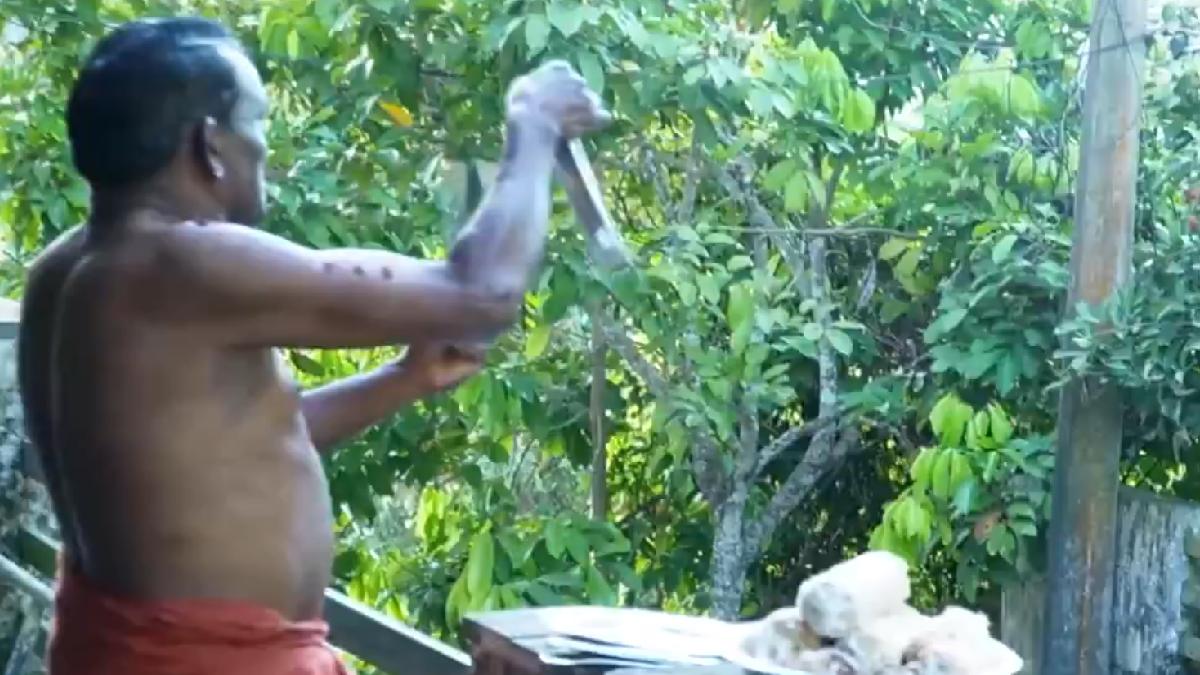
Sivarajan rings a bell every morning to signal breakfast is ready. But the bell is not meant to call family members to the dining table or neighbours to the table. It is an invitation to the huge number of crows who gather around his home. Almost immediately after the bell rings, birds come in large numbers, waiting for their delicious meal.
Sivarajan’s breakfast is puttu, one of the most popular traditional dishes in Kerala. Made of coarsely ground rice flour and grated coconut and steamed in a cylindrical mould, puttu is an all-day breakfast that we eat in Kerala and is a popular breakfast across the state. But for Sivarajan, it is a meal for creatures dependent on the generosity of others for food.
What’s most remarkable about his story is the consistency with which he has continued to feed the crows. Sivarajan and his wife started feeding the crows ten years ago. It was reported that only 10 or 15 crows would come by. Over the years, word (or rather the familiar morning call) seems to have spread through the local crow population. Today there are hundreds of crows in the vicinity for the daily meal.
So many crows gather to have breakfast in the neighbourhood. The birds have somehow integrated Sivarajan’s morning routine into their lives and are responding to the bell that has been ringing for years. What started as a small group of birds has made into an extraordinary daily gathering of birds.
Sivarajan’s motivation is also very simple. A devoted follower of Lord Shiva, he does not perform the ritual for fame, publicity or spiritual reward. Instead, he considers feeding the crows an expression of a basic human responsibility: caring for creatures that cannot always care for themselves.
His approach demonstrates that compassion doesn’t need an elaborate gift or a big gesture. A basic meal every day, cooked with care and brought back often, has made a human family and a large number of wild birds. The same has made the couple a lot of admirers among local folks who have seen the couple sticking it out for each other every year.
Meet the Keralam man who cooks breakfast for hundreds of crows every morning.
— News Arena India (@NewsArenaIndia) September 4, 2026
Sivarajan rings this morning bell every day, and has been doing so for the last 10 years.
It is a call signalling that breakfast is ready, not for human beings, but for crows.
Hundreds of crows in… pic.twitter.com/1Z6FIESggy
The story is a reminder that kindness toward animals can become a part of your daily life. With the city filled with buildings, traffic and human activity, birds and other animals are still sharing the same space with people. Little efforts to feed and care for them can make a difference in situations where natural food sources aren’t always readily available.
For Sivarajan there seems to be no desire for recognition. His morning bell, which rings itself out consistently after years of repetition, is much more personal: a vow to keep caring for creatures that have come to depend on his kindness.
From a handful of 10 or 15 crows to hundreds each morning, the change is very clear that consistency is key. Sivarajan’s story from Balaramapuram is less about the quantity of food and the number of birds and more about the spirit behind the gesture. His decade-long routine shows us that compassion can be expressed in the simplest acts—and that sometimes, a humble morning meal can make a great connection between human beings and nature.