India and Bhutan have further strengthened their long-standing relationship with a concessional LoC for energy projects in Bhutan at an estimated cost of ₹4,000 crore. It is all part of a bigger development and energy partnership between the two neighbouring countries and will be discussed on the agenda during S. Jaishankar's visit to Bhutan from 16 September to 17 September 2026. The agreement will be beneficial for energy development projects as well as further cooperation in an area that has been very important to India-Bhutan relations.
The LoC valued at ₹4,000 crore was signed through an Umbrella Line of Credit Agreement between the Royal Government of Bhutan and the Export-Import Bank of India (Exim Bank) in July 2026. The deal is for concessional financing for energy projects in Bhutan. The development provides a financing framework through which eligible energy projects can get support and reflects the importance both countries attach to expanding Bhutan’s energy capabilities.
Energy cooperation has been one of the most important pillars of India-Bhutan economic relations for decades, especially through hydropower. India and Bhutan have jointly developed several major hydroelectric projects like Chukha, Kurichhu, Tala, Mangdechhu and Punatsangchhu-II. These five projects have a combined capacity of 3,156 MW and account for approximately 90 percent of Bhutan’s installed electricity-generation capacity.
Thus the latest Line of Credit is based on an existing energy partnership in Bhutan. Bhutan has significant hydropower potential, and India has continued to be a partner in the development and purchase of power generated from Bhutanese projects. Cooperation in this area has helped in infrastructure development, energy access and economic links between the two countries.
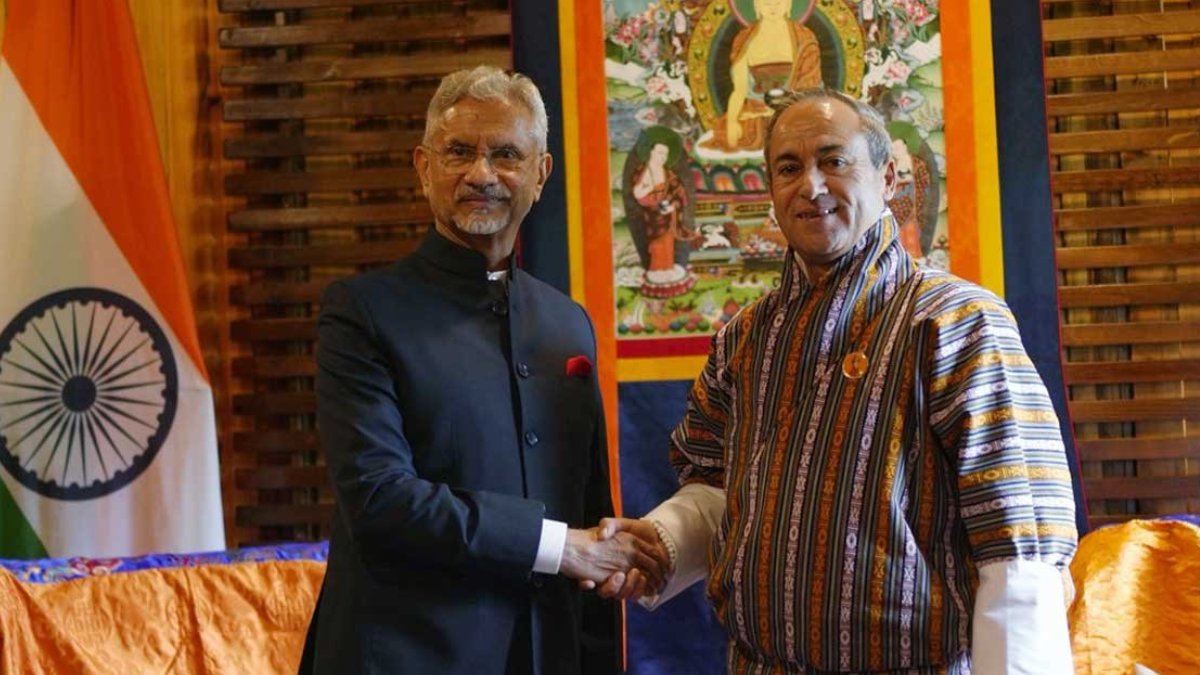
Jaishankar’s visit also highlighted a number of other areas of bilateral cooperation. In his meetings with Bhutanese officials, he had discussions on development cooperation, energy, trade, connectivity and culture and people-to-people relations. He also met Bhutanese Foreign Minister D.N. Dhungyel and Prime Minister Tshering Tobgay and King Jigme Khesar Namgyel Wangchuck. The visit was presented as part of regular high-level exchanges between India and Bhutan.
Energy-based cooperation is also expanding beyond hydropower. India and Bhutan are institutionalizing cooperation in renewable energy via a memorandum of understanding on solar energy, wind energy, biomass, energy storage, green hydrogen and capacity building. This broader framework could allow the two countries to explore a wider range of clean-energy opportunities with Bhutan’s hydropower sector.
The ₹4,000-crore financial arrangement forms part of India’s broader development cooperation with Bhutan. India has been providing ₹10,000 crore for Bhutan’s 13th Five-Year Plan covering 2024–2029 and other development programmes have also been supported by India. Infrastructure, healthcare, connectivity, digital payments and other sectors have also been tackled by the two governments.
The recent developments illustrate the breadth of India-Bhutan relations where energy cooperation is a part and parcel of infrastructure development and social-sector projects. Jaishankar’s visits also witnessed the launching and inauguration of various development projects in Bhutan, which is indicative of the very wide range of bilateral cooperation in Bhutan.
For Bhutan, access to concessional financing can support the development of energy infrastructure and related projects, while strengthening the country’s ability to use its energy resources. For India, deeper energy cooperation with Bhutan also further strengthens our economic and infrastructure ties with a neighboring Himalayan country.
India, Bhutan welcome Rs 4000 crore Line of Credit for energy projects during EAM Jaishankar's visit
— ANI Digital (@ani_digital) September 18, 2026
Read @ANI Story | https://t.co/zbdw8Yn8hT #Jaishankar #Bhutan #India pic.twitter.com/cFhrFJhd9J
That is why the Line of Credit is so significant not only for the financial resources that it provides but also for the larger framework of India-Bhutan cooperation. With both countries looking at hydropower and newer renewable energy opportunities, the agreement is another tool for furthering Bhutan's energy sector development.
Jaishankar’s visit here in September has placed energy, development and connectivity very much at the center of the bilateral agenda. With the LoC now operationalised and cooperation expanding into renewable energy, India and Bhutan will continue to work together to find the connections between energy development and the growth of the country as well as the development of the regional economy and cooperation.