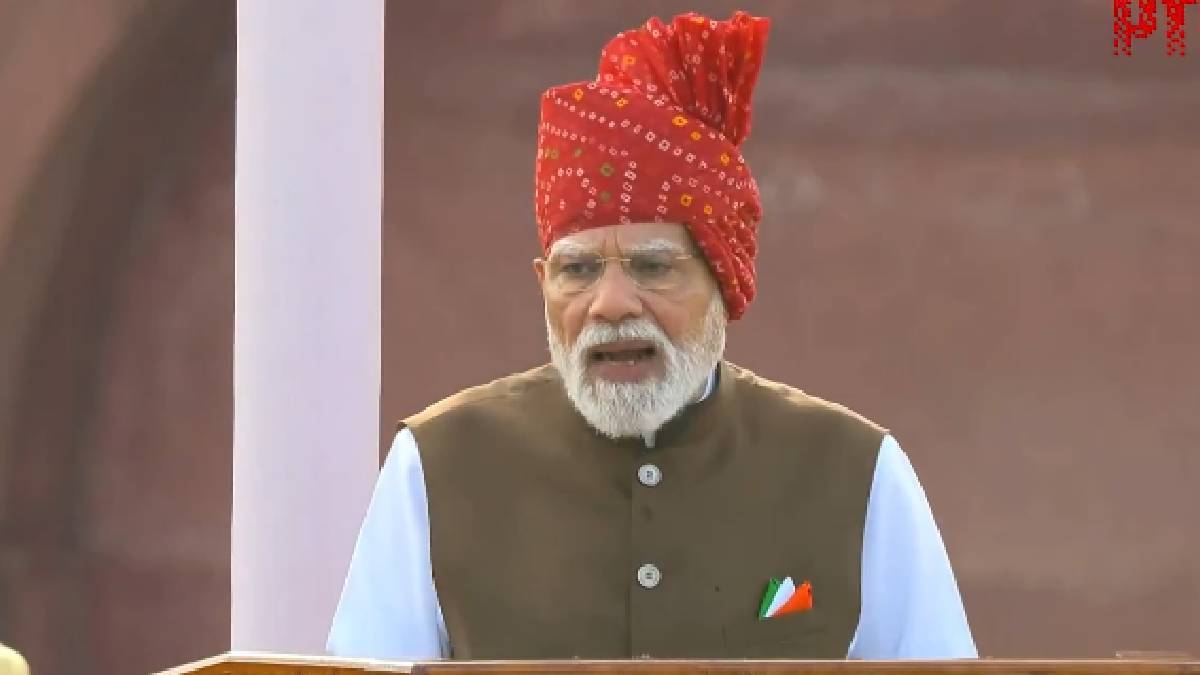
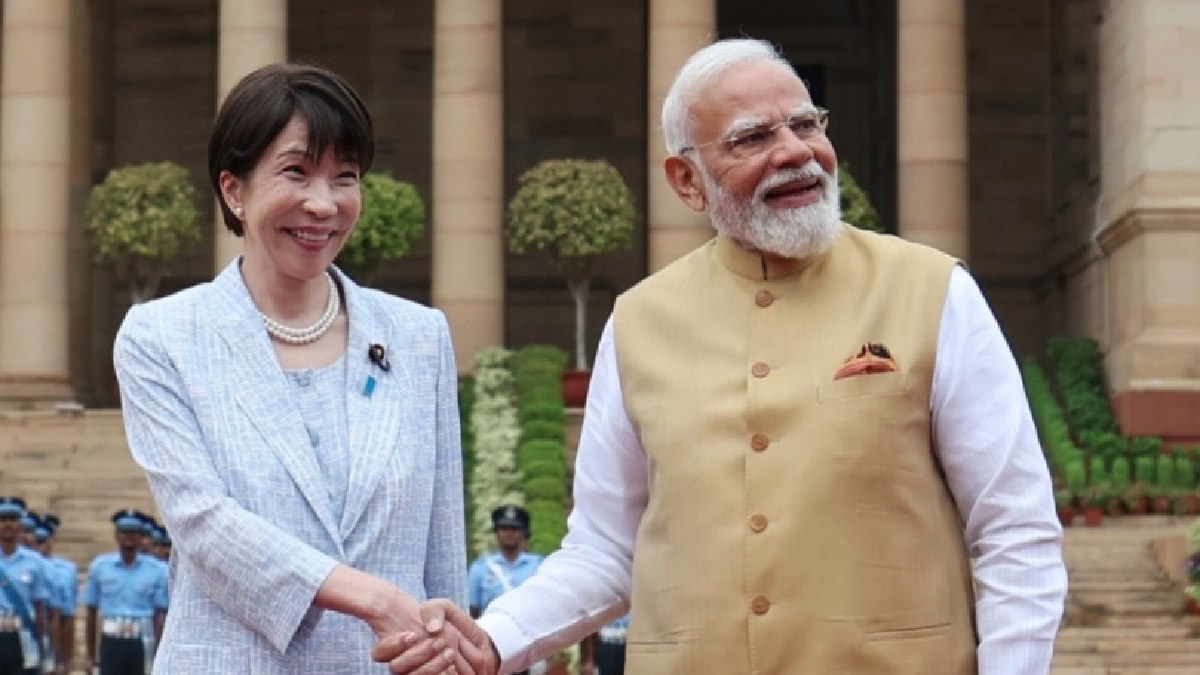
India and Japan on Thursday cemented the strategic partnership with the signing of their first-ever defence co-development project as Prime Minister Narendra Modi and Japanese Prime Minister Sanae Takaichi held wide-ranging talks on the 16th India-Japan Annual Summit in New Delhi. The two leaders also unveiled a series of initiatives on semiconductors, quantum technologies, clean energy, resilient supply chains and investment that marks a new phase in bilateral cooperation.
The prime minister went on to say technology is a vital aspect of the India-Japan relationship and said the partnership is still built on trust and common democratic values.
"Just a few days ago at the G7 Summit, I remarked that in today's world of global turbulence, mutual trust is our greatest strategic asset. I am proud that the India-Japan partnership fully lives up to this standard," Modi said.
Narendra Modi welcomed Takaichi on her first visit to India as Japan’s Prime Minister, and said that Takaichi was a visionary and popular leader of her country and that she is the first woman Prime Minister elected in Japan. He also talked about the cultural affinity between India and Japan and the fact that Takaichi is from Nara Prefecture which is a part of the common Buddhist heritage of India and Japan.
The largest announcement from the summit was the signing of the first India-Japan defence co-development project, a major milestone in security cooperation between the two Indo-Pacific partners.
"We have signed our first co-development project in defence today. We will jointly develop defence technologies that will contribute to regional peace, maritime security and a rules-based order," Modi said.
The two leaders reaffirmed their commitment to a free, open and rules-based Indo-Pacific and that peace, stability and freedom of navigation in the region were fundamental.
Given the growing geopolitical and economic uncertainty, India and Japan also proposed together a roadmap for energy security, economic resilience and technology cooperation.
"In today’s uncertain times, energy security and economic security are extremely important. We have produced a joint roadmap. It covers semiconductors, quantum technologies and strengthening supply chain resilience."
The roadmap will also help to expand collaboration in strategic areas that are very important to future economic growth and technological leadership.
Another important outcome of the summit was the launch of the India-Japan Biogas Initiative for biogas plants in India, which both countries have a commitment to developing. Modi said it would focus on clean energy, improve rural livelihoods and contribute to sustainable development, and enhance cooperation on renewable energy.
Economic ties were also very much a part of the conversation. Modi said that about 120 new business agreements had been made over the past year with investments of approximately USD 10 billion in India. He also said that Japan would have 10 trillion yen investment in India in the next decade and the level of Japanese companies' confidence in India's economy was growing.
The summit also reviewed progress across a broad spectrum of bilateral cooperation covering trade, infrastructure, digital innovation, supply chains, critical technologies, security and people-to-people exchanges.
The Indian delegation included Foreign Affairs Minister S. Jaishankar, National Security Adviser Ajit Doval, Foreign Secretary Vikram Misri and others.
Earlier in the day, Prime Minister Takaichi was accorded a ceremonial Guard of Honour at Rashtrapati Bhavan before she started her official engagements.
Official Spokesperson of the Ministry of External Affairs Randhir Jaiswal described the visit as a reflection of a partnership “built on trust and rooted in shared values."
Takaichi is on a three-day official visit to India from July 1 to 3 at the invitation of Prime Minister Modi. As stated by the Ministry of External Affairs, the summit will give both countries the opportunity to deepen cooperation in strategic, economic, technological and security fields and strengthen the India-Japan Special Strategic and Global Partnership.
The agreements announced at the meeting underscore the expansion of India-Japan relations in all fields of technology, defence cooperation, and resilient supply chains on which both countries are focused in the fast-paced world.