India and Myanmar have been talking about connecting the undemarcated stretches along their shared international border in various sectors, but the Ministry of External Affairs (MEA) has said bilateral talks are ongoing to conclude the border.
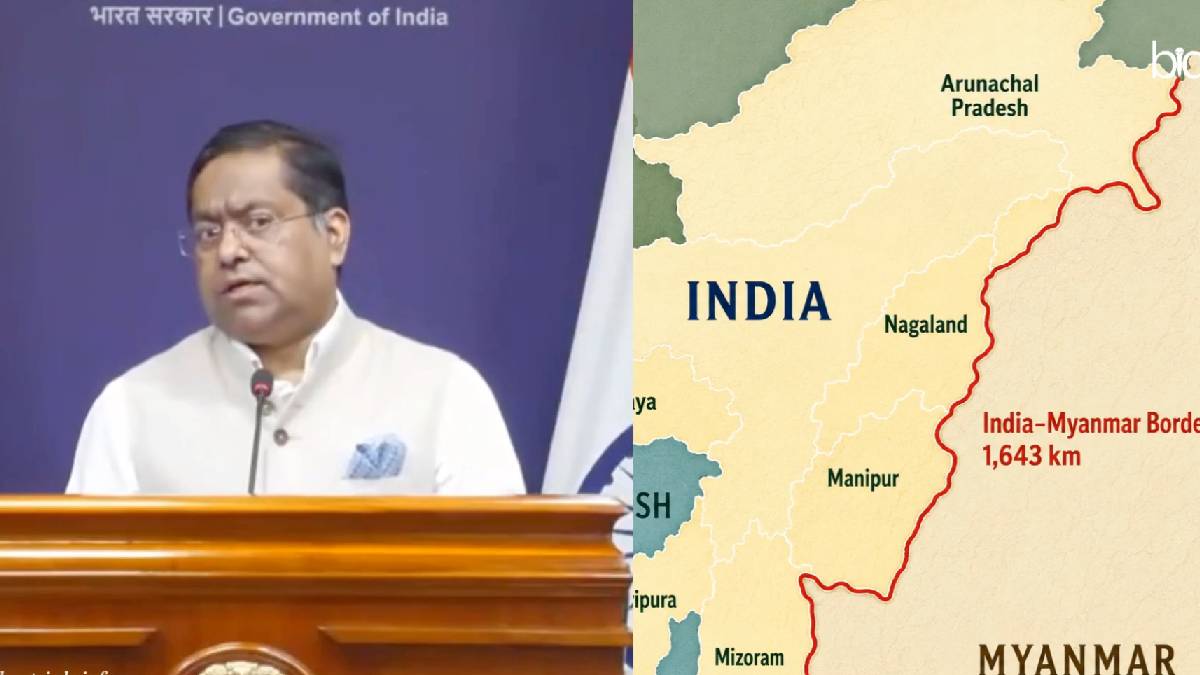
The development comes as the two countries are considering a possible adjustment involving about 1.4 square miles of land in Manipur's Chandel district, especially in the area between Border Pillars 65 and 68. But MEA does not confirm any concluded agreement of a land swap or transfer.
🚨 JUST IN: 🇮🇳 India May Swap Land with 🇲🇲 Myanmar in Manipur | MEA CONFIRMS BORDER TALKS
— Beats in Brief 🗞️ (@beatsinbrief) August 6, 2026
India and Myanmar are in talks to settle undemarcated border stretches, the MEA said on Tuesday.
Reports point to a possible exchange of about 1.4 square miles in Manipur’s Chandel… pic.twitter.com/o6gkrvbGTs
According to official statements, the ongoing discussions aim to finish the demarcation of sections of the 1,643 km India-Myanmar border, where some of the sections are unclear or disputed due to the historical boundary alignment and geographical problems.
A border clearly drawn would facilitate the construction of border fencing and enhance surveillance to curb illegal immigration, cross-border smuggling and insurgent movement, officials said. Because of the hard terrain and the presence of several insurgent groups in the area, the India-Myanmar border has long been a sensitive one.
The proposed demarcation exercise is also linked to the Centre’s overall efforts to enhance border management and national security in India’s northeastern states. Authorities have always maintained that fencing vulnerable sections of the border is to protect the security of the border as well as better control of cross-border movement.
However, the possibility of a territorial adjustment has worried local organizations in Manipur, especially in Chandel district. Several civil society organizations and community leaders have strongly opposed any proposal that would involve the transfer of territory.
These groups have asked the Central Government and the Manipur administration to be more transparent about both the exchange of land and for the authorities to tell if there is any possibility of a land deal going forward. Local communities must be consulted prior to territorial boundaries being determined, they have said.
The MEA has maintained that the discussions with Myanmar are part of the normal bilateral process of settling undemarcated border segments and ensuring that the international boundary is accurately defined on the ground. These kinds of exercises are common between neighboring countries where historical boundary alignments need technical verification and joint surveys.
Border delimitation and demarcation usually involve technical discussions, field surveys, and agreement between both countries. If needed, any adjustment to the alignment would usually be made with bilateral consent and follow all diplomatic and legal protocols.
India and Myanmar have deep strategic, economic, and cultural ties, with the border being one of the major routes for trade and connectivity. Meanwhile, the region is experiencing persistent threats that include insurgency and illegal cross-border activity, and border management must be a top priority of both governments.
As talks continue, no final agreement on any territorial adjustment has been officially announced. The outcome of the talks will be closely watched by stakeholders in Manipur as well as policymakers involved in India’s border security and regional diplomacy.