India has experienced its first decline in national highway fatalities since the Covid-19 pandemic, a significant step in the country's overall road safety campaign.
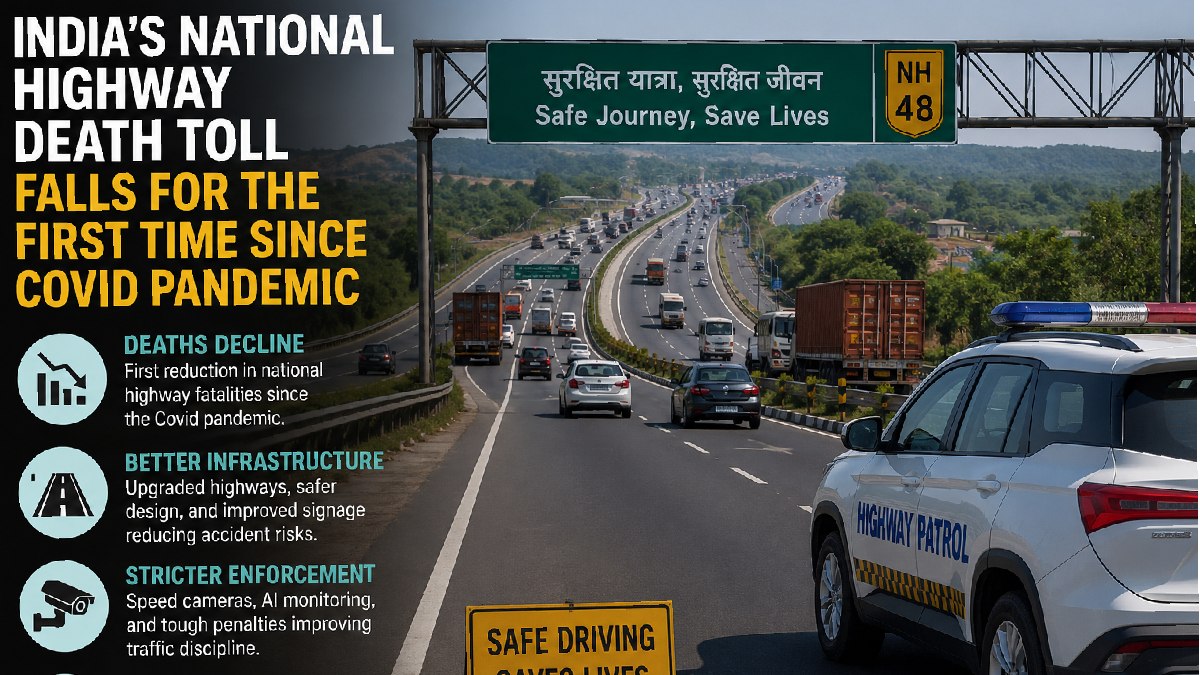
The latest data shows that while road accidents remain a major public safety problem, the decline in national highway deaths shows that tougher enforcement, better infrastructure and broader awareness are starting to make a difference.
National highways are only a small percentage of India’s entire road network but carry nearly 40 percent of the country’s traffic. As a result, they have historically experienced a disproportionately high number of fatal accidents. As traffic volumes had resumed to normal after the pandemic, deaths on these highways had risen over the last few years.
But the latest figures indicate that the trend has turned back. This is largely due to better highway engineering, better emergency medical services, greater policing of speeding and drunk driving and more intelligent traffic management systems in general.
Government agencies have intensified road safety campaigns that are focused on helmet, seat belt and responsible driving. Speed cameras automatic number plate recognition systems and AI-based surveillance have also been used to catch traffic violations more rapidly.
There have been infrastructure upgrades as well. Some of the accident-prone spots called “black spots” have been redesigned with better road geometry, better lighting, crash barriers and better signage. These changes have drastically reduced the likelihood of serious crashes in many high-risk areas.
Experts say despite this improvement, India still has one of the world’s highest road accident fatalities in a year. Overtaking, driver fatigue, distracted driving, and driving with poor driving habits still cause deadly crashes; overspeeding is the most dangerous and unsafe factor, and vehicle drivers are also failing to obey traffic laws.
But road safety advocates say long-term projects have to continue to make sure that road safety advocates say sustained efforts are more than just a little slower but ongoing efforts are needed to continue to keep the downward trend.
They recommend better licensing requirements, better driver training, safer vehicle safety standards, and faster response to emergencies and emergency medical attention to prevent even more deaths by putting more rigorous safety measures that are needed to reduce fatalities further.
And the Ministry of Road Transport and Highways has repeatedly said it is committed to reducing road deaths through engineering improvements, enforcement, education and emergency care.
Many states have also launched efforts like awareness drives in schools, tougher penalties for repeat offenders and highway patrol services.
Technology will continue to play an increasing role in road safety, industry experts say. Connected vehicles, AI-based traffic monitoring, predictive analytics, and real-time incident detection will be used by authorities to respond to accidents in real-time and prevent them before they occur.
No doubt, the decline is a great one but officials stress that every road death is preventable.
It will be more necessary to invest in safer infrastructure, responsible driving and law enforcement if we are to see India’s highways become much safer for millions of daily commuters and commercial transport operators.